
April 2026 News
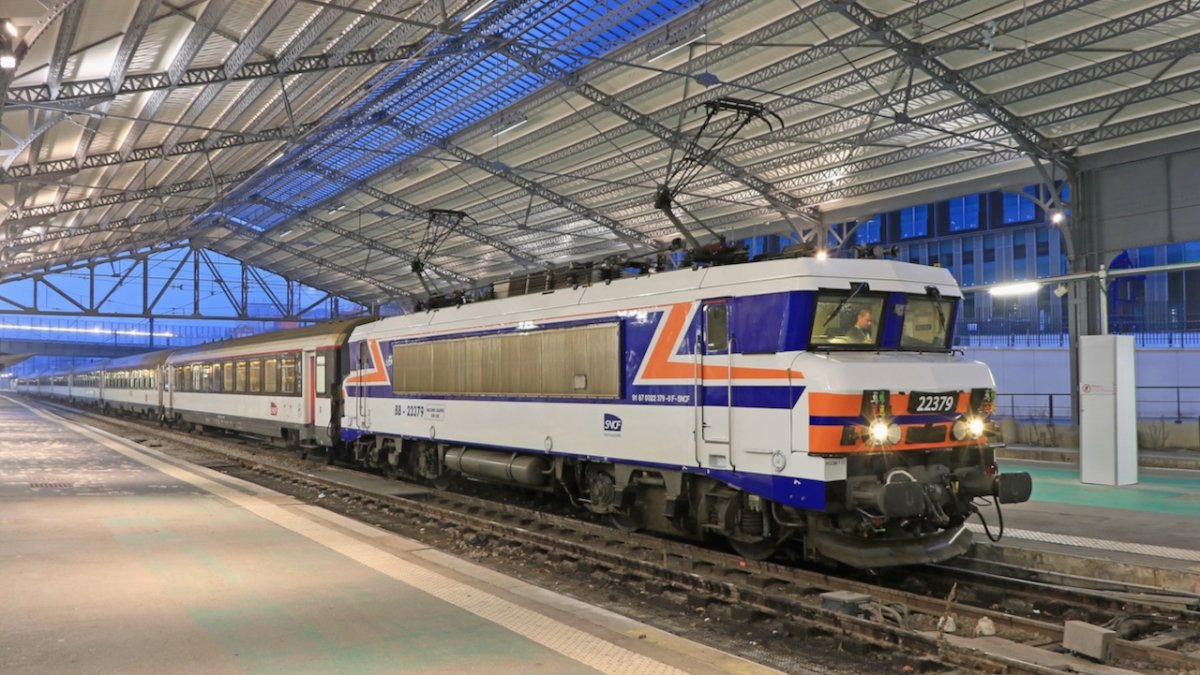
The weekend of 7/8 March saw the first operation of Intercités de Nuit 3742 to Bordeaux via the LGV Sud Europe Atlantique high-speed line due to engineering work on the conventional route. BB 22379 worked both the southbound and northbound journeys.
Departing from Austerlitz at 21.40 it arrived at Bordeaux at 01.52 and left again at 02.40 arriving back in Paris at 07.03. BB 22379 is part of the Infra fleet and is equipped with TVM 430 signalling enabling it to operate on LGVs. It has been restored with a livery to commemorate its prototype career, having run as BB 20011 until 1993 as the test bed for the synchronous motors and equipment used in the BB 26000 'sybics'. Seen above after arrival at Platform 20 of Paris Austerlitz on 8 March.
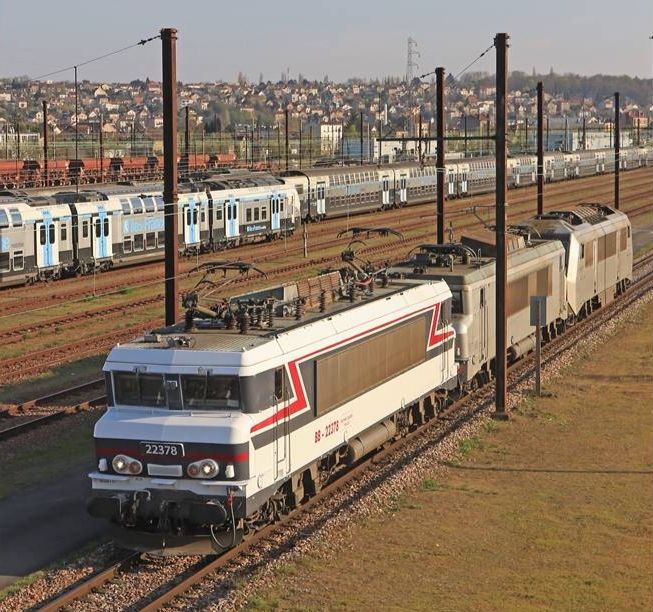
For the following weekend classmate BB 22378, also equipped with TVM 430 signalling, and turned out in a similar style 'French Berry' livery was used, and is seen opposite in the yard at Villeneuve-Saint-Georges on 20 March.
Photos: Christophe Masse
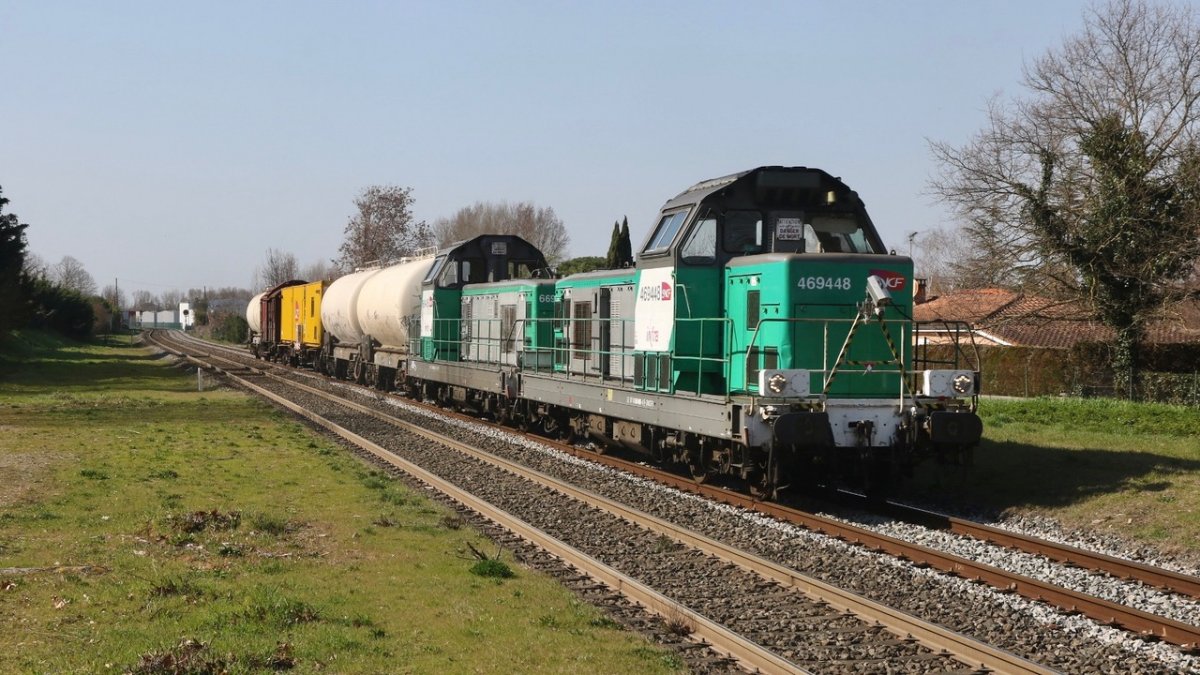
SNCF Réseau saw its revenue from track access charges increase by 4.8% to €8.35 billion in 2025, delivering a gross profit of 30.5%, something unlikely to be missed by private operators who feel charges are too high. During the year over €3 billion was invested in the infrastructure network with 736km of track and 239km of overhead power lines replaced. On the day that Groupe SNCF's results were released, BB 69448/69465 were captured at Montrabé with a weedkiller train 103395/94 Saint-Jory – Aurillac. Photo: Georges Turpin.
Solid performance for Groupe SNCF in 2025
Overall, the domestic rail business showed growth over 2024, with increased revenue offset by a reduction in revenue from the two arm’s length subsidiaries, worldwide logistics carrier Geodis and transport operator Keolis. Revenue for the individual subsidiaries and comparisons with 2024 were:
Passenger services saw further growth with TGV traffic up 3.5% to 168 million journeys. TGV occupancy in 2025 was 86 per cent, up 2 per cent on 2024, and strikes were more numerous, costing €41 million in reimbursements and loss of revenue. For services sponsored by Île-de-France and the régions a return of commuter traffic saw Transilien journeys increase by 4%, while TER journeys increased by 2.8%.
SNCF Voyageurs €20.882 billion (+3%)
SNCF Réseau €8.354 billion (+4.8%)
SNCF Gares & Connexions €2.06 billion (+3%)
Rail Logistics Europe (RLE) €1.8 billion (−1.6%)
Keolis €7.12 billion (−7.4%)
Geodis €10.553 billion (−4.2%)
On the freight side, RLE's performance was viewed as good in a sluggish market, with traffic losses stemming from the 'economic discontinuance' of Fret SNCF largely offset by new customers and growth across the intermodal subsidiaries, particularly Naviland (maritime intermodal) and VIIA (rolling motorway). This appears to reflect the restructuring within RLE during the year of its combined transport division with more integrated working of its intermodal sectors. The position is further strengthened with the acquisition earlier this year of Seatruck, increasing the number of freight forwarders from 70 to 120.
Although revenue for Keolis dropped, it retained existing contracts in France and won a new contract in Île-de-France. Abroad it retained or won new business in the USA, Canada, India, UAE, Belgium, Denmark and Sweden. Cadence, a consortium of Keolis, SNCF Voyageurs and La Caisse (CDPQ), won the contract for construction and operation of the Alto high-speed rail link from Québec City to Toronto.
Groupe staff numbers in France fell slightly from 217,000 to 215,000 although 16,300 new personnel were recruited. Training costs were equivalent to 8% of the paybill. Another 270,000 jobs in France indirectly support the rail industry. The Groupe reduced its CO2 emission by 6.5% from 2024 and 13% since 2022. On procurement, 84% of expenditure went to French companies
THE FRENCH RAILWAYS SOCIETY SUMMER RENDEZVOUS
MODEL RAILWAY EXHIBITIONSunday 7th June
Ashtead Peace Memorial Hall, Woodfield Lane, Ashtead, Surrey, KT21 2BE
10am – 4pm
Ashtead Peace Memorial Hall, Woodfield Lane, Ashtead, Surrey, KT21 2BE
10am – 4pm
Adults £8 Children £2
Working Layouts - Trade Stands
Illustrated Talks - Bring & Buy - Specialist Societies
Working Layouts - Trade Stands
Illustrated Talks - Bring & Buy - Specialist Societies
Refreshments and Free Parking

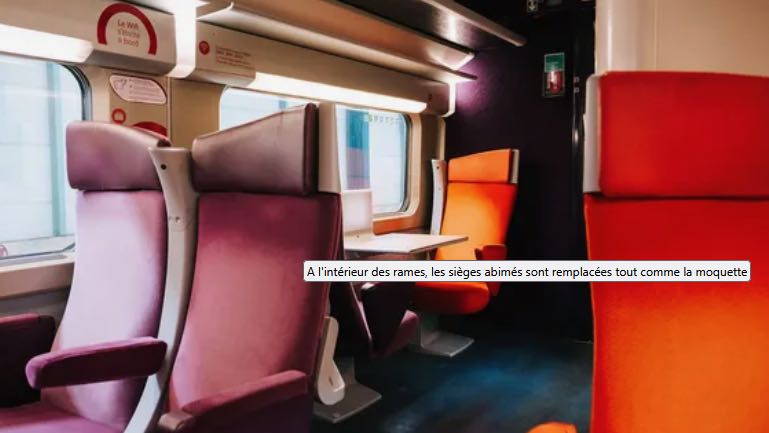
O2D refurbished TGV rolled out
After two years spent assessing the trains and planning a work programme, the first O2D production line was set up last September at Châtillon Technicentre Atlantique in Paris, followed by commissioning in January of lines at Le Landy in Paris and Rennes-La Janais; the technicentres at Hellemmes and Longueau are also involved. The scheme covers:
● 81 single-deck trains built in the 1990s found to be good for up to four more years’ service. They receive a light makeover, including renewal of seat covers, carpets, armrests, electrical sockets and lighting; upgrade of bar and toilet fittings; exterior paintwork touched up; work takes about seven weeks.
● 23 double-deck trains needing more substantial renovation to extend life-span for up to 10 years. These trains undergo a total interior refit and have additional seating, as well as modernisation of traction equipment; the work taking up to six months.
All trains receive checks to safety equipment and ERTMS, upgrading of HVAC, toilets and lighting, and an interior deep clean. Three trains were in such a poor state as to be written-off; they are being cannibalised for reusable parts.
This year will see 26 refurbished trains return to service followed by 23 in 2027, together contributing 17,700 seats which would otherwise have been lost. Thereafter, with nearly half the 104 sets revamped, the pace will slow to around 10 per year through to 2033, by which time the greater part of the TGV M fleet should be operational.
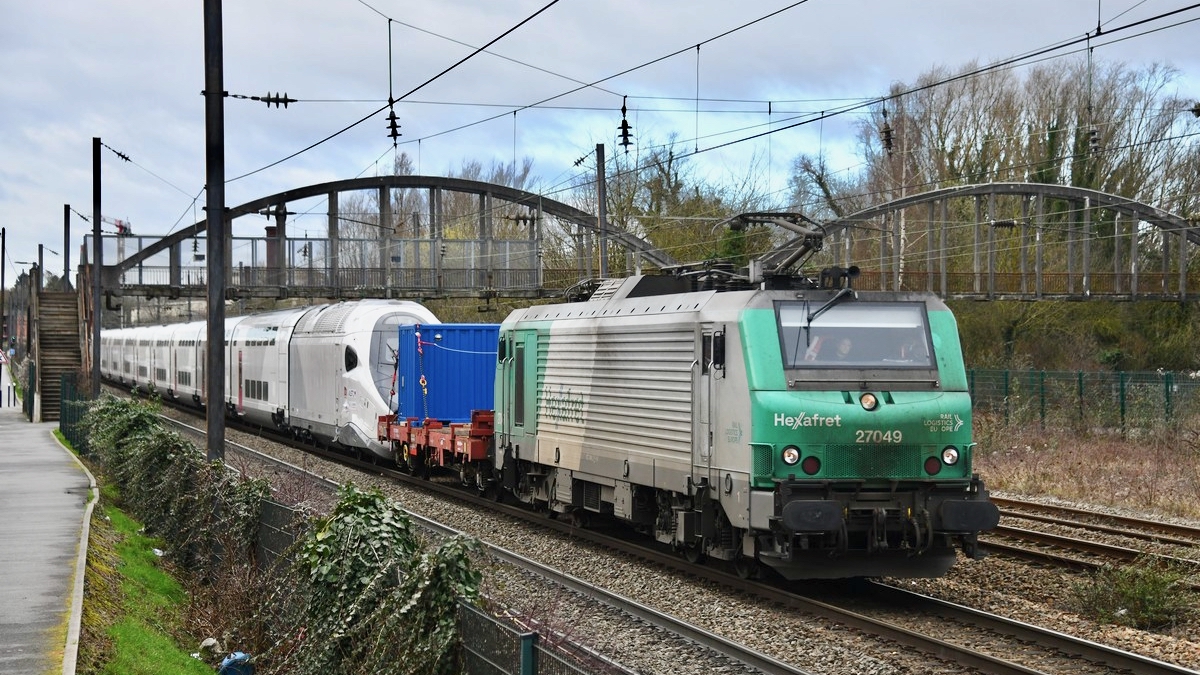
On 28 February Hexafret BB 27049 passes Valenciennes towing TGV M set 1401 en route from Belfort to the Alstom plant at Raismes after testing in Italy. Set 1401, the first of 15 four-current TGV Ms for operation in Italy, ran trials at Bologna’s San Donato test centre at the end of last year (see December 2025 News) and has been running throughout the network as part of its homologation process. A report in La Republicca says the double-deck sets are too high to pass through numerous tunnels on classic routes, access to which RFI maintains is essential for out-of-course running when LGV lines are disrupted. SNCF insisted that it had worked with RFI to ensure the train’s compatibility with all high-speed lines and potential alternative routes. The train has yet to be approved for service. Photo: Didier Delattre.
Legal ruling clears way for SNCF in Italy
SVI welcomed the 6 March decision as ‘a step forward’ though a new offer of 18 paths (out of the 26 requested) for a period of 10 years is still deemed insufficient for implementation of its plans; it had sought a 15-year agreement. It ‘awaits guarantees on all the commitments necessary for its entry…to the Italian high-speed market’. Assuming more paths are made available, and agreement reached on access to depots and maintenance facilities, start of operations would be in September 2027.
SVI had applied in 2024 to run two new services in Italy: four daily A/R Turin – Venice and nine Turin – Naples, plus the existing Paris – Milan twice-daily (one fewer than at present due to the higher capacity of TGV M trainsets), with a 2026 start. Difficulties were encountered in negotiating paths and depot access with RFI and FS, the allocation offered for the first stage of development covering only 30% of the paths requested, and a second offer only 15%. Hence the complaint to AGCM which has taken almost a year to assess.
TGV M July start in doubt?
According to VRT, further reliability problems were identified on the two test trains, Sets 1008/1009, including with the train control and management system. Staff at Alstom’s La Rochelle plant are reported to have been asked to work holidays and weekends to correct some 3,600 defects (mostly minor). Ordered in 2018, the trains were originally scheduled to enter service in 2023.
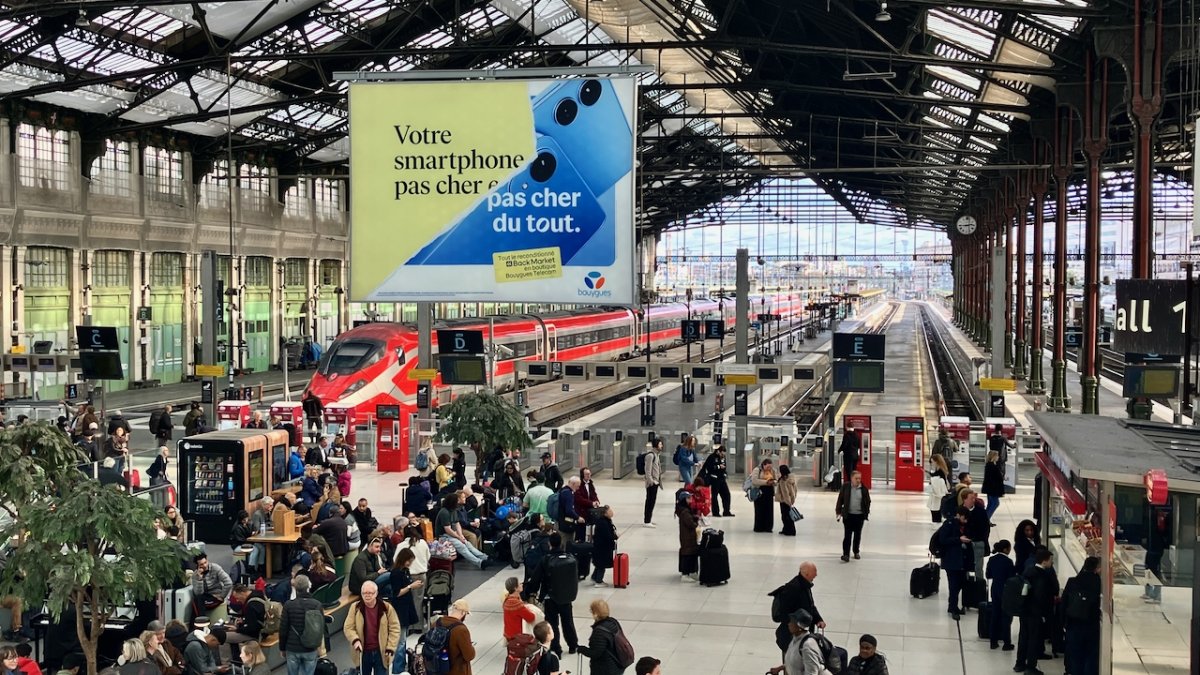
Tit-for-tat? Trenitalia’s Paris – Lyon – Marseille Frecciarossia service has spooked SNCF on its busiest route, taking more than 50% of the business market in four years with fares often substantially lower. Now SNCF is poised to launch competing services in Italy. At Paris Gare de Lyon on 9 March Train 6113 the 15.09 to Marseille Saint-Charles awaits departure.
On 17 March, Trenitalia signed an agreement with SNCF to lease for 35 years a site at Maisons-Alfort Pompadour southeast of Paris for construction of a maintenance depot with capacity for up to 25 Frecciarossa trainsets. As well as simplifying maintenance schedules for Trenitalia’s French operations, currently carried out in Milan, the site will offer a springboard for its proposed services from Paris to London and its European high-speed metro vision. Commissioning is planned for 2029 at a cost of €80 million.
SNCF reorganises to meet competition
In one of his first interviews, PDG Jean Castex reiterated his predecessor’s call for a level playing field for all operators, saying: “SNCF will not accept competition that focuses [only] on the profitable part of the railway, so that we [SNCF] no longer have the means to serve the least profitable areas.”
TGV Europe Business. The operator predicts that by 2035 around 70 high-speed trainsets will be in service with new entrants, compared to just 10 with Trenitalia today, while it is envisaged that 95% of TGV routes will be served by at least one competitor in the long term. As the Ouigo fleet expands from 35 to 50 trains, services will be extended and augmented, especially to the west in competition with Velvet.
The company intends to ‘spend more time’ with its customers as well as ‘Europeanising’ the business to offset the pressures of competition in the home market. SNCF already has 43% of high-speed market share in Europe, having taken 20% of the Spanish market with Ouigo España. In Spain, three new routes are opening to competition next year. The next major push will be into Italy, where SNCF Voyageurs Italia is poised to start services in September 2027 (see item above). A further 15 four-current TGV M trains were ordered from Alstom in February for services from regional cities to Brussels, bringing the ‘European’ fleet to 30.
DSP Business. The Délégation de service public unit will focus on activities contracted by the State, such as Intercités and ICN, by the régions for their TER services, or with Île-de-France Mobilités. With the Nantes – Bordeaux/Lyon IC contract won last year and all but two TER contracts retained, DSP will be hoping for other successes. Each bid is based on operation by a subsidiary, suggesting that DSP will end up as a kind of holding company.
In its turn, SNCF Réseau is decentralising to get closer to the growing number of new operators seeking access to the network as well as its TER ‘customers’ in the régions. In development for more than a year, Plan Resonances has been implemented in all areas except for Nord-Est Normandie where it was halted by a legal challenge. Three new directorates cover the Sud-Est, Atlantique and Île-de-France areas, supported by directors for each of the régions.
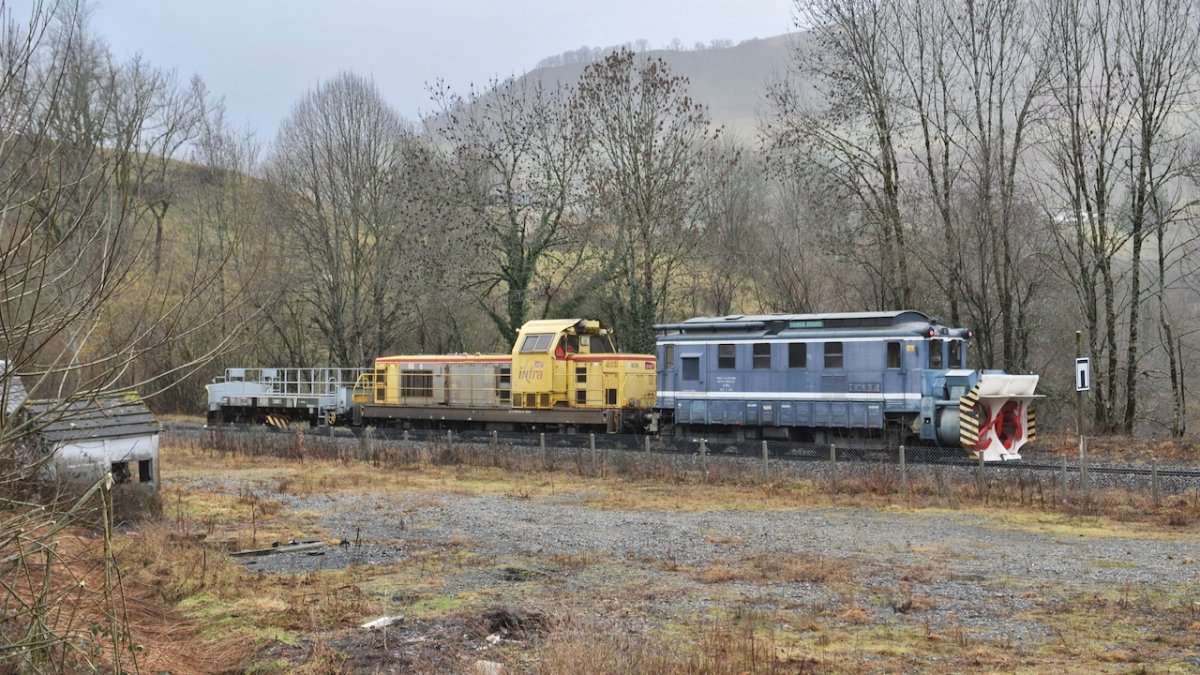
In contrast to the severe weather in the Pyrénées and Alps, Cantal’s mild winter has provided no work this year for the CNS snowplough based at Aurillac. On 30 January it was given a run out on a driver-training turn, seen above at Thiézac propelled by BB 69285 with a simple plough wagon in tow. Photo: Jean-Louis Poggi.
Hydrogen: another setback
GE’s move is a further blow to the traction alternative following Alstom’s decision to pause its hydrogen development programme (see January News). According to La Lettre, even the main proponent of the project Occitanie is becoming restless. The Luchon branch reopened last year was to have been a showcase for hydrogen traction. Now, it seems Occitanie is refusing to pay its share of the trains’ costs and claiming compensation for late delivery.
Paradoxically, Occitanie’s Technocampus Hydrogène at Toulouse is gearing up for opening next year. Researchers, industrial groups and start-ups will test hydrogen production processes and applications under real-world conditions for use in aeronautics, heavy transport and energy-generation. The région is investing €29 million under its Plan Hydrogène Vert adopted in 2019.

The Series Mania Festival, an event dedicated to european television series was held in Lille from 20-27 March. SNCF as a partner, provided a special train at Lille Flandres for four days that included a cinema coach and a former postal vehicle. Seen above after arrival from Sotteville on 19 March hauled by BB 67613/67611. Photo: Didier Delattre.
Channel Tunnel freight revival?
According to NR, businesses would ‘gain direct rail freight links to Europe’ under the government-backed plan which could see ‘regular rail freight traffic through the Channel Tunnel’ once again. Today, the only on-rail traffic through the tunnel is Évian and Volvic mineral water running to Daventry up to 7 days a week and Toyota cars three times weekly between Toton and Valenciennes, outbound with Corolla hybrids manufactured at Derby, inbound with French-built Yaris models. Both are operated by DB Cargo. In 2025, this amounted to just 14 trains per week, leaving more than 90% of available capacity unused.
Getlink annual results 2025
Channel Tunnel concessionaire Getlink announced annual results at the end of February. Total revenue was down 1% at €1.595 billion although EBITDA was up 4% at €859 million. Broken down between Getlink's component companies, the figures are:
Eurotunnel. Revenue up 4% at €1.198 billion with EBITDA up 5% at €667 million. Passenger traffic was up 2% with Eurotunnel having 56% of the cross-channel car market. Truck volume was down 3% due to reduced economic activity though Eurotunnel maintained its share of the cross-channel market at 35.4%.
Eleclink that provides cable capacity for imported electricity saw revenue fall by 20% to €225 million with EBITDA at €158 million; 81% of 2026 capacity has already been pre-sold.
Europorte, the French freight operator, saw revenue up by 2% at €172 million with EBITDA up 6% at €34 million. Last July it acquired a 67% holding in Electrofer SAS which specialises in anti-wear treatment of new rail, railhead restoration, welding, bending and milling; this should facilitate Eurotunnel's expansion into the infrastructure market.
During January the first electric truck (eHGV) was conveyed through the Channel Tunnel. The DAF New Generation XF left the Kuehne & Nagel East Midlands Gateway depot fully-charged with a 12tonne payload. It completed a 1,700km round trip to the Kuehne & Nagel depot at Haiger in Germany by recharging at public charging hubs at Dunkerque and Maasmechelen (Belgium).
The DAF XF has a real-world range of 500km (310 miles) when fully charged, making 1,000 km journeys a day possible. Photo: Getlink.

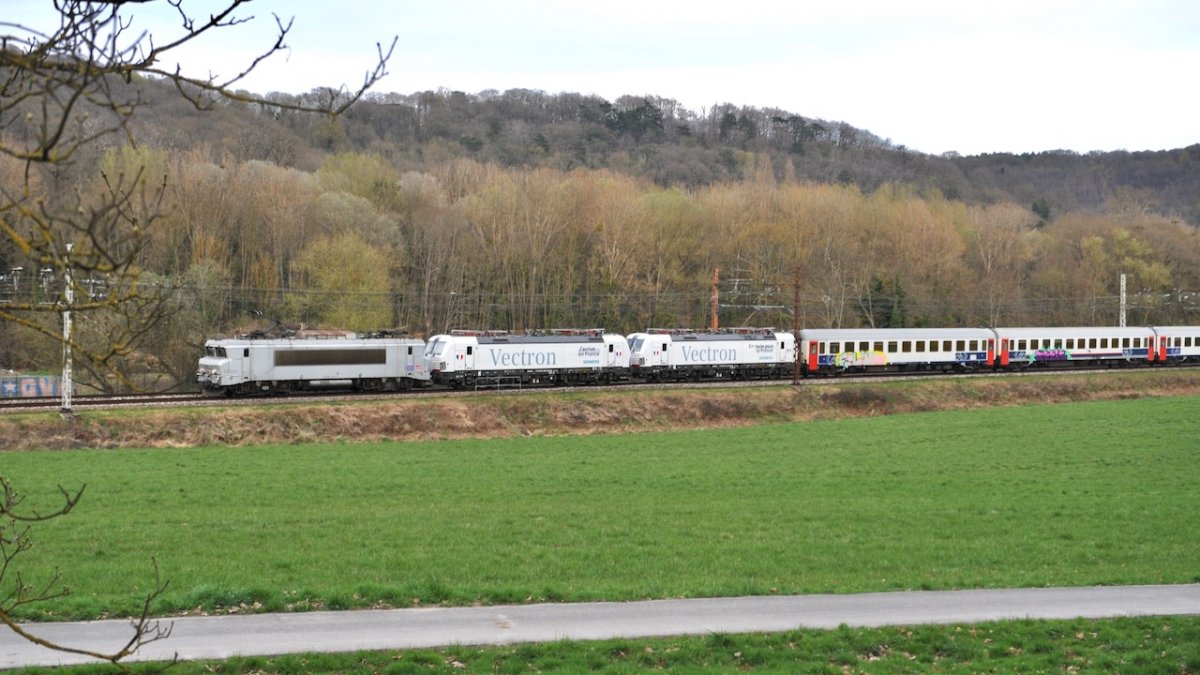
Vectrons for trial. The lengthy homologation of Vectrons in France continues. Passing Vauboyen southwest of Paris on 10 March, BB 22251 is seen towing two Vectrons, 193 488 'Sophie' and 193 414 'Angeline', and nine former SNCB coaches. The convoy was en route from Alstom’s Belfort works, where tests had been carried out by Railway Test Agency AEF, to Angers. Trials have since taken place at 200km/h between Angers and Le Mans. Photo: Jean-Louis Poggi.-
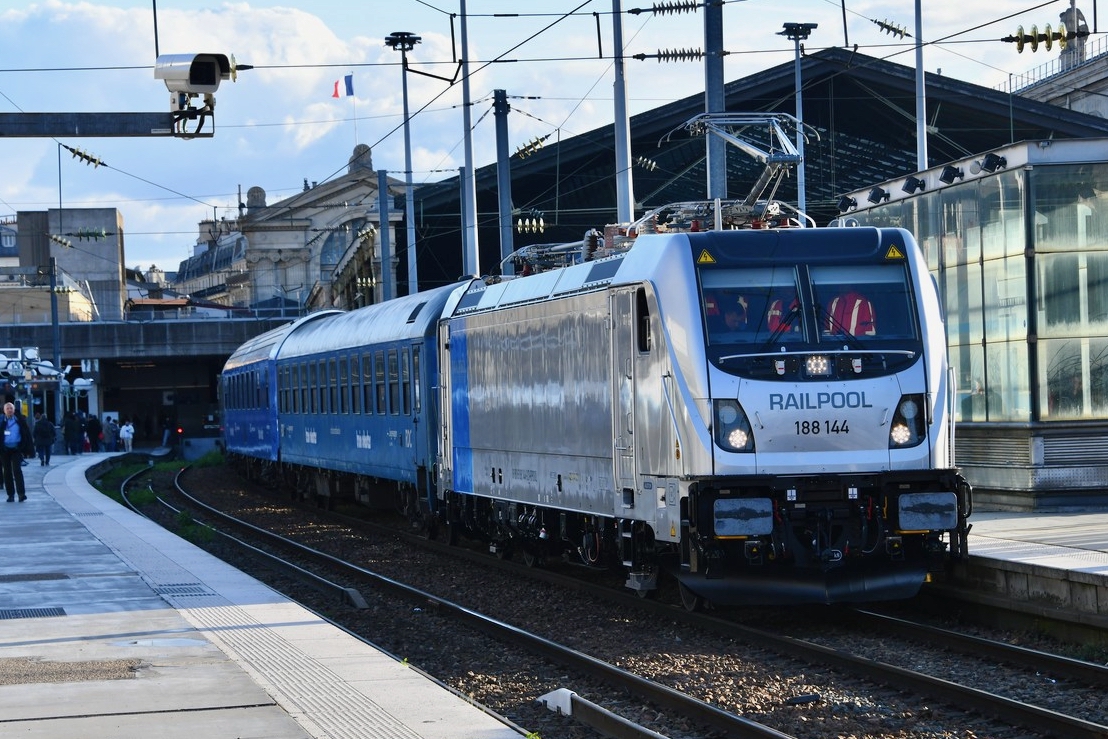

European Sleeper re-introduces Paris – Berlin overnight service
The Paris – Berlin via Brussels night train operated by European Sleeper ran for the first time on 26 March. Rolling stock was provided by Dutch operator Train Charter Services using Railpool leased Traxx MS3 locomotives and coaching stock leased from RDC Deutschland. 188 144 operated the service from Paris throughout to Berlin, believed to be the first time that a Class 188 MS3 has operated a passenger train in France. 188121 was also on hand, bringing in the empty stock from Le Bourget. Photos: Didier Delattre.
ES 475 departs Paris Nord at 18.03 on Sunday, Tuesday and Thursday for 09.02 arrival at Berlin Hbf the following morning. ES 474 departs Berlin at 18.31 and arrives Paris Nord at 10.58. Its only stop in France is at Aulnoye-Aymeries and there is no public stop between Liège and Berlin until 13 July when the train will call at Hamburg Harburg in each direction. Fares start at €59.99 for a place in a six-berth compartment. The Brussels – Milan service that was due to start on 3 June has been delayed until September.
The initial service was a chaotic event for some passengers, who were informed at midday that as one of the coaches was out of service and accommodation was not available elsewhere in the train their bookings had been cancelled. This is due in part to their being only stabling facilities at Le Bourget and any maintenance being undertaken in Berlin. Occupation was reported to be 90%, with most passengers boarding in Belgium.
Freight News
VIIA. Since January, VIIA has operated three weekly round trips between Lyon PEH and Calais, increased to four in February and scheduled to reach six from 1 April. The service runs with trains longer than 750m, carrying 11 double wagons equivalent to 22 semi-trailers, using equipment from CFL. The connection also links Lyon with Sète and Bettembourg, enabling commercial flows between Calais and Sète as well as Bettembourg and Sète. VIIA is also assessing operation of 850m-long trains.
Maurienne Valley. The EC has approved state aid from France and Italy totalling €5 million towards the cost of reopening the Alpine rolling motorway service between Aiton (between Chambery and Saint-Jean-de-Maurienne) and Orbassano in Italy. Manager Autostrada Ferroviaria Alpina ceased activity last year after the service had been suspended during closure of the Maurienne valley railway following the rockfall. France and Italy agreed to restart the service at last June’s Turin-Lyon Intergovernmental conference. EC approval of the funding is conditional upon opening the route to other operators.
Rungis. The €36 million project to expand rail facilities at the Paris wholesale food market has stalled. Rail Logistics Europe’s VIIA subsidiary was awarded an operating concession in 2023 to develop the 130,000m2 terminal, intended to handle up to eight trains of produce daily and cut the 25,000 daily road vehicle movements. VIIA is reported to have withdrawn from the project.
First Traxx Universal. In mid March Alstom outshopped Traxx Universal loco No 188 134, one of an order of 50 for Railpool. As mentioned in February News, this will be the first of its type to operate in France and will be delivered to RegioRail. The operator has ordered three Traxx from Railpool, all with a last-mile diesel engine, and will deploy them on trains of containerised clinker from Sète to Cem’In’EU cement plants at Tonneins southeast of Bordeaux and Portes-les-Valence south of Lyon. On these duties they will replace Class 66s, some of them hired from DB Cargo France. A second customer for a Traxx Universal operating into France will be night train operator European Express.
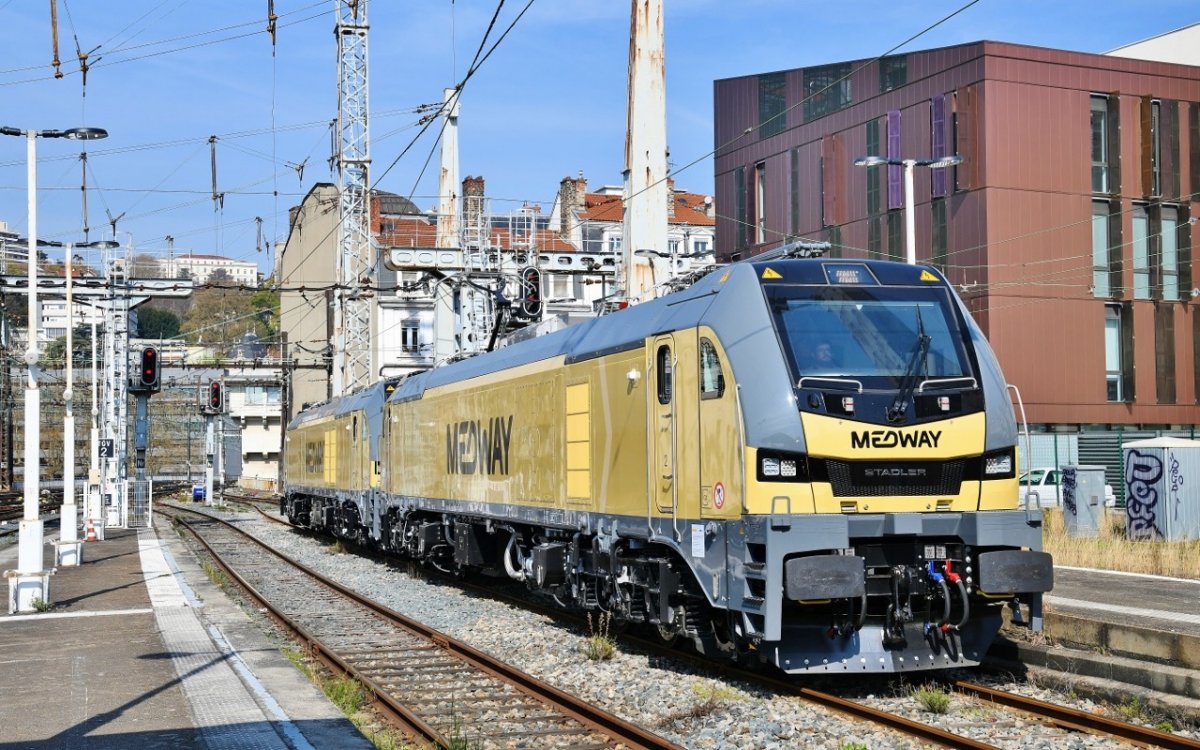
Medway Euro 6000s. Medway France continues its expansion in France. It is a subsidiary of the Italian-Swiss container and cruise ship operator MSC. On 4 March four new Euro 6000 Co-Co electrics, Nos 6023 to 6026, were moved to Lyon where they were taken over by Medway. They were hauled by identical Alpha Trains/Captrain No 6001. Four more will follow. At a ceremony at Lyon-Perrache on 24 March the locos were named after the partners’ four daughters: 6203 ‘Valentine’, 6204 ‘Maud’, 6205 ‘Thaïs’ and 6206 ‘Estelle’. Photo: Pierre Julien.
Medway’s first container trains with these locos were launched on 15 March for Delta Rail, linking Lyon’s Port Edouard Herriot (PEH) on the Rhône with Fos-sur-Mer. These operated initially three times a week, soon increasing to six. A further three weekly round trips between Lyon and Piacenza (not Medway) were scheduled to start in early April. Additional services are under consideration for 2027, including a Lyon – Dunkerque route likely to start later this year. The Port of Lyon expects intermodal traffic to double from 60 trains a month in 2025 to 120 by the end of 2026.
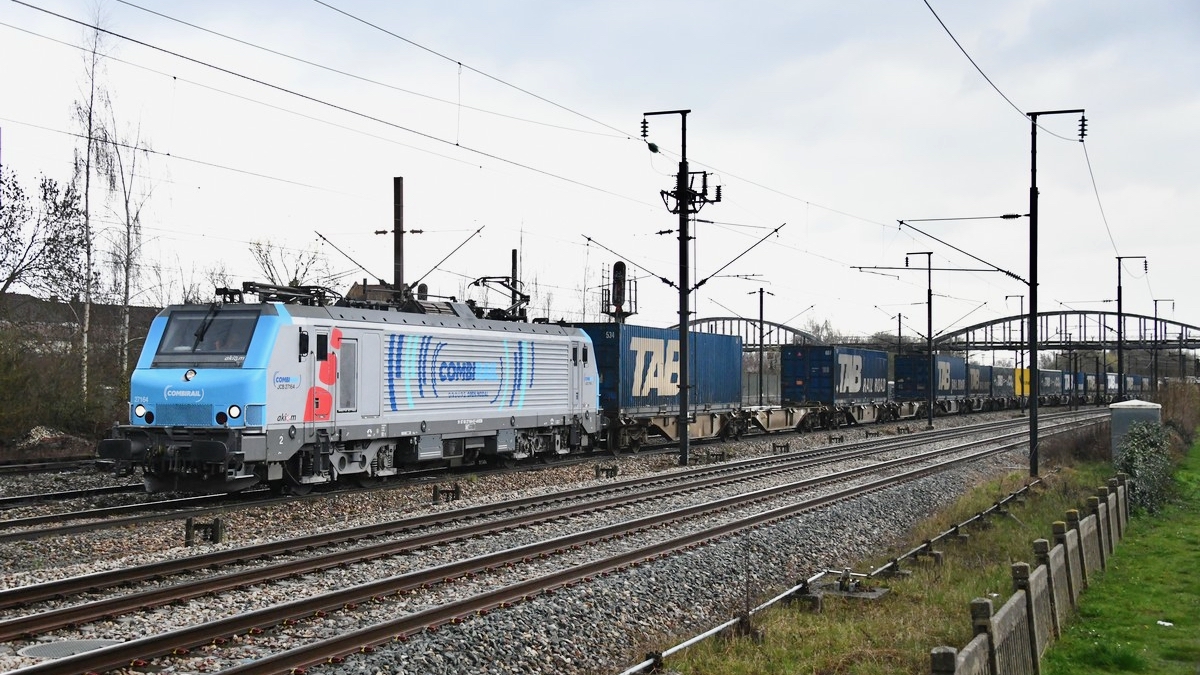
Akiem has supplied three more Prima BB 27000 locomotives to Combirail, expanding the operator’s leased fleet to 12. One of them, No BB 27164, was outshopped in a new livery on 10 March. Cabside markings show ‘JCB 27164’, commemorating Jean-Claude Brunier, founder of Combirail’s owner Open Modal, who died last year. Following its naming at the Port of Lille it is seen above departing from Lille Deliverance with Train 50230 to Sucy Bonneuil. Photo: Didier Delattre.
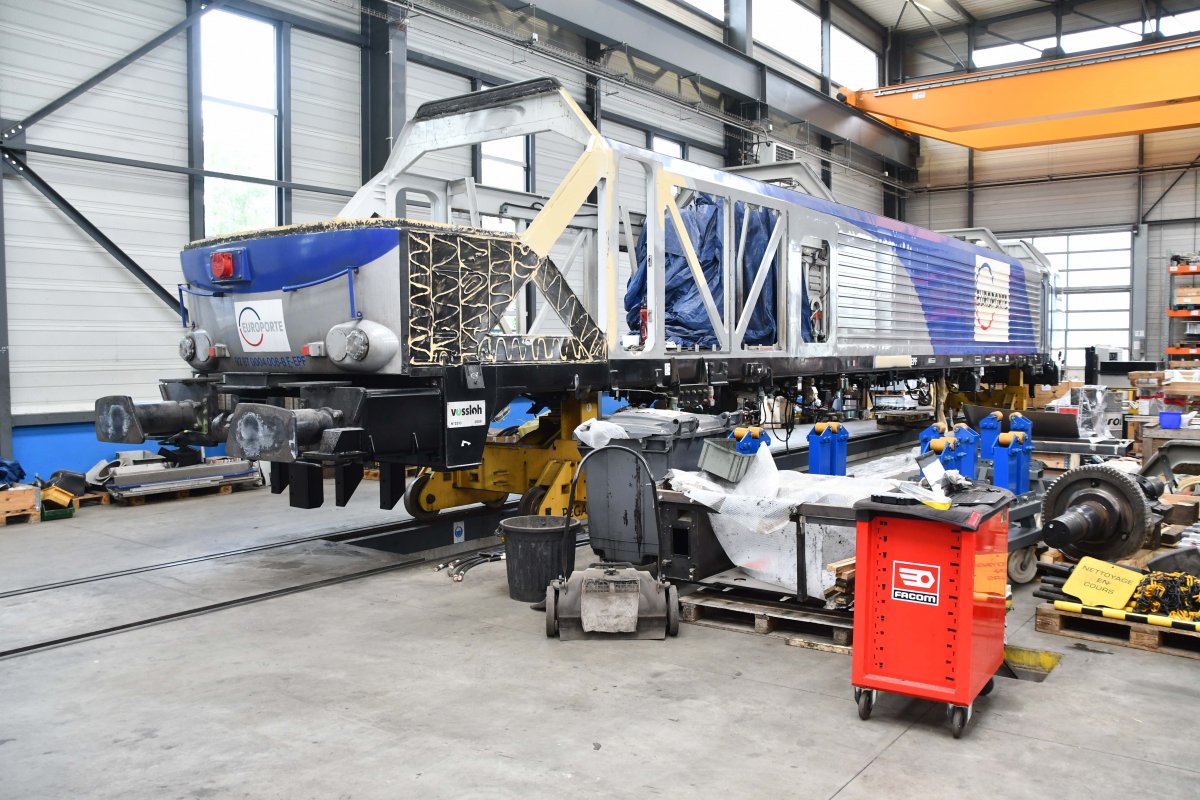
Third time lucky for 4006? On 16 February the Erion works at Montceau-les-Mines rolled out Europorte Euro 4000 Co-Co diesel No 4006 after a complete rebuild. This loco seems to be cursed; 4006, which can operate in France and Belgium, was introduced in 2011 and named ‘Alesia’. On 16 June 2021 it was severely damaged when it hit a lorry on a level crossing in northern France. Europorte decided on a rebuild, and the loco returned to service in 2023. However, early in 2025 the loco fell off its supports in Antwerp Noord depot and was again seriously damaged. After a further rebuild by Erion, No 4006 is now decorated with a mini ‘Harry Potter’ – hopefully some magic will protect it from now on! Photo: David Haydock.
Military might?
“If it takes 45 days, we will lose the war”, Community of European Railways executive director Alberto Mazzola said, citing a recent trial movement of an armoured division from France to Romania. Speaking at the ProMedia Group RailTech Europe conference in Utrecht on 5 March, Mazzola again highlighted the difficulty of arranging short-term cross-border paths for military movements: “Of those 45 days, 30 were spent not moving anything — simply planning and approving the train”. But he insisted “rail is the backbone of military mobility in Europe” as much of the materiel to be moved is bulky or dangerous and therefore ill-suited to road haulage.
CER welcomed EC work to draft a regulation covering military mobility, with a number of strategic corridors identified along with 500 ‘hot spots’ needing interventions to boost throughput. While the corridors cannot be identified for security reasons, there was said to be a high degree of overlap with TEN-T axes. Mazzola cautioned that technical specifications for the TEN-T rail network did not cover loading gauge requirements for military traffic. “We need an extra 20cm on all tunnel dimensions”, he said.
Mazzola said railways could no longer ignore the need for alternative traction to keep trains moving if electrical supplies or OLE are damaged by hostile actors. He said that while environmentalists may not like it, the reality was that “we cannot…turn our back on diesel” completely. He urged policymakers to recognise the challenge by supporting operators to find extra funding for more-expensive bimode and hybrid locos.
Europe also faces a shortage of suitable wagons. “Only a small proportion of military movements need specialist wagons, most can use existing general freight designs”, he said. ”But we simply do not have enough of them — in the event of a full conflict with Russia, we will need 50 times more.”
SNCF has around 400 wagons suitable for handling military equipment.

Le Boulou expansion
Traffic at Le Boulou grew by 14% in 2025 with 165,000 units handled by 12 daily trains. Nevertheless, the terminal suffers from its position at the end of a 14km single-track branch off the Perpignan – Portbou line at Elne, the north-facing connection there making it unable to take rail traffic to and from Spain. Now, the State has granted €1.5 million towards studies for a south-facing chord to the LGV which crosses the branch 3km north of the terminal. The project is supported by Occitanie région as part of its effort to encourage modal shift; currently only 4% of cross-border freight moves by rail. The new chord would open the terminal to major Spanish industrial centres such as Tarragona, Valencia and Algeciras.
Initial public consultations were held in 2023, when the preferred site for the new sidings emerged; an alternative location east of the LGV was dismissed as being too far from the existing facilities. In July 2024, the project received a Connecting Europe Facility grant of €4.5 million for preliminary design. SNCF Réseau will carry out geotechnical studies this spring and plans the next stage of consultation in November after which a declaration of public utility will be sought.
Photo above: VIIA
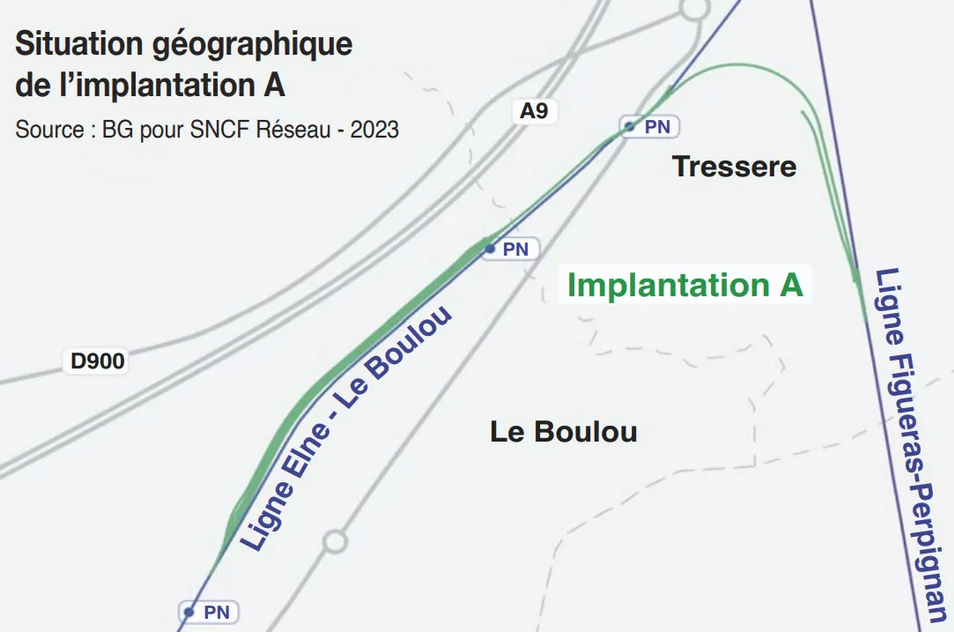
In the longer term, doubling the line from Elne will be required to cope with traffic growth. This was studied as long ago as 2006 and costed at €120 million, a figure which would be considerably higher today. Double track would also open the way to restoration of a passenger service between Elne and Céret (24km) on the long-closed line to Arles-sur-Tech, a local aspiration for which the right-of-way has been preserved. Diagram: SNCF Réseau.
News in Brief
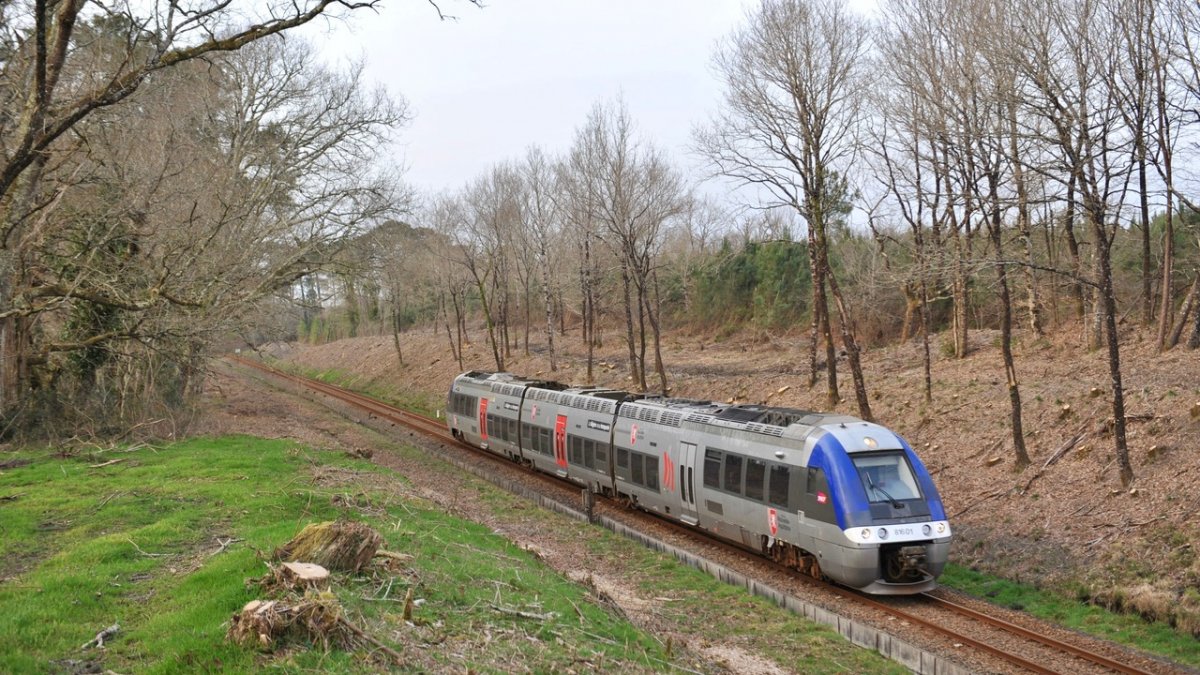
Morcenx. Complaints over the station’s dilapidation and lack of accessibility could see it written into Nouvelle-Aquitaine’s regional accessibility master plan. Patronage has doubled over the past five years to 282,000 annually and 2029 will bring new passengers with opening at nearby Arjuzanx of a 130-room respite residence for elderly people. A few km away at Arengosse on the Mont-de-Marsan branch, B 81601/02 passes on 4 March with the 17.40 from Bordeaux, TER 866619. Storm damage in January and February necessitated further tree-felling here and clearance to ensure safe operation. Midday trains were replaced by buses for five weeks to 29 March. Photo: Jean-Louis Poggi.

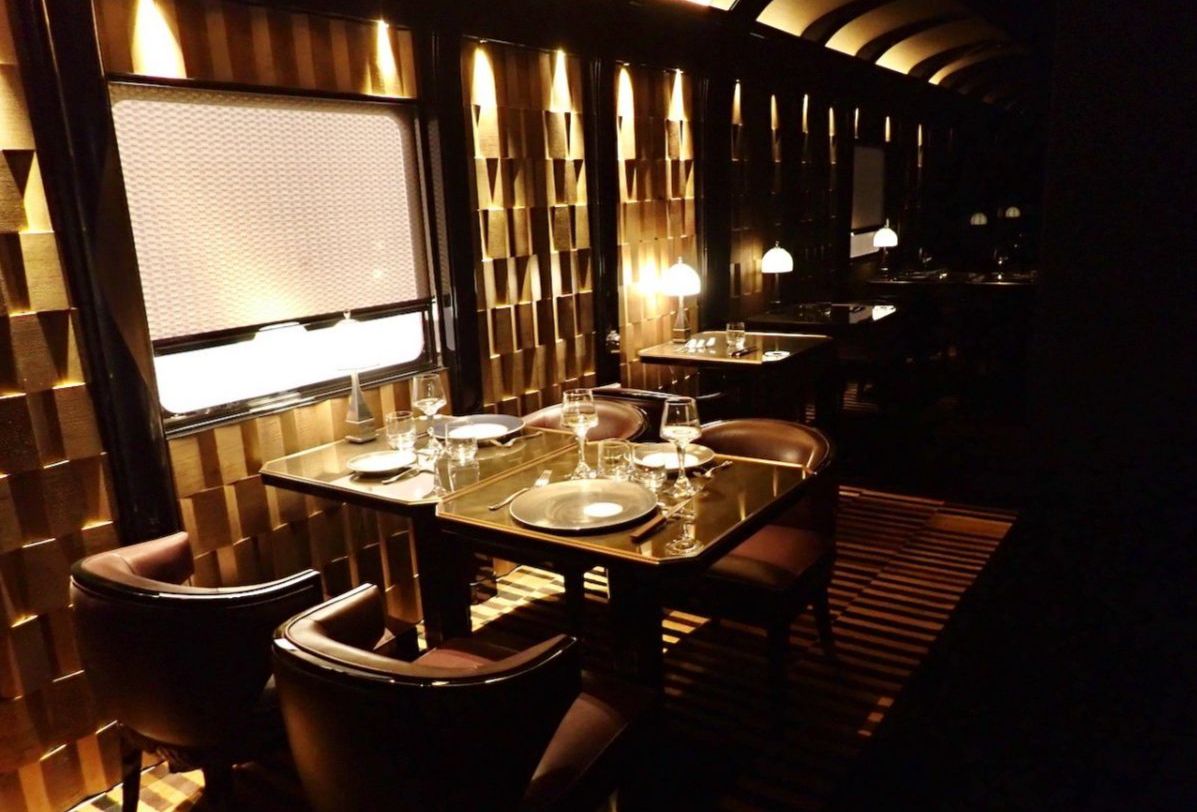
VSOE Art Déco celebration
Photos: Didier Delattre.





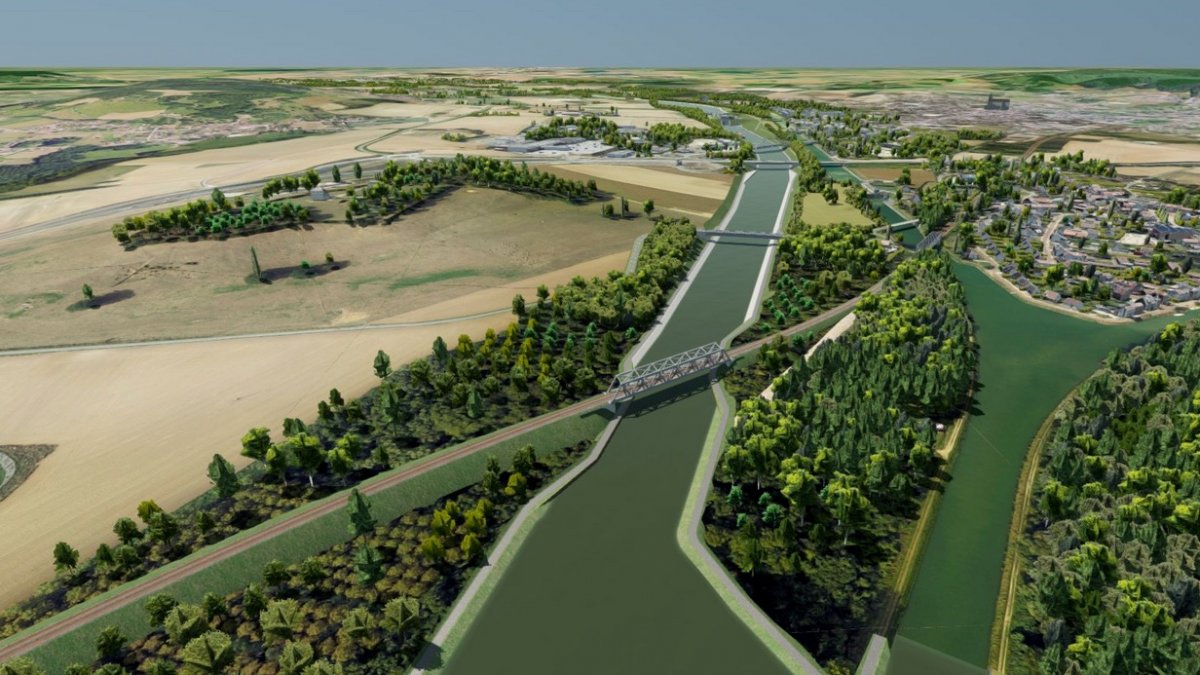
Canal crossings approved
Noyon. A 2.2km deviation to take the railway over the canal on a new bridge about 90m long, necessitating diversion of the Divette river and construction of an underpass for wild animals. The deviation will rejoin the existing alignment just south of the bridge over the Canal du Nord.
Nesle. 3km of new route will position the railway to cross the canal on a 77m Warren truss, together with a 908m viaduct crossing the Ingon valley. The existing bridge over the Canal du Nord will be dismantled.
In 2022, SNCF Réseau renewed 1.2km of track and pointwork at Ribécourt between Compiègne and Noyon to serve CSNE’s work site for delivery and evacuation of millions of tonnes of material by rail or barge on the Canal Latéral à l’Oise. Construction started in 2024 on the 107km canal, which includes a 1.3km aqueduct. Costed at €7.35 billion and opening in 2032, this is the French section of the Seine-Scheldt European waterway. Images: CSNE.
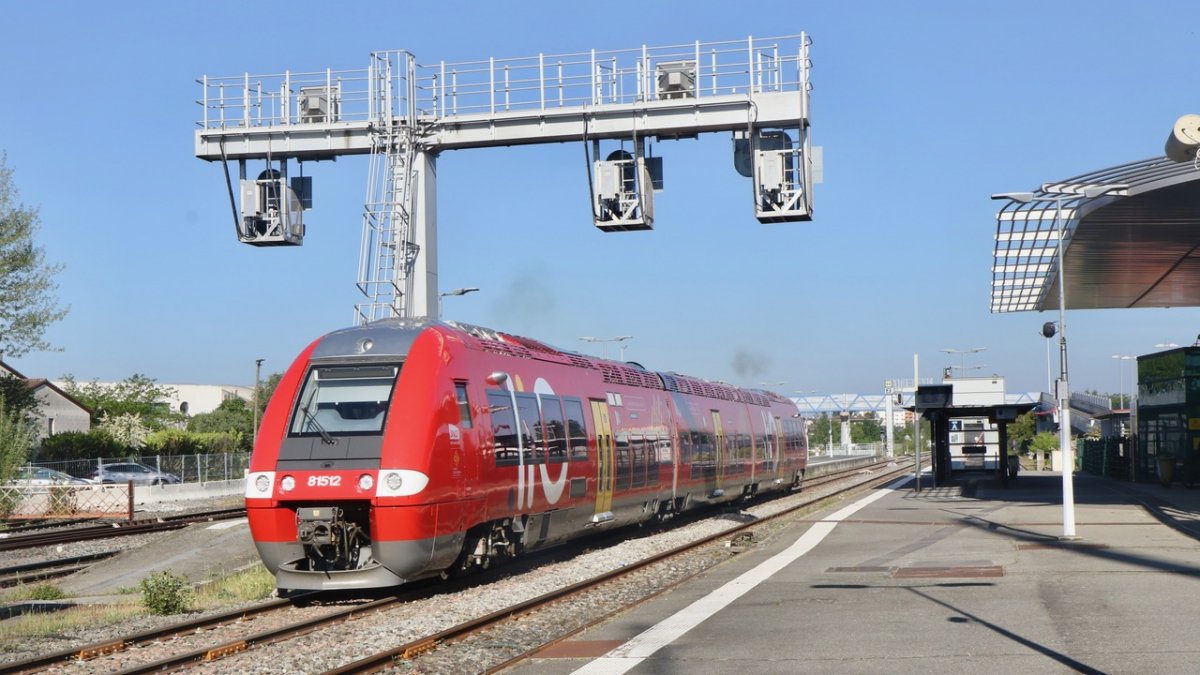
Currently terminus of a half-hourly shuttle from Saint-Cyprien Arènes, Colomiers is also served hourly by trains to L’Isle-Jourdain and two-hourly to Auch. On 9 May 2024, B 81511/12 calls with TER 870304 08.05 Auch – Toulouse Matabiau. In 2028 Colomiers will become a park-and-ride and major interchange with metro Line C. Photo: Georges Turpin.
Toulouse SERM moves forward
Rail elements of the plans include enhanced services on all six routes out of Toulouse Matabiau: to Castelnau-d’Estrétefonds and Montauban, Saint-Sulpice-Tarn, Villefranche-de-Lauragais, Auterive, Carbonne and L’Isle-Jourdain. These would have trains every 10 or 15 minutes at peak hours and half-hourly during an operating day extended from 05.00 to 23.00. Four of the six routes are electrified; diesel or bio-fuel trains will continue to serve the L’Isle-Jourdain and Saint-Sulpice lines.
Turnback facilities will be required at Carbonne and possibly Auterive (where there is only a loop and a siding facing the wrong way), while frequency to Saint-Sulpice (31km) may be constrained by the 11km of single track (with two passing loops) carrying longer-distance TERs to Castres/Mazamet, Rodez and Capdenac. The L’Isle-Jourdain line is also single track with a passing loop at Brax-Léguevin. Two short sections might be doubled to provide extra capacity, while the loop at Pibrac would be reopened.
Metro Line C opening in 2028 is at the core of the project, offering new connections between modes at Matabiau, Colomiers, La Vache, Montaudran and Labège. Occitanie région has voted a further €8.5 million towards the final stages of construction. Outer-suburban bus routes will mostly terminate at the rail/metro interchanges, keeping traffic clear of central Toulouse. A park-and-ride for 500 cars will be built at Colomiers, though this may not be sufficient to cope with the large number of Gers residents driving in on RN124, many of whom will wish to take the metro. A single passenger pricing and information system will be introduced to simplify daily travel.
Phase 1. Will see opening in 2027 of the station at Route de Launaguet on the line towards Montauban and its interchange with metro Line B, followed in late 2028 by opening of Line C with interchanges at Colomiers, La Vache, Matabiau, Montaudran and Labège.
Phase 2. In 2031 completion of the four-tracking between Toulouse and Castelnau-d’Estrétefonds will allow introduction of more frequent trains.
Phase 3. By 2040 the major elements of multimodal transport will be in place, with the enhanced rail offer complemented by express bus lines, car-sharing and extended cycle routes.

After weeks of miserable weather springtime eventually arrived in the Marne at the beginning of March. On 3 March the former SNCF exhibition train formed of Mistral 69 stock is seen near Changis-Saint-Jean en route from Sotteville to Châlons-en-Champagne hauled by CMR's BB 67613/67470 with BB 63405 dead in tow. The eventual destination was Baroncourt although it is unclear whether the stock is for scrapping or asbestos removal for possible restoration. Photo: Christophe Masse.
Ariège closure
Within a few days of discovery of a track deformation at Ginabat on the line from Toulouse to Latour-de-Carol on 18 February, it became clear that a major embankment slippage was underway. As recorded in last month’s News, the line in Ariège département was severely affected by February’s bad weather. The RN20 road from Toulouse to Andorra, closed for seven weeks, reopened earlier than envisaged on 9 March, though too late to ease the plight of struggling winter resorts. Even smugglers were finding the going tough, resorting to robbing the customs post at L’Hospitalet-près-l’Andorre of alcohol and cigarettes to serve their clients.
A section of embankment 70m long and 18m high carrying the single track between Foix and Tarascon-sur-Ariège was found to be slipping at a rate of 300mm per day. SNCF Réseau began work on 2 March with placement of 10,500m3 of material at the foot of the embankment to arrest the slippage. This was followed by consolidation and stabilisation works prior to reconstructing the alignment. Large quantities of hardcore and other material had to be located at short notice and brought to the site; 500 lorryloads of rock were deposited in the first phase of work. SNCF Réseau said it hoped to reopen the line ‘before the summer’.
SNCF and Occitanie mobilised substantial resources to keep trains moving, though ultimately to no avail. Normal service is running between Toulouse and Foix, with buses thence to Ax-les-Thermes. At first these connected with five A/R on to Latour, a single EMU running ‘one train in section’. With three EMUs and a BB 7250 loco trapped at Ax there was no shortage of rolling stock, but it proved impossible to provide for their maintenance without an inspection pit, so the service was replaced by buses from 14 March. Patronage had been brisk, with over 5,000 emergency €1 tickets sold, though with Occitanie’s Skirail offer withdrawn, resorts were receiving 1,000 fewer Toulousains at weekends. Nevertheless, a large fleet of buses was required to distribute those continuing to arrive at Foix by train. It was hoped to restore the Skirail service for the last few weekends of the winter season.
At a press conference on 9 March, SNCF Réseau outlined investment of €90 million ‘to regenerate the line in Ariège’ over the coming years. Regional officials dismissed rumours that the line would be abandoned, insisting that it remained a vital part of the national network.
Andorra. After seven weeks without road access from France and businesses losing up to 80% of turnover, the prime minister Xavier Espot called on France to join in reviving proposals for a railway from L’Hospitalet-près-l’Andorre to El Pas de la Casa just over the border. Such a line would not be long (it’s 13km by road) but would be complex and costly to build in the mountainous terrain; the alignment would be almost entirely on French soil. The matter was to be raised with president Macron (who is co-prince of Andorra) during his visit to the country at the end of this month.

Train Jaune. Work costing €450,000 has stabilised the rockfall that closed the line at Thuès-les-Bains on 23 January and trains should be running again on 18 April. A further closure is scheduled for autumn to consolidate the restored rockface and install avalanche screens.
Photo: France TV.
Spending rise for Bretagne and Pays de la Loire
ERTMS. Increased investment will pave the way for installation of ERTMS between Le Mans and Nantes starting in 2029 and likely to take 10 years. This will raise capacity from eight to 12 trains/h, sufficient to absorb demand through the 2040s. There will also be considerable savings in signalling and infrastructure maintenance. The €1 billion cost includes €250 million for a new control centre at Le Mans and €220 million for Nantes. In a later stage, ERTMS will be extended to the Nantes – Redon – Rennes and Rennes – Brest lines.
Infra round up
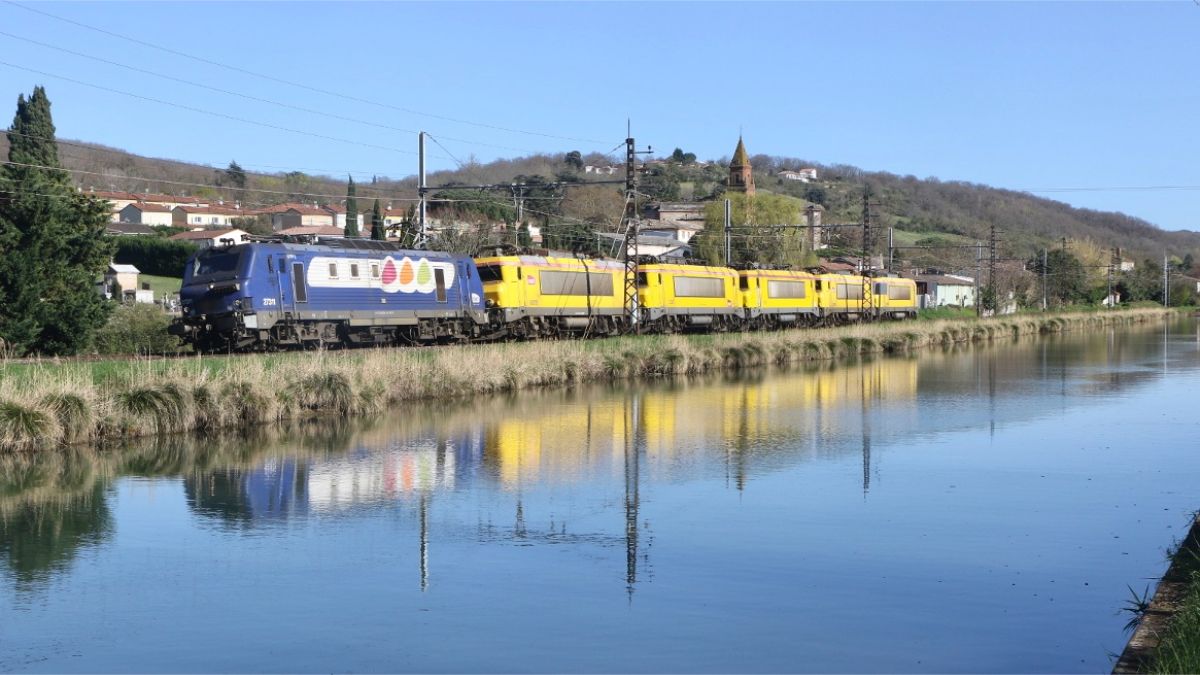
BB 27311 passes Pompignan on 17 March with Infra 66628 Saint-Jory – Hourcade consisting of BB 22292/22367/22383/22300 and 22302. Photo: Georges Turpin.
On 15 March, Tours – Loches reopened following completion of the second phase of upgrading begun in 2021. The 13km between Reignac-sur-Indre and Loches (pictured) has been relaid, four turnouts renewed, drainage improved at 21 sites, decking replaced on the viaduct at Esvres-sur-Indre, and emergency phones provided at 14 level crossings; cost €23 million. Infrastructure is now fit for 110km/h running. The line has suffered a substantial loss of traffic over the past 10 years compared with growth elsewhere in Centre-Val de Loire. Buses run more frequently than the trains (six A/R) and at similar times, with a €3.40 fare against the train’s €10.30. Officials point to a rosy future when the line becomes part of Tours’ SERM. ..
Agen agglomération has agreed with SNCF Réseau to make available a 60Ha worksite for the Bordeaux – Toulouse LGV at Sainte-Colombe-en-Brulhois, west of the city and close to the Gare TGV location at Brax. In the initial two-year study phase, annual rental will be €100,000; thereafter it will be €1.2 million.
Service resumed between Grenoble and Valence on 14 March following repair of the collapsed retaining wall at Poliénas. Work will continue overnight until the end of May, the last train of the day being replaced by a bus. With renewal of 100m of track and OHL, the total cost is €1 million.
Avignon – Pont-Saint-Esprit trains are suspended on weekdays until 3 July during track replacement between Saint-Gervais and Bourg-Saint-Andéol (25km), part of a €230 million upgrade of the Rhône Rive-Droit line. The project is independent of the works being carried out for reopening six stations for extension of the service to Le Teil (see January News). Reopening dates are: Villeneuve-lès-Avignon end 2027, Roquemaure end 2028, and Laudun-l’Ardoise, Aramon, Remoulins and Marguerittes by 2030.
This month sees completion of work on the 780m Angoulême tunnel, part of the €15.4 million project to provide 4m clearance in four tunnels on the classic main line between Poitiers and Bordeaux. A 198m section of the arch was strengthened with sprayed concrete and stiffeners installed. This will allow the route to be used by Brittany Ferries’ Cherbourg – Bayonne ferroutage service. Work in the other tunnels will be completed next year. Currently diesel-hauled throughout and running via Niort, the train will then change to electric traction at Saint-Pierre-des-Corps and take the Midi main line.
At Arcachon no trains ran between 10.00 and 16.00 for several weeks until 20 March when overnight engineering work was shifted to daytime after protests by residents, a move that angered passengers faced with longer journey time by replacement bus. The station is being replanned and resignalled for its role as terminus of Bordeaux’s cross-city Line F41, along with provision of siding space for nine Regio 2N sets, a light maintenance area, and lengthening bay platform 4 to accommodate a TGV.


Beard management plan scrapped
The leaked guide was hastily taken down, SNCF saying it was a ‘working document, unvalidated…and not representing our values’. Sud-Rail pointed out that employment contracts mention only wearing of the regulation uniform. ‘Nowhere is it stipulated that workers must adapt their body, their silhouette or their appearance to the aesthetic requirements of the company. Nowhere is it expected that makeup, beard management or morphology would be professional criteria’.
Cartoon: ©Atlantico.fr. Image: Sud-Rail.
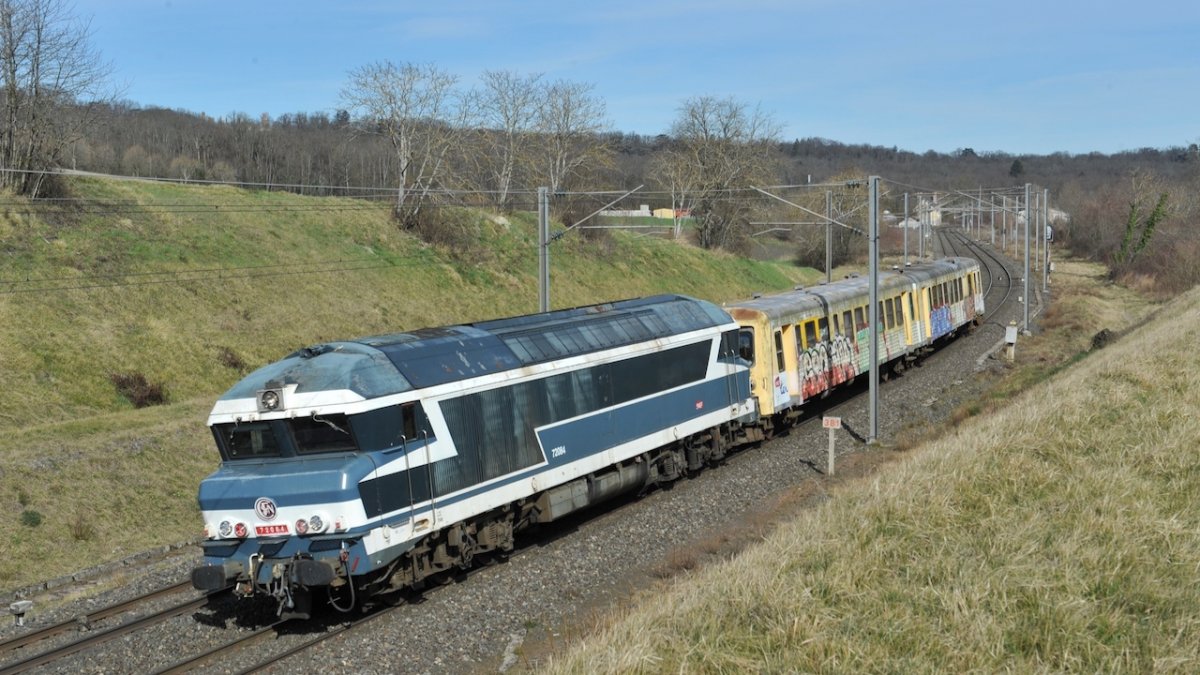
On 24 February CC 72084 returned to service, having been out of action for some months, when it hauled X 4786 (formerly of the Auxois CFT) from Les Laumes to Pont-de-Dore (for the Haut-Forez CFT at Estivareilles) via Dijon, Nevers, and Clermont-Ferrand. Seen above passing Km 381on the Bourbonnais line, near Radan, north of Clermont Ferrand. Photo: Jean-Louis Poggi.
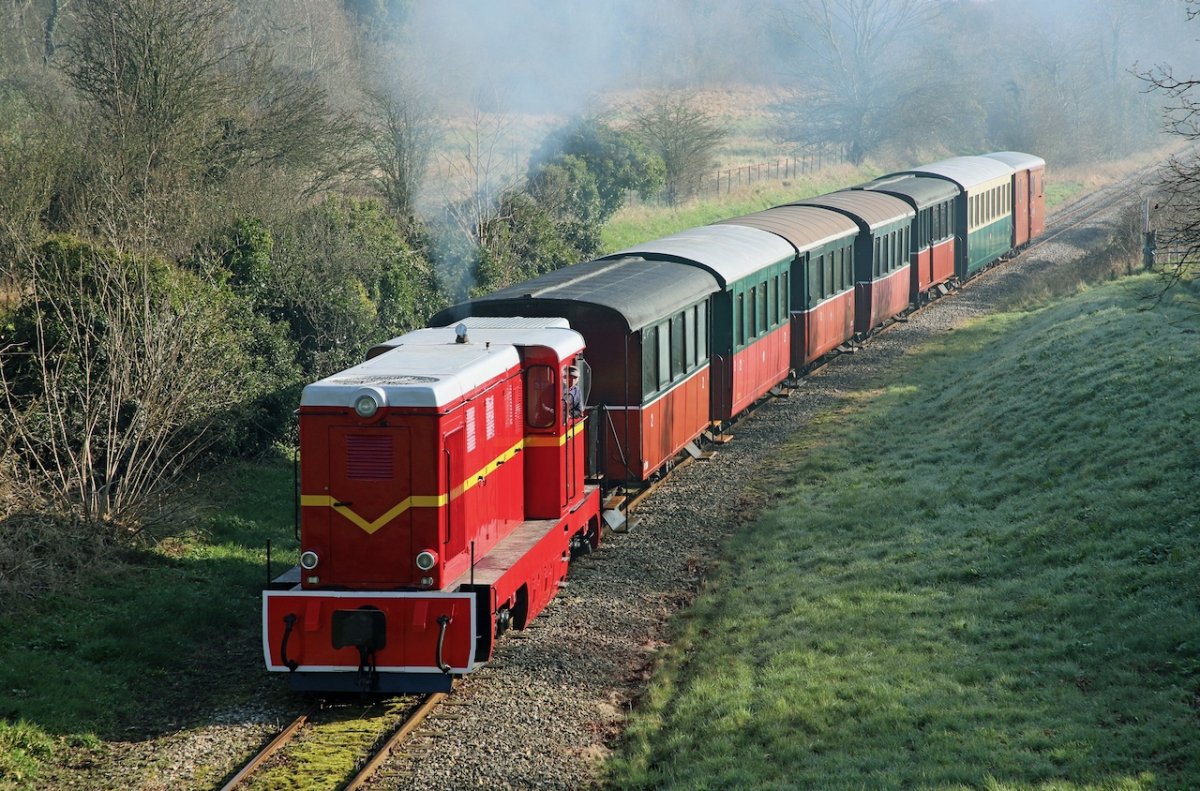
CFBS's latest Faur L45H acquisition, former PKP 326, has now had its wheels reprofiled and the bogies refitted. On 4 March it was used for a driver training day and is seen climbing away from Saint-Valery en route to Cayeux.
On the 20 March former Réseau Breton E 327, now preserved by GECP at Puget-Théniers in PACA, was the first of the visiting locomotives to Arrive at Saint-Valery for the forthcoming Fête de la Vapeur 2026 over the weekend of 25/26 April. The opportunity was taken to bring it alongside classmate E 322, currently awaiting restoration. Photos: Jocelyne Bourneuf.

BB 15001 Portes Ouvertes at Strasbourg Technicentre – 25 April
Association de Préservation du Patrimoine Ferroviaire de l'Est (APPFE) is organising public viewings of BB 15001 on Saturday 25 April from 10.00 to 18.00, divided into eight one-hour presentation slots. The event will take place at SNCF’s Grand-Est Technicentre, 19 rue Georges Wodli, 67000 Strasbourg. The programme for visitors is:
● Presentation of the association’s aims and projects;
● Guided tour of the locomotive, with technical explanations and historical anecdotes;
● Q&A session with the volunteers.
Registration is mandatory but free, donations welcome.
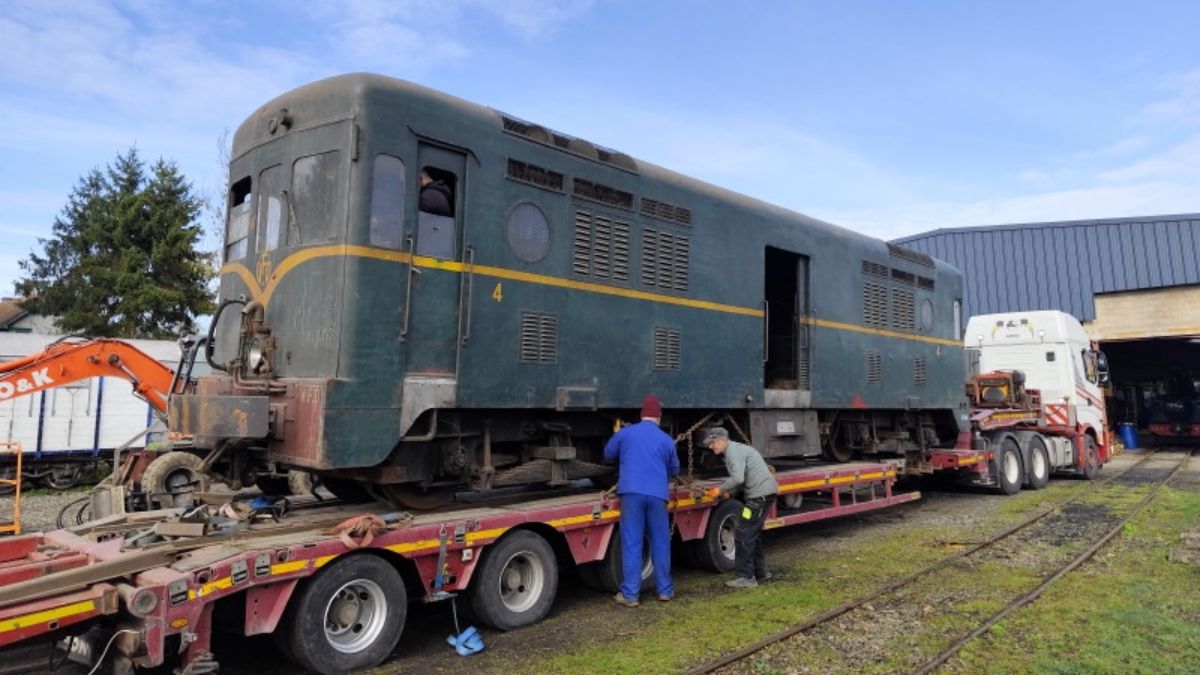
Historic rolling stock from the Chemin de Fer de La Mure in Isère has been dispersed to preserved railways. On 12 March Brissoneau et Lotz T4, once used for shunting at Saint-Georges-de-Commiers, is seen above arriving at MTVS's Crevecoeur site. Originally built in nearby Creil for Les Voies Ferrées du Dauphiné, T4 is returning to the département where it was built. Photo: Olivier Janneau.
Blanc-Argent preservation group SABA has new covered accommodation at La Foulquetière between Écueillé and Luçay-le-Mâle. On 17 February it contained three former La Mure coaches that had originated on the NSTCM - TPN at Noyon. Outside, the trackwork was still to be connected. Photo: Jean-Louis Poggi.


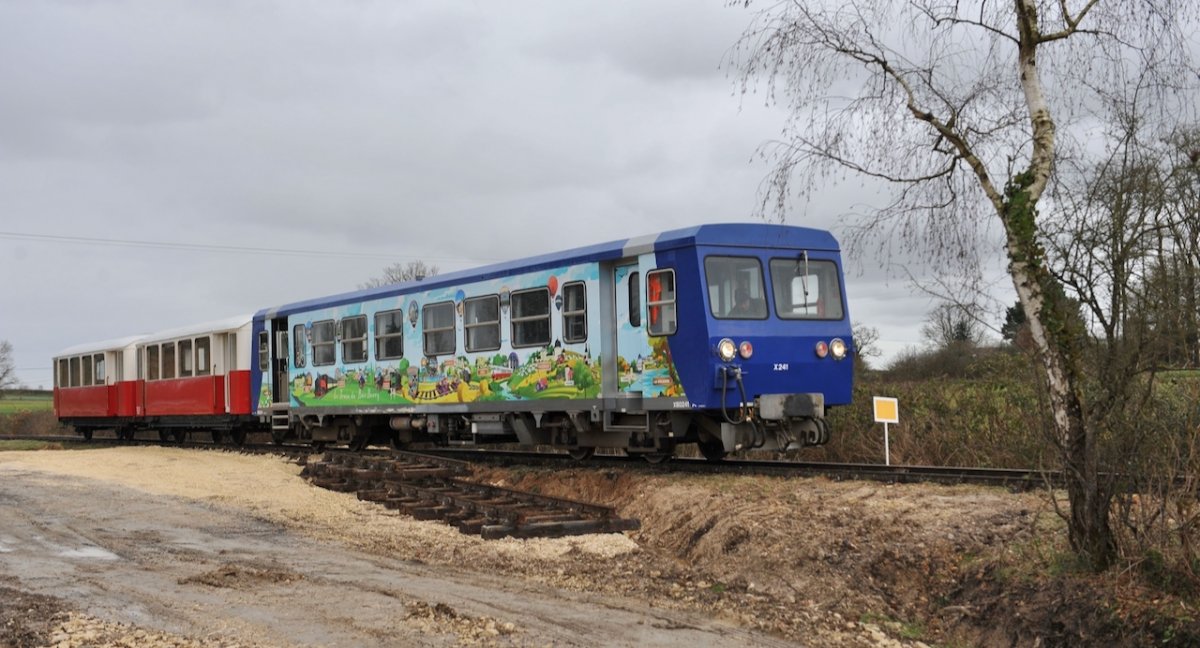
Below. Also on display at La Foulquetière was former Blanc-Argent autorail X 241 (built 1981), recently put back into operation. Picturesque vinyls have been applied and it is scheduled for the Train de la Chasse aux Oeufs on 6 April. Photo: Jean-Louis Poggi.
Urban Rail
During his examination by MPs in February, incoming RATP PDG Xavier Piechaczyk said he would aim for Paris transport to achieve world class quality. He would continue his predecessor’s work in restoring high-quality service to all modes and would tackle challenges such as the lack of step-free access to the metro. Only 21 metro stations are fully accessible (Line 14) though a 20-year aspiration for the entire network was announced in 2023. No programme has been set out, but a study of work needed to make Line 6 fully accessible is to be published shortly.
The 2025-29 operating agreement between Île-de-France Mobilités and RATP includes escalators at 20 metro/RER stations, five more than originally planned, but no new lifts.
With the first sections of GPE opening this year and next, RATP is advertising for 3,500 permanent-contract personnel for service in Île-de-France, two-thirds of them operating, engineering and maintenance positions. A further 2,600 jobs are on offer with RATP Dev in France and overseas. As well as encouraging female candidates, RATP has signed its 10th accord for employment of persons with disabilities, in line with its equal opportunities policy.
To encourage more staff to work weekends, in this year’s pay negotiations RATP is offering metro drivers an increased bonus. The Saturday premium would rise from €10 to €30 by the end of the year and Sunday’s lump sum of €51.46 would be paid from the first day worked instead of after 12 Sundays as at present.
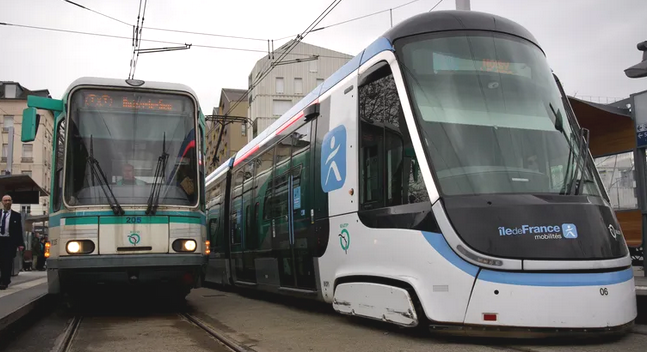
Friday 6 March was the last day of operation for Paris’s oldest trams, the TFS (French Standard Tram, above left) introduced when T1 opened between Bobigny and Saint-Denis in 1992, heralding the new era of Paris tramways. Photo: Franceinfo/ED.
Transilien. The network has received a five-year Cap’Handéo certification in recognition of efforts to ensure that persons with a disability are catered for at all stages of a journey, even when services are disrupted. Each day, Transilien provides assistance to 34,000 passengers, with nearly 300 stations now fully accessible including 43 added in 2024-25. Transilien director Alain Ribat said “Everything is not yet perfect, but we are working on continuous improvement for our customers with reduced mobility”. Photo: Franceinfo/ED
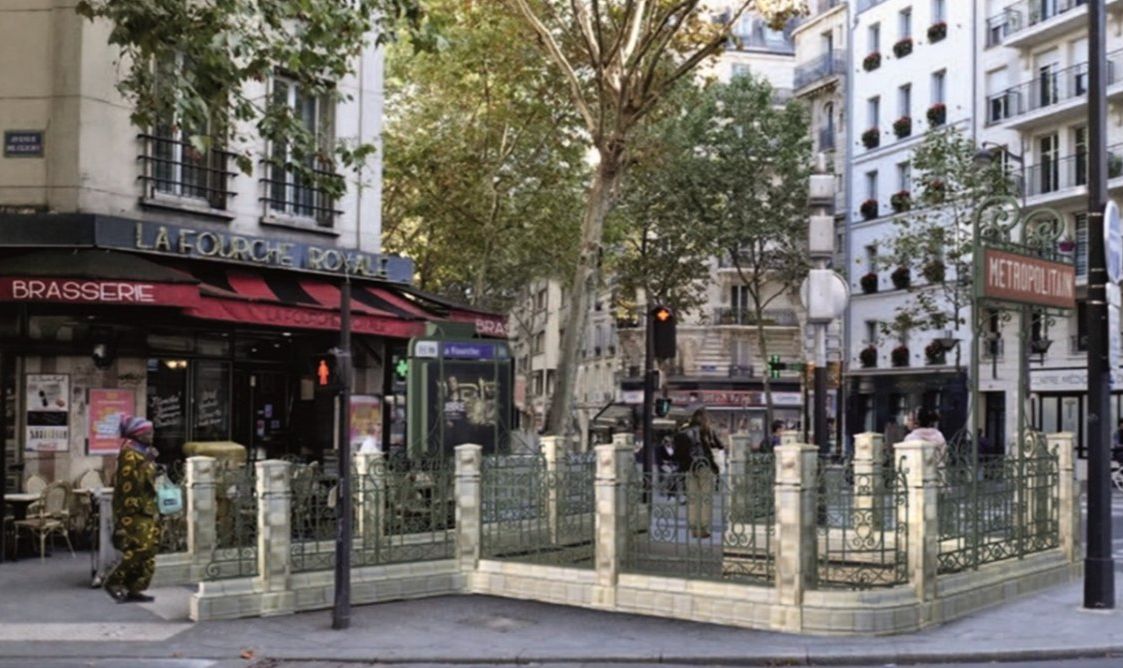
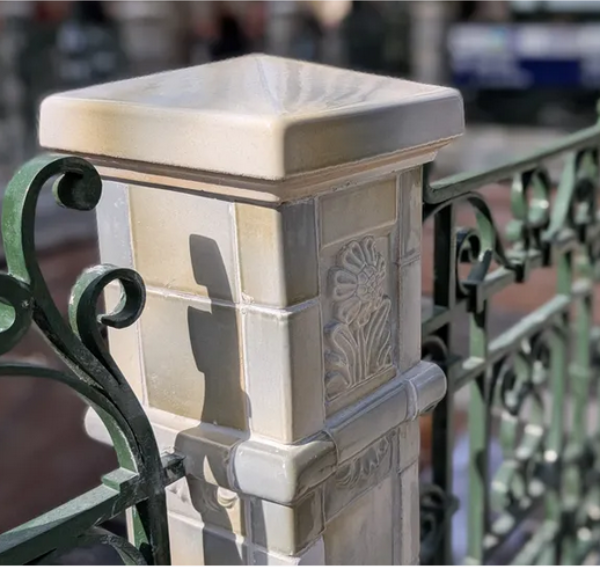
Hidden by concrete walls since being hit by a bus in 1964, the art deco entrance to La Fourche station on M13 has been restored. RATP sought expert advice in renovating the ironwork and tiles, of which some 3,000 were recreated by artisans. Paris city financed the €700,000 works. Photo: RATP.

Champigny RER Line A station has been renamed Saint-Maur-Champigny to reflect its location in the commune of Saint-Maur-des-Fossés where major redevelopment is taking place. The aim is also to avoid confusion with Champigny-Centre, Bry-Villiers-Champigny and Saint-Maur-Cretéil stations on GPE Line 15.
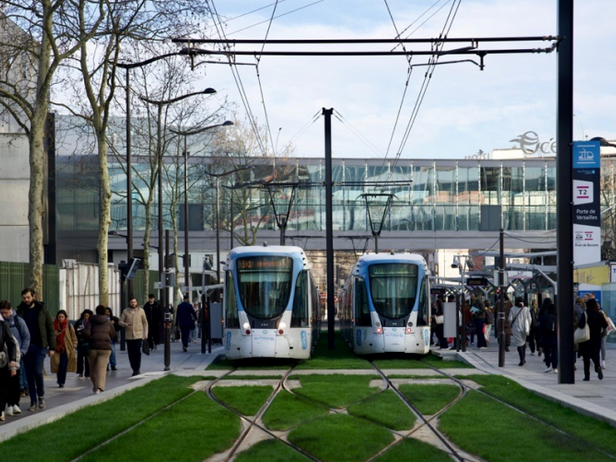

After a year’s work, the new T2 terminus at Porte de Versailles was opened on 20 February. Paris’s second-busiest tram route (230,000 passengers daily) has been extended 100m from the old cramped island platform to separate arrival and departure platforms accessed by a scissors crossover, with turnback sidings beyond and a shorter walk to interchange with T3 and M12. The turnback facility will improve reliability of the 3.5min interval peak service. Patronage is set to increase when the adjacent Triangle Tower office complex opens later this year, when three additional double units will be transferred from T7/8 to ease pressure on the T2 fleet. A new control centre for the line has been commissioned at Les Moulineaux. Total cost with associated pedestrian improvements and green space is €50 million. Photos: RATP.
In the next stage of the Octys 2030 programme for installation of CBTC, Alstom has been contracted to install the system on metro Line 8. Completion is scheduled for 2029 when MF19 trains are due to enter service. This is the sixth line to be equipped with computer-based train control.
Lyon. On 14 February T6 was extended northwards from Hôpitaux Est Pinel to La Doua-Gaston Berger in Villeurbane, 5.4km, 10 stops. At La Doua the T6 tracks run up to and connect with the T1 and 4 interchange but the trams terminate a short distance away at Quai 43 and passengers must walk to the main interchange.
After last year’s increases in fines for ticketless travel, TCL stepped up its anti-fraud efforts from 3 March with swoops at busy stations accompanied by a public awareness campaign to remind passengers of the importance of validating their tickets and the free or reduced-price travel available for certain groups. The network loses up to 17% of income on bus and tram trips.

Toulouse. The Line B escalator-replacement programme begun in 2020 will be completed this year. Ten stations have alredy been tackled, Rangueil will be ready this month, with Barrière de Paris, Université Paul Sabatier and Empalot still in progress; 80 excalators have been replaced at a cost of €22 million.
Brest’s tram Route B began operation on 14 February linking CHU La Cavale with Gare SNCF, 5.1km, 11 stops and Route A interchange at Liberté. With express bus Route D introduced the same day, current plans for the network are achieved. Route B cost €225 million.
Additions to FRS Photographic Archive during March 2026
To Photographic section
- A new John Rowcroft gallery to Folder 1
- A new gallery of images of Paris Bastille & Paris Nord in September 1969 to Folder 1 (donated by the Italian Railways Society)
- None
- Photo indexes for both new galleries
© Peter Lovell & Chris Bushell. The French Railways Society 2026. With thanks to Georges Turpin, Christophe Masse, Didier Delattre , Jean-Louis Poggi, Pierre Julien, David Haydock, Jocelyne Bourneuf and Olivier Janneau.
