
July 2026 News
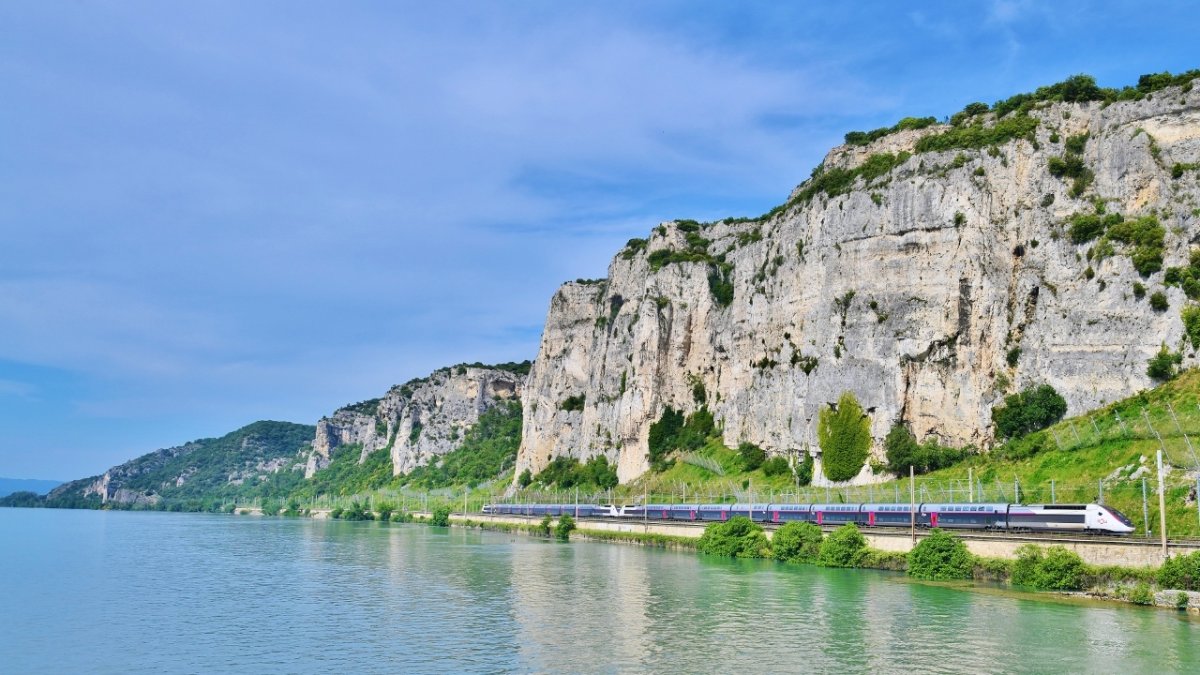
On Saturday 30 May, weekend engineering work on LGV Méditerranée between Valence and Avignon saw traffic diverted via the left bank of the Rhône. In glorious sunshine a pair of Duplex TGVs are seen heading south past the Défilé de Donzère with TGV 6177 14.10 Paris Gare de Lyon – Nice.
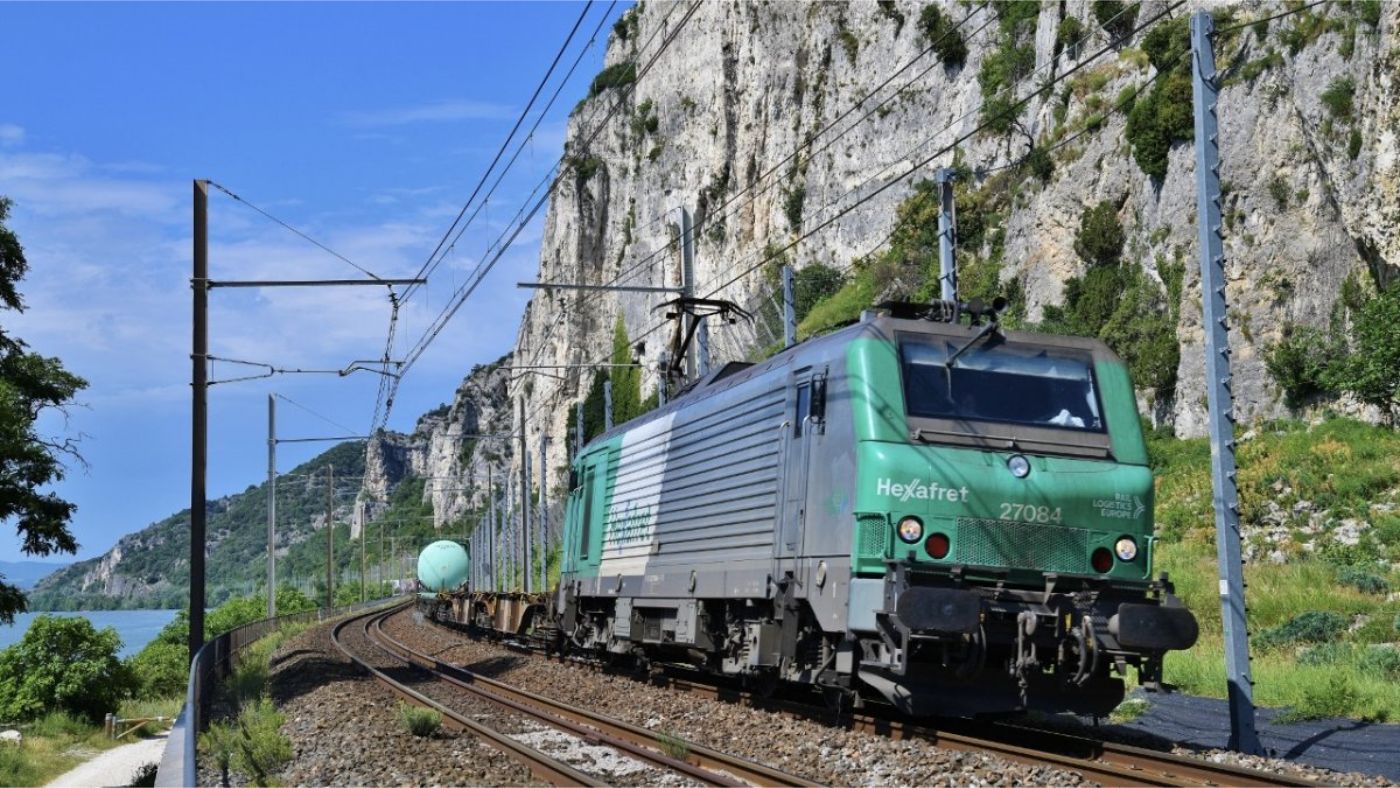
Below. A few days later on 8 June Hexafret BB 27084 passes the Défilés with 49903 Zoufftgen – Le Boulou. Both photos: Pierre Julien.
CDG Express revealed
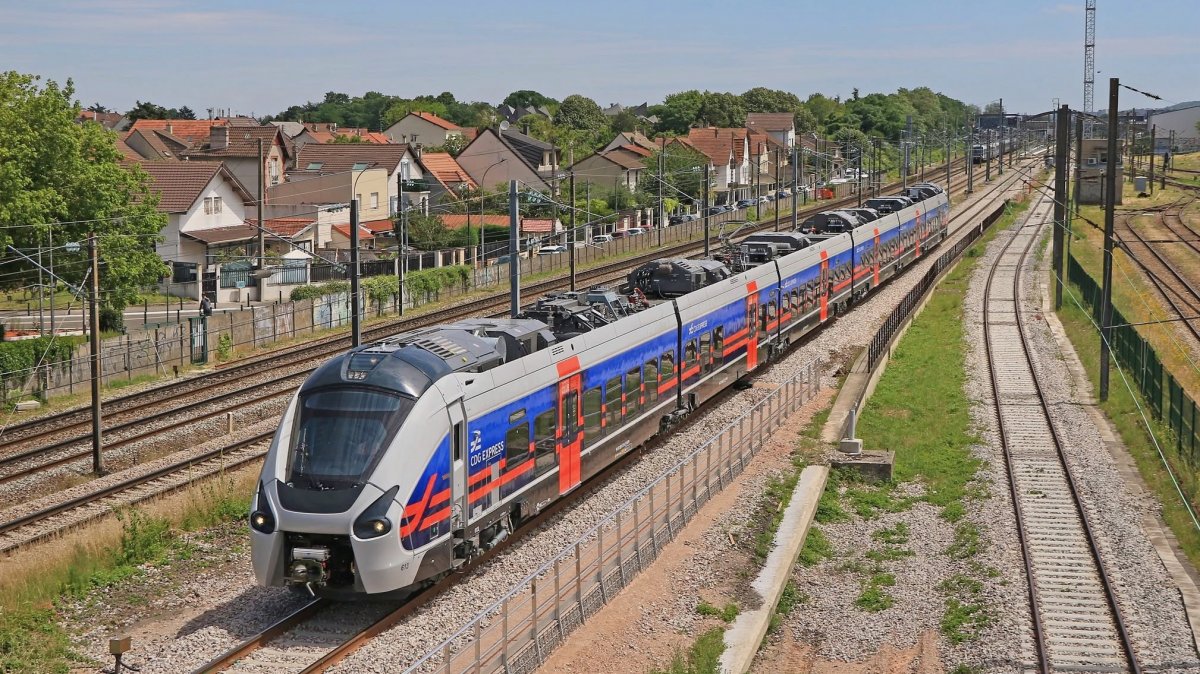
In striking grey and blue with orange doors and stripes, the CDG Express trains were shown to the media at SNCF’s Bobigny Technicentre on 27 May. CDGE and operator Hello Paris set out details of the dedicated airport service due to start on 28 March 2027. Trains will run every 15min from Gare de l’Est to CDG airport Terminal 2 (32km) from 05.00 to 24.00, 365 days a year, journey time 20min, maximum speed 150km/h.
The infrastructure is expected to be handed over to the operator shortly for testing and staff training. Set Z 61613 is seen above running past Le Bourget Yard on 17 June with a test run from Mitry-Claye to Gare du Nord. Photo: Christophe Masse.
An announcement on the fare structure had been long-awaited. The single fare will be €25 (Heathrow Express for comparison £26/€30), against which a family ticket for two adults and two children seems good value at €33; accompanied children under 16 travel free. Return tickets will cost 85% of two singles and Navigo pass holders will travel for €16. Fares for airport employees have yet to be determined, as has the charge for use of a private compartment.
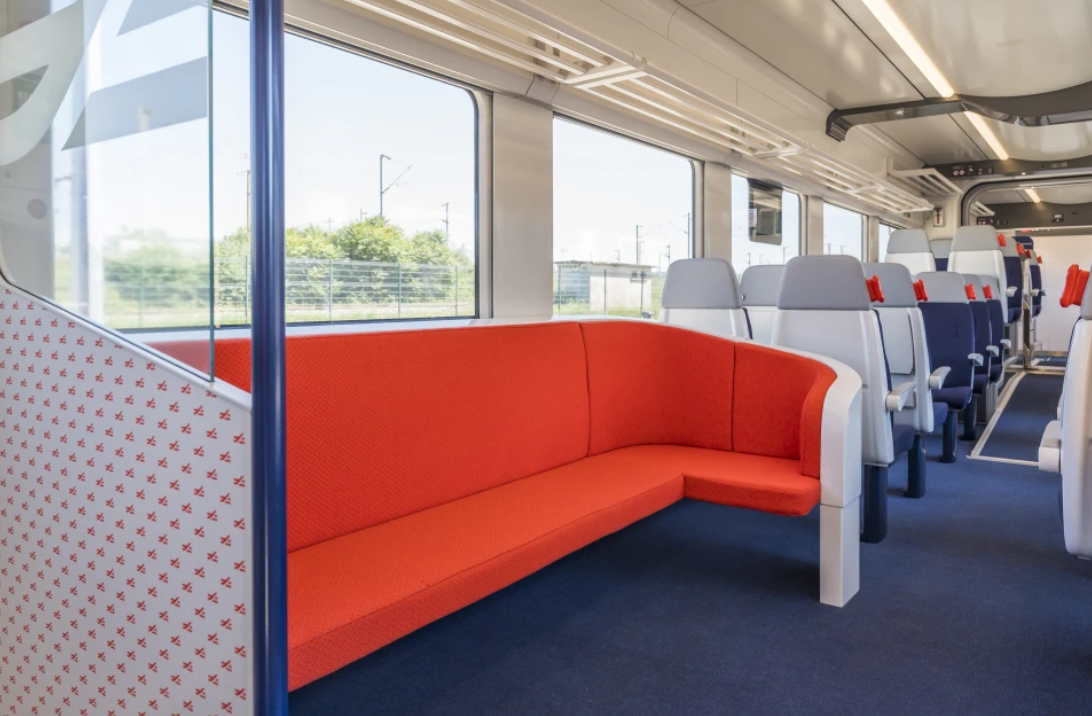
A roomy interior provides air-conditioned comfort and calm, with a variety of spaces for individuals, families and groups, some sofa-style bench seats and a 12-seat reservable private compartment. There is extensive luggage space, a dedicated area for passengers with reduced mobility, toilets and baby-changing facilities, wifi, USB ports and screens showing flight information. Trains will have a bilingual (French/English) onboard manager to assist passengers and serve snacks. All operating staff will be multi-skilled, with drivers and train managers interchangeable according to circumstances. Ten sets are required to run the service, with two in maintenance and one kept on hot standby at Gare de l’Est to aid recovery in the event of breakdown or disruption.
Photos: CDG Express.
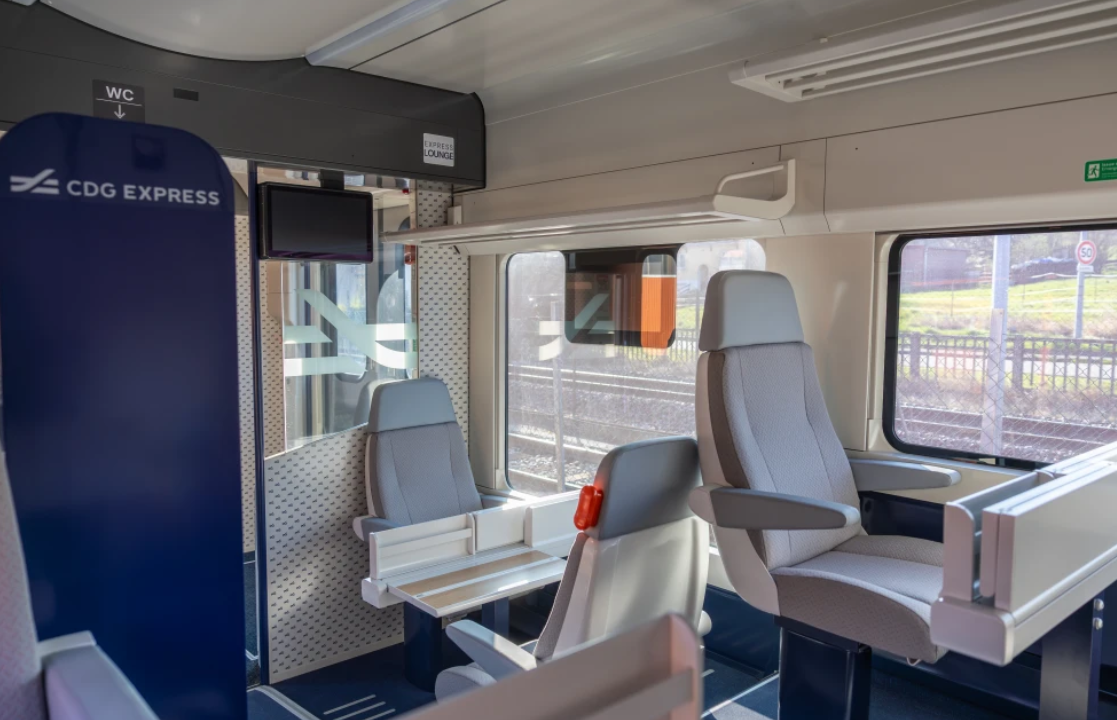
The 13 Coradia Liner (Régiolis) trainsets (seven six-car Class Z 61000, six four-car Z 41000) were ordered from Alstom in 2019, a contract that passed to CAF after Alstom’s purchase of Bombardier. Built at Reichshoffen, the trains were completed and stored whilst construction of the railway, originally to be finished in time for the 2024 Olympics, slipped due to covid and other factors. They will be maintained in a purpose-built facility in the SNCF Technicentre de l’Est at Bobigny.
Hello Paris, a consortium of Keolis and RATP Dev, expects to carry 25,000 passengers a day (up to 8 million a year), taking at least 15% of car and taxi journeys to and from the airport, relieving the congested A1 motorway. It also aims to capture 35% of trips currently made on the RER Line B airport service, thus helping restore Line B to its principal role as a commuter railway.
Hello Paris, a consortium of Keolis and RATP Dev, expects to carry 25,000 passengers a day (up to 8 million a year), taking at least 15% of car and taxi journeys to and from the airport, relieving the congested A1 motorway. It also aims to capture 35% of trips currently made on the RER Line B airport service, thus helping restore Line B to its principal role as a commuter railway.
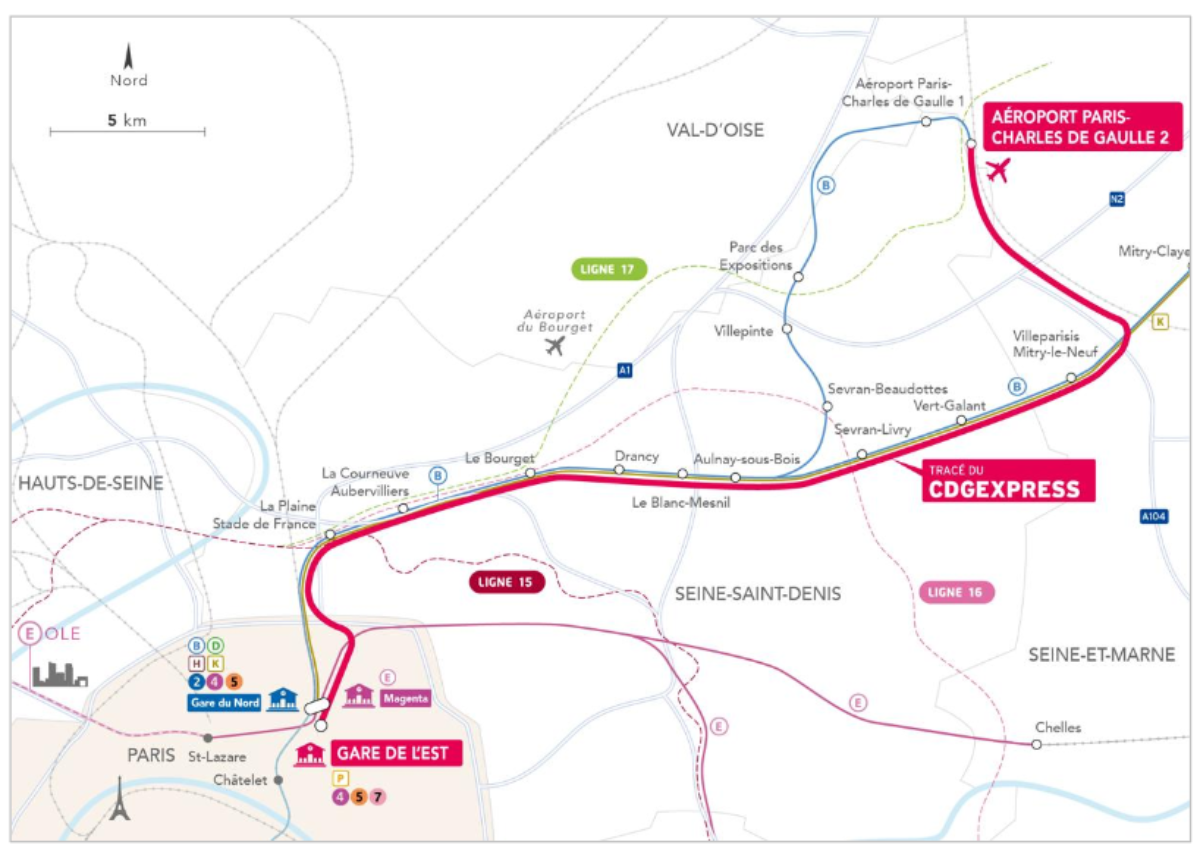
Infrastructure. The previous weekend, SNCF Réseau had switched on power and signalling over the 4.5km of new route between Gare de l’Est and Plaine Saint-Denis, connecting it to the Saint-Denis control centre. Ten signalling installations required modification and testing; 300 staff worked over the 72h possession. Also brought into use were crossovers at Aulnay-sous-Bois and east of Villeparisis station where the 3.5km spur into CDG airport leaves RER Line B by a burrowing junction. The seven-year project has cost €2.6 billion.
Trials are now underway to prove the safety and reliability of the infrastructure, overseen by safety authority EPSF which it is hoped will grant an operating licence by the end of the year. Pre-public services jointly overseen by SNCF Réseau and Hello Paris will then test safety procedures, incident management and other parameters under real-life conditions.
RER B upgrade. In parallel with the airport project, €537 million has been invested in improvements to the four-track section between Saint-Denis and Villeparisis which CDG Express shares with RER B, Transilien Line K and other services. Work included 76km of new or upgraded track and 78 turnouts replaced; creation of turnback tracks at Le Bourget, La Plaine and Aulnay-sous-Bois to improve resilience; modernisation or replacement of several bridges; and provision of additional siding space for RER B trains at CDG.
Map: SNCF Réseau.
Bretagne moves to biofuel
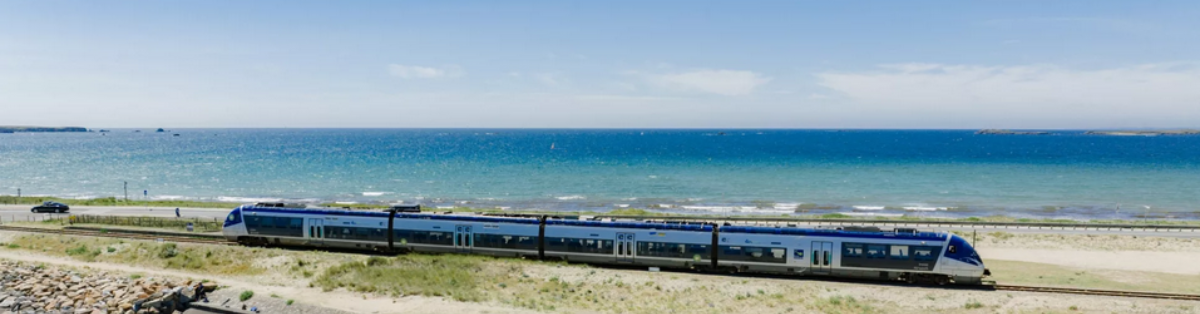
Auray – Quiberon (the Tire Bouchon line) carried 173,000 passengers to and from the seaside in 2025, its 40th year of operation. The long-awaited rebuilding starts in mid-September, a €54.5 million project financed jointly by the State, Région Bretagne, Auray Quiberon Terre Atlantique communauté and SNCF Réseau. The work is aimed at future-proofing infrastructure against rising sea levels. Culverts will be installed to divert surplus water that might otherwise cause washouts. Track will be completely rebuilt, with 53km of new rail laid and ballasted. Service will resume as usual in June 2027, prior to signalling work planned for early-2028. Introduction of year-round service is ‘not ruled out’ the région says ‘if locals can demonstrate a real need’. Photo: SNCF Voyageurs.
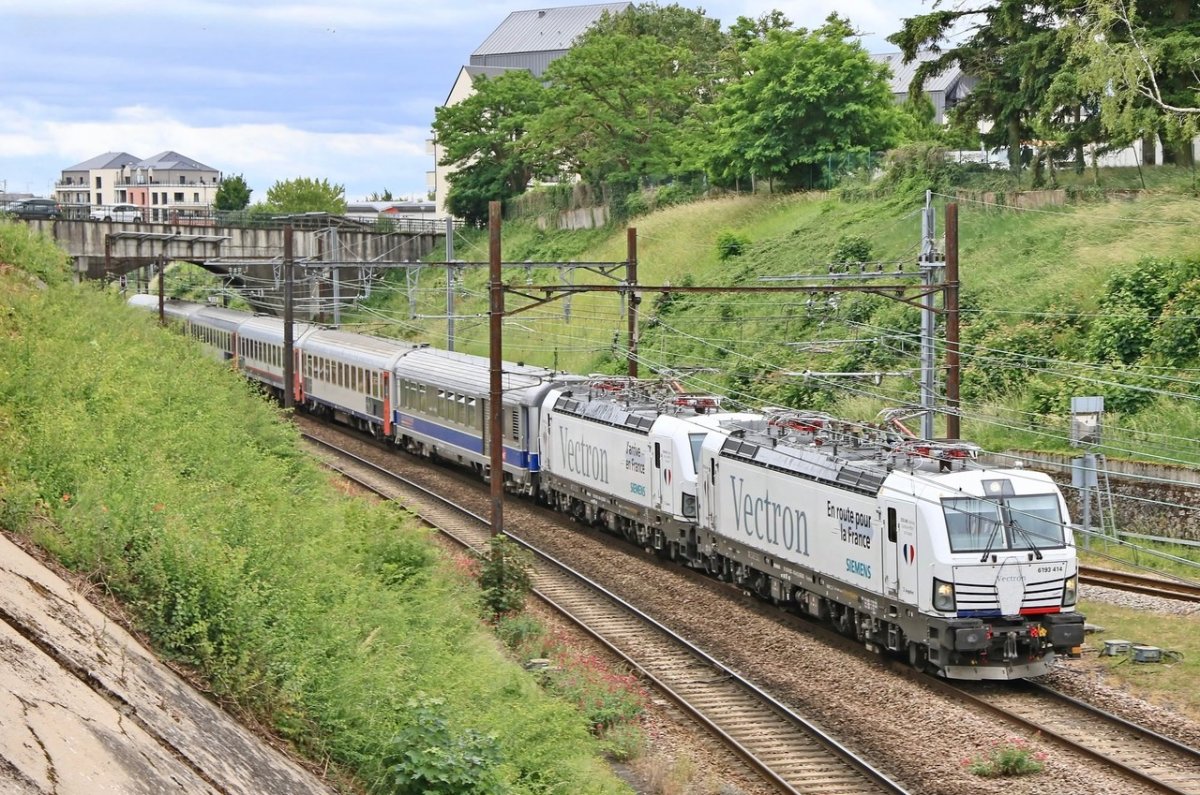
In early June, Siemens Vectrons 'Angéline' and 'Sophie' undertook 200km/h testing between Vierzon and Les Aubrais. Operating in multiple, the pair are seen approaching Les Aubrais with the AEF (Agence d'Essai Ferroviaire) test coach and five SNCB I10 vehicles. The single line on the right provides direct access to Orléans gare from the south. Photo: Christophe Masse.
SNCF contract out for consultation
One new element is the decision to index the sum to inflation, so that the level of input does not diminish over time. The contract also sets additional performance indicators for SNCF Réseau, up from 33 to 44, and it must commit to reducing debt while carrying out more work, in exchange for State funding.
After 2032, the additional funding will come from hypothecation of motorway tolls, as laid out in the framework law (see May News) which the transport ministry hopes will pass the National Assembly before the summer. Until this new money is available, €500 million per year will come from SNCF Group profits, the remainder from sources yet to be firmed up: possibly a mix of energy savings certificates (CEE), additional funding from the EC, and private-sector investment, particularly for ERTMS projects.
Régions take dim view of proposals
Nouvelle-Aquitaine was the first région to give its views. Meeting in plenary session on 15 June, the council voted for ‘a more ambitious contract’, citing its own requirement for €2 billion over 10 years to finance infrastructure renewal. Transport vice-president Renaud Lagrave described the current model as “neither financially sustainable for the régions nor effective in guaranteeing equality between régions”. The council felt the proposed settlement would not achieve its stated aim of increasing spending sufficiently to guarantee the long-term stability of rural lines, and drew attention again to the very high access charges projected for the years to 2033. Along with the Association des Régions de France, he supported the return of responsibility for maintenance and modernisation of dessertes fines to SNCF Réseau.
Budgetary restraints have already led Nouvelle-Aquitaine to withdraw ‘top-up’ spending on unplanned maintenance and emergency works. As a result, five lines are thought to be at risk of closure: Agen – Périgueux, Tulle – Meymac, Brive – Objat, Guéret – Montluçon and the Médoc line from Bordeaux to Le Verdon.
Other régions will make their views known over the coming weeks; some like Bretagne and Grand Est are likely to support the ARF verdict which will be released in early July. According to media reports, opinions are all expected to be unfavourable.
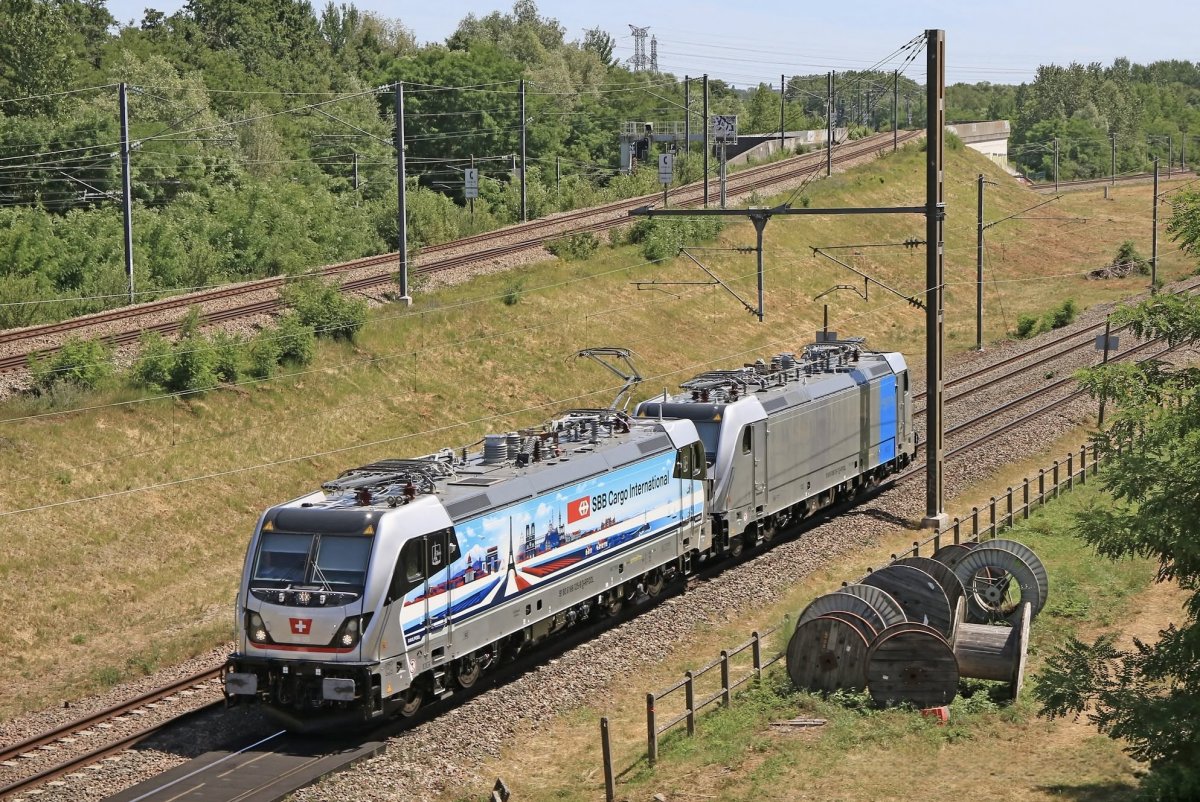
Swiss operator SBB is the latest to enter the French freight market with SBB Cargo International taking over the Novatrains intermodal service from Noisy to Novara (Piedmont) formerly operated by Hexafret. SBB has leased five Traxx 3 MS locomotives from leasing company Railpool to operate the service between Noisy and Muttenz (Basle). On Sunday 14 June a pair of Traxx 3 loco led by appropriately decorated !88-125 made a positioning move from Mulhouse to Vaires in readiness for the first scheduled train on 16 June, seen above at the foot of the LGV Est Européenne high-speed line at Vaires-sur-Marne. Photo:Christophe Masse.
SNCF the only bidder for Paris radials
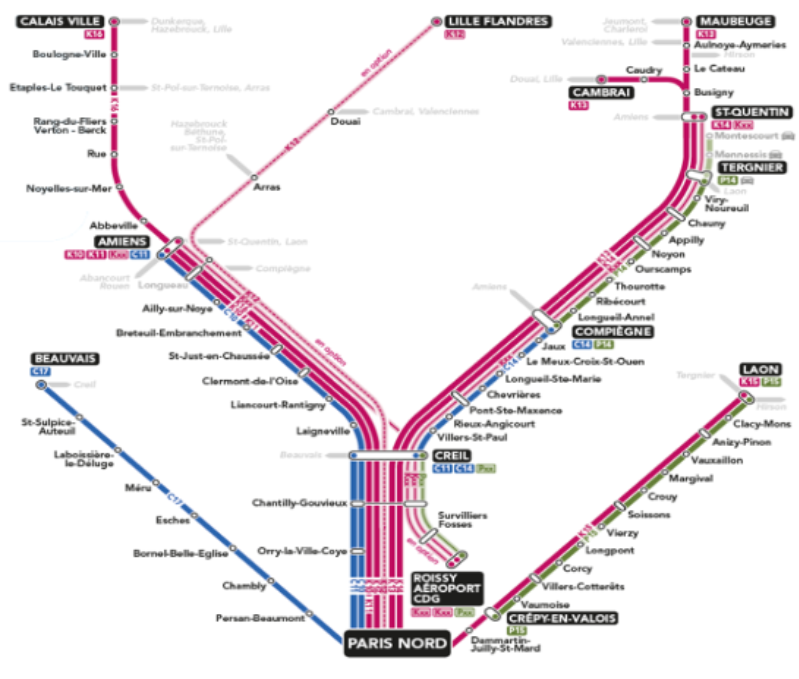
TERs from Paris Gare du Nord to Beauvais, Amiens/Calais, Maubeuge/Cambrai and Laon, Hauts-de-France région’s ‘Paris radials’, will be operated by an SNCF Voyageurs subsidiary for 10 years starting in December 2027, contract value €3 billion. The pre-operating period starts immediately. Announcing the award on 28 May, HdF transport vice-president Christophe Coulom said that though SNCF was the only bidder, it had “taken risks in terms of quality and improvement in its offer”. Nevertheless, he said “I would have liked greater collective pressure [from competing bidders]. Perhaps in 10 years there will be other candidates". The lack of interest in France’s second-largest operating contract was attributed to the complexity involved in working out of Gare du Nord.
The Lot comprises eight routes serving 70 stations and around 70,000 passengers a day. The new operator will take on 103 trains currently running 205 services daily, and 1,700 personnel. Also included are new services over several routes to Roissy-CDG Aéroport over the Roissy-Picardie link opening in December 2028.
SNCF’s offer was based largely on improved performance (98.5% punctuality against 96% today) and environmental gains, though there will be 143 additional trains per week, mainly Sunday extras on lines struggling to accommodate growth in weekend travel. Penalties are tightened, the maximum rising from €1.6 million to €3.6 million, and €1,500 for cancellation of a peak-hour train. There is also an aspiration to be carrying 14% more passengers by 2037.
This is SNCF’s second win in Hauts-de-France; it already runs Étoile d’Amiens services. Two more lots are open for bidding: the Étoile de Saint-Pol and Nord-Pas-de-Calais lines, expected to be awarded in 2027 and 2028. Map: SNCF Voyageurs.
NA tenders two more lots
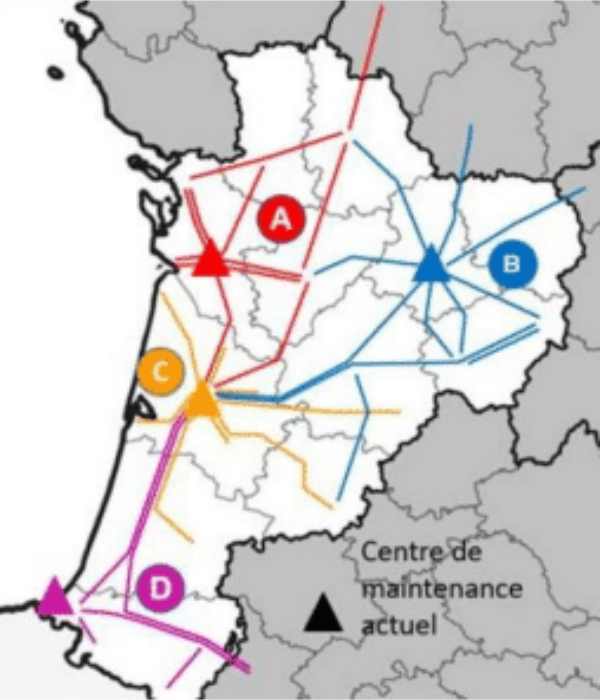
Nouvelle-Aquitaine launches the tender process this summer for TER Lot B Limousin-Périgord and Lot D Sud Aquitaine, 10-year contracts to begin in December 2030 and December 2031 respectively. Lot B comprises:
● Local trains on the POLT main line northwards from Limoges to La Souterraine and south to Uzerche and Brive.
● Limoges to Guéret and Montluçon, Ussel, Saint-Yrieix, Périgueux/Bordeaux, Saillat-Chassenon and Poitiers.
● Périgueux – Le Buisson – Agen, the F32 Mussidan – Périgueux – Niversac shuttle, and (Bordeaux) – Périgueux – Brive.
● Brive – Tulle and Ussel, and Brive – Objat.
● Limoges to Guéret and Montluçon, Ussel, Saint-Yrieix, Périgueux/Bordeaux, Saillat-Chassenon and Poitiers.
● Périgueux – Le Buisson – Agen, the F32 Mussidan – Périgueux – Niversac shuttle, and (Bordeaux) – Périgueux – Brive.
● Brive – Tulle and Ussel, and Brive – Objat.
Total 11 routes, currently served by 252 trains daily carrying 13,000 passengers, 7.4 million train-km/year. Bidders are expected to offer at least 20% more trains overall, up to a maximum of 10.4 million train-km/year. The new operator will take over the MU fleet based at Limoges, along with maintenance facilities. NA hopes to award the contract in January 2028 with the usual 18-month pre-operation period beginning in mid-2029.
Lot D Sud Aquitaine is the Bordeaux – Dax/Hendaye/Tarbes service on the Midi main line, (Pau) – Puyoô – Bayonne and the branches to Saint-Jean-Pied-de-Port and Bedous. Total five routes served by 97 daily trains carrying 12,300 passengers. Oddly, the Bordeaux – Mont-de-Marsan service, running 109km on the main line before branching off at Morcenx, is not included, being part of Lot C l’Étoile de Bordeaux. This lot includes Bordeaux’s developing SERM services; a tendering date has yet to be specified.
Map: Région Nouvelle-Aquitaine.
Visiting Saintes on 28 May, SNCF PDG Jean Castex signed the 10-year contract with NA for operation of the région’s first tendered services, Lot A Poitou-Charentes. New subsidiary SNCF Voyageurs Terre Atlantique will be based in Saintes.
Unions fight contracting out
Unions believe staff are pressurised by reorganisation to meet competition; SNCF said none of the 13 had faced transfer or redundancy. Accidents at work have increased by 50% since 2022 and another reason for the strike was to protest against SNCF’s move to link staff performance payments to the number of incidents.
Equal rights were demanded for personnel in the new subsidiaries taking over TER services having won competitive bids. Existing staff transferring have their pay and conditions preserved for 15 months, after which they have to renegotiate revised terms and conditions. There was also a call for a pay rise on the grounds that increases negotiated for 2026 have been wiped-out by inflation resulting from the Middle East war. SNCF said it had guaranteed a 2026 premium of €1,450 for all staff and that none is hired at or paid less than the minimum wage (the SMIC, now €1,867.02 gross per month) plus10%. On 23 June, SNCF announced that a €100 premium would be added to the July pay of every staff member. In addition, it will expand its human resources capability by hiring 100 additional personnel.
With the Hauts-de-France ‘Paris radials’ contract awarded last month (see above), SNCF has taken 11 of the 15 service groups so far tendered. Bretagne and Occitanie have yet to launch tenders, a process that must be completed by 1 January 2034.
Oyonnax revived
After a 10-year campaign by locals and a €5 million track upgrade, on 24 August AURA région is introducing 26 additional trains per week to and from Bourg-en-Bresse, ending the unbalanced service of three trains out from Oyonnax in the morning with no return between 08.45 and 17.30. There will now be five A/R on weekdays, three at weekends, timed for better connections to Lyon and with TGV Lyria to Paris at Bourg-en-Bresse. Weekday departures from Oyonnax will be at 06.38, 07.33, 10.46, 14.41 and 18.37, returning from Bourg-en-Bresse at 06.21, 08.45, 12.32, 17.30 and 18.38. The current 12.38 departure is replaced by a bus. Passengers’ group Fnaut welcomed the improvements after ‘10 years of stagnation’ but added: ‘this represents only a minimal step forward. Oyonnax [population 23,000] remains one of the least well-served towns in AURA région’.
Oyonnax is the southern stub-end of the spectacular Ligne des Hirondelles through the Jura from Andelot to Saint-Claude and Bourg-en-Bresse. The 32km between Saint-Claude and Oyonnax was closed in 2017 due to the poor state of its infrastructure. What is now merely a 13km branch to Oyonnax diverges from the electrified Bourg-en-Bresse – Bellegarde ‘Haut-Bugey’ line at Brion-Montréal-la-Cluse. Though the physical junction is here (a single turnout), the station no longer functions as such. The remaining platform is only served by Oyonnax trains. Bourg-en-Bresse to Bellegarde (65km) was rebuilt and electrified in 2006-10 to provide a shorter route from LGV Sud-Est to Geneva, at the same time relieving congestion on the Lyon – Ambérieu – Culoz line.
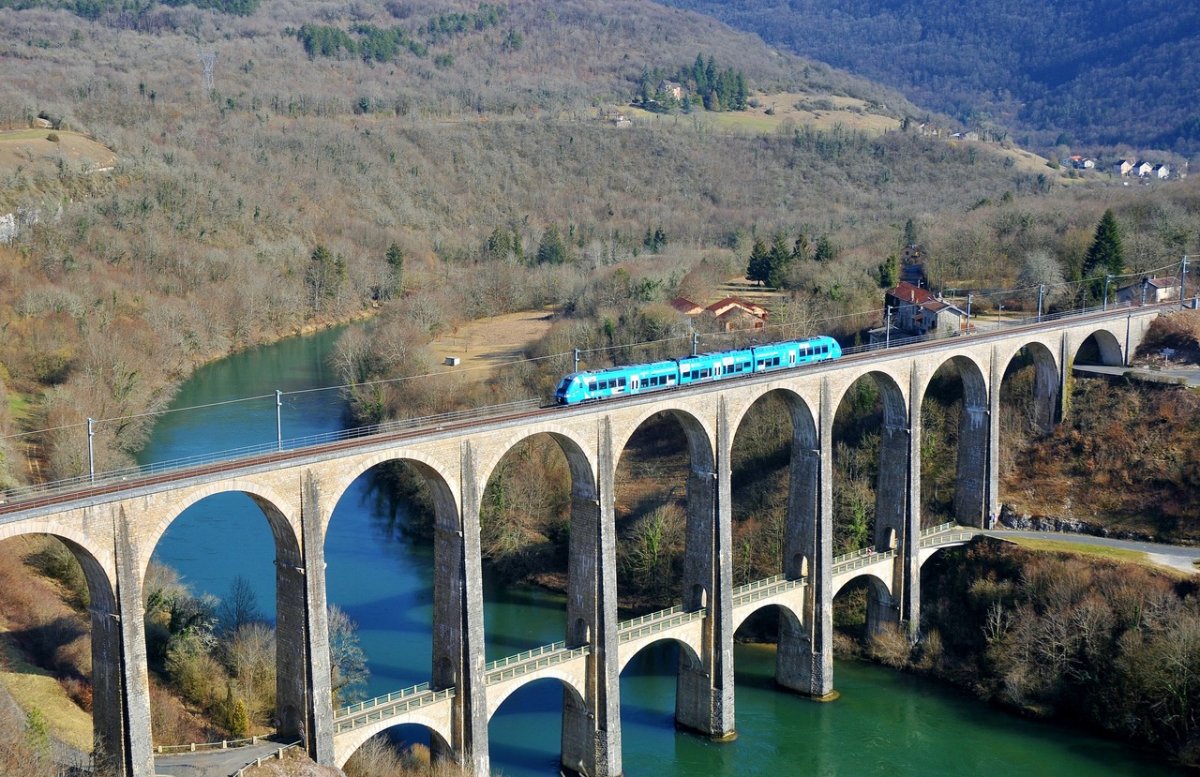
On 20 February 2019, lunchtime TER 886410 Oyonnax – Bourg-en-Bresse crosses the Ain river at Cize-Bolozon on the Bourg-en-Bresse – Bellegarde line. Currently timed to leave at 12.38, for many years this has been the last departure of the day from Oyonnax. Photo: Pierre Julien.

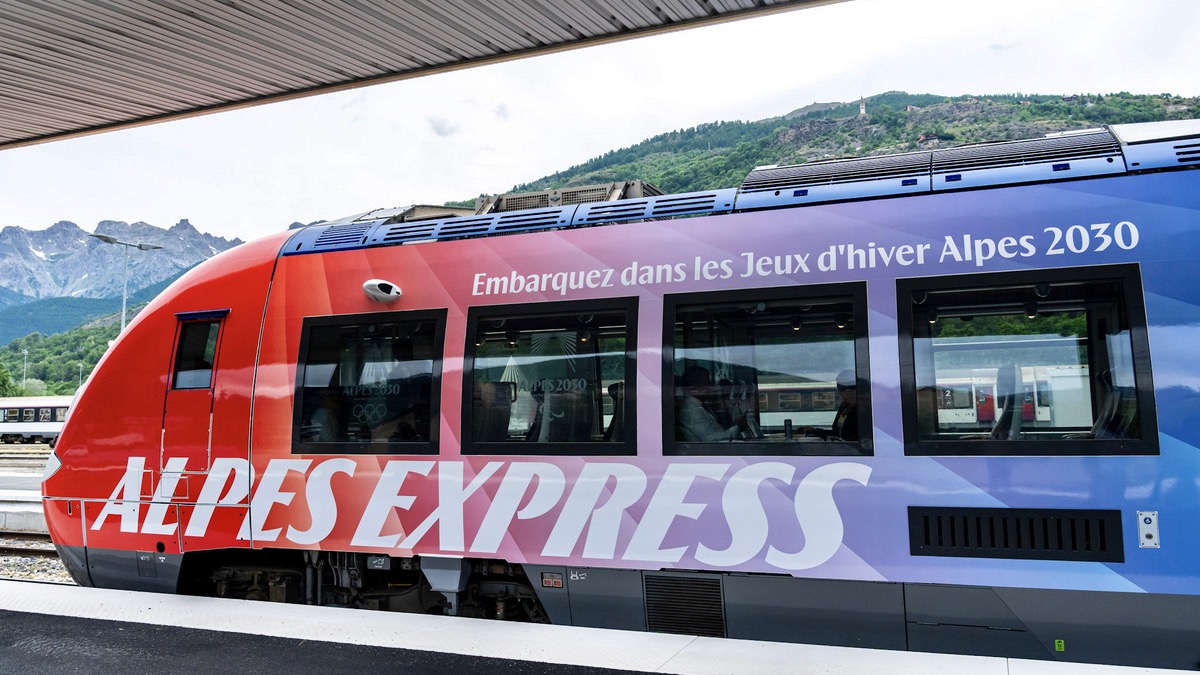
Alpes Express trialled
Région Sud and SNCF Voyageurs ran a special train on 18 June to launch the Alpes Express 3h 40 timing between Marseille and Briançon, scheduled for introduction in late-2029 for the 2030 Winter Olympics. Onboard were the sports minister, local elected officials, an Olympics representative, young people, sportspersons and regional partners. Later at Briançon they took part in a ceremony unveiling the Olympics symbols, marking the start of Sud-Alpes 'everyday involvement' in the Olympics project, the minister said.
B 84605/06 in special livery is seen on arrival at Briançon on 18 June. The special left Marseille Saint-Charles at 12.18 and with just one stop at Manosque reached Briançon at 15.58, shaving around 70min off today's standard timing. Turning a one-off run into daily reality depends on the €342 million Sud-Alpes upgrading project starting next year. Photo: Région Sud.
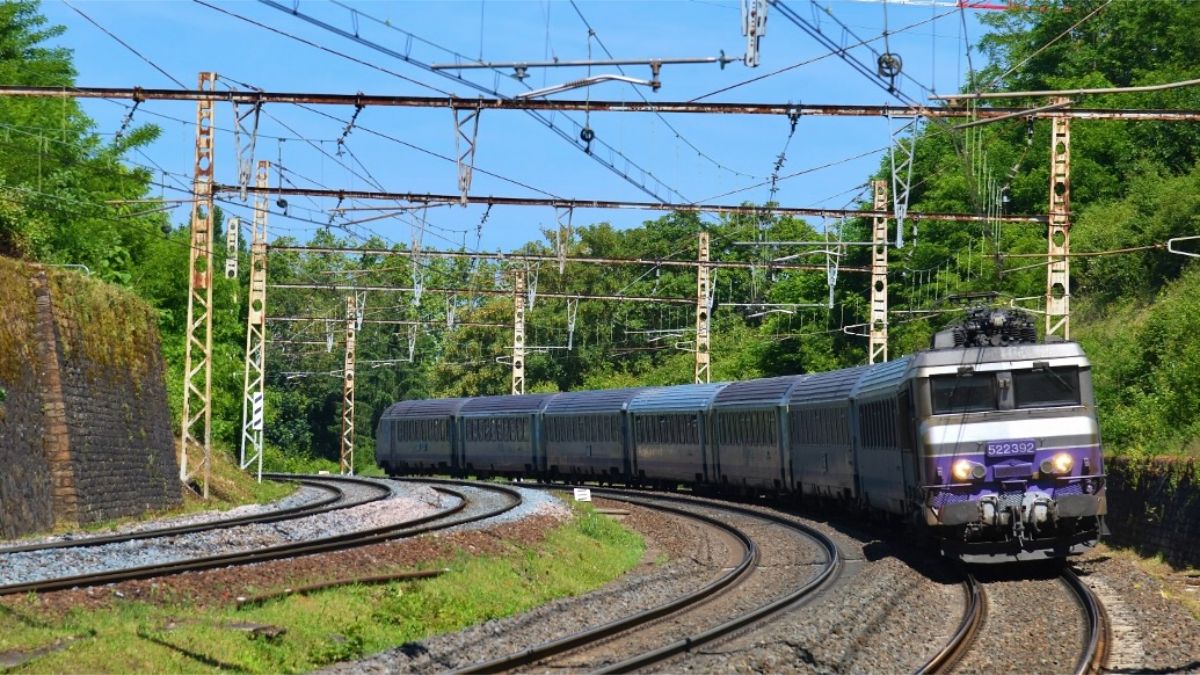
While Intercités cancelled many Corail-operated services during the extreme heat due to concerns over their air-conditioning, AURA and Grand Est continued to operate their large TER fleets of Corail in push-pull formations. Above. BB 22392 passes Albigny-Neuville on 22 May with AURA TER 09.43 Dijon Ville – Lyon Part Dieu. Photo: Pierre Julien.
Extreme heat brings havoc to rail network
Extreme weather hit France again during the latter half of June. The Vapeur du Trieux's season got off to a dramatic start on 15 June, the inaugural train causing a number of lineside fires; the service was immediately suspended. At Guignolez, 70 firefighters worked from mid-afternoon until 20.00 to quell the flames over some 1,500m2. The Guingamp – Paimpol public service was replaced by buses for the rest of the day.
Two days later on Wednesday 17 June, with a further heatwave forecast, SNCF pre-emptively cancelled 71 Intercités trains between Thursday 18 and Monday 22 June on the Paris – Toulouse, Paris – Clermont-Ferrand and Marseille – Bordeaux routes. All the trains were booked to be formed of Corail rolling stock where the air-conditioning is unable to cope when external temperatures exceed 35C and switches off to avoid burning out the motors. With temperatures forecast to be 39C in Paris and 40C-plus further south, there was a risk of rolling stock overheating, causing heat-related illness to passengers. As temperatures continued to exceed those values cancellations were then extended to Saturday 27, and some until Tuesday 30 June.
By 22 June, central and western France was subject to a red alert as temperatures nudged 40C and beyond. Schools were closed and sporting events cancelled, alcohol consumption was banned in public places, and passengers were advised to postpone travel and only make essential journeys. SNCF implemented its heat and water plans. This included 3,500 staff delegated to monitor the effect of the weather on track and OHL and distribute water at stations. At Marseille staff distributed straw hats to passengers. Numerous timetables were 'adapted', generally cancelling afternoon services to preserve infrastructure and rolling stock and avoid staff illness. Bordeaux hit 42C on 21 June, the following day Nouvelle Aquitaine TER announced that virtually all services would be suspended between 10.00 and 18.00. A similar position followed on Occitanie, Pays de la Loire and Centre-Val de Loire TERs.
Two days later on Wednesday 17 June, with a further heatwave forecast, SNCF pre-emptively cancelled 71 Intercités trains between Thursday 18 and Monday 22 June on the Paris – Toulouse, Paris – Clermont-Ferrand and Marseille – Bordeaux routes. All the trains were booked to be formed of Corail rolling stock where the air-conditioning is unable to cope when external temperatures exceed 35C and switches off to avoid burning out the motors. With temperatures forecast to be 39C in Paris and 40C-plus further south, there was a risk of rolling stock overheating, causing heat-related illness to passengers. As temperatures continued to exceed those values cancellations were then extended to Saturday 27, and some until Tuesday 30 June.
By 22 June, central and western France was subject to a red alert as temperatures nudged 40C and beyond. Schools were closed and sporting events cancelled, alcohol consumption was banned in public places, and passengers were advised to postpone travel and only make essential journeys. SNCF implemented its heat and water plans. This included 3,500 staff delegated to monitor the effect of the weather on track and OHL and distribute water at stations. At Marseille staff distributed straw hats to passengers. Numerous timetables were 'adapted', generally cancelling afternoon services to preserve infrastructure and rolling stock and avoid staff illness. Bordeaux hit 42C on 21 June, the following day Nouvelle Aquitaine TER announced that virtually all services would be suspended between 10.00 and 18.00. A similar position followed on Occitanie, Pays de la Loire and Centre-Val de Loire TERs.
In Paris, services were curtailed on the RER and Transilien networks, with only RER A operating normally. Grand Est replaced the remaining non air-conditioned RRR sets on Saverne – Séléstat and Strasbourg – St Dié services with air-conditioned MUs. It was debatable whether replacing the 586-seat double RRR set on the 17.01 Strasbourg – St Dié with a four-car Régiolis providing 220 seats was an improvement, although with people being encouraged to work from home passenger numbers were probably lower.
There were also some major incidents. On 22 June Lyria 9226 16.34 Basle – Gare de Lyon suffered a mechanical failure on the LGV Rhin-Rhône, trapping another train behind. With no functioning air-conditioning, the temperature within the TGV rose to 50C. Passengers were eventually transferred to following train that was already full, reaching Paris at 02.00.
There were also some major incidents. On 22 June Lyria 9226 16.34 Basle – Gare de Lyon suffered a mechanical failure on the LGV Rhin-Rhône, trapping another train behind. With no functioning air-conditioning, the temperature within the TGV rose to 50C. Passengers were eventually transferred to following train that was already full, reaching Paris at 02.00.
By the end of the month temperatures returned to normal, although forecast to increase again in July. With the peak travel days of 3 and 10 July approaching Christophe Fanichet, CEO of SNCF Voyageurs, said he was prepared to "assume responsibility" and carry out further train cancellations if he deemed that "passenger safety was at stake," as well as the safety of railway workers. SNCF would also provide refunds or exchange tickets free of charge should passengers wish to alter their arrangements. A protocol had been introduced that should a train suffer a power failure it would be evacuated within 30 minutes. TGV sets would also carry 500 bottles of water, in addition to water being distributed at major stations.
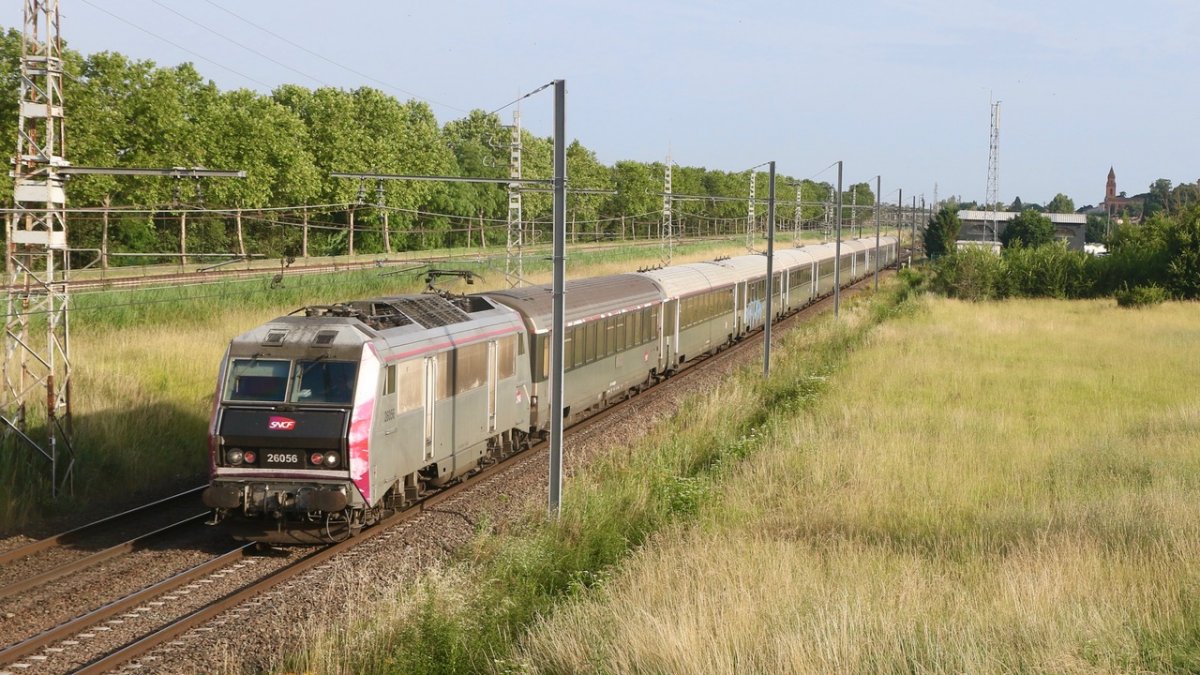
Marseille – Bordeaux services were badly hit by the extreme weather with the three mid-morning/afternoon services in each direction cancelled over several days. On Saturday 20 June, scruffy BB 26056 with an equally scruffy set of coaches is seen near Castelnau-d'Estrétefonds north of Toulouse with IC 4655 06.10 Bordeaux – Marseille. This was the first and penultimate service between Bordeaux and Marseille that day. IC 4657 08.07 Bordeaux ran as scheduled but the three following services were cancelled due to the very hot weather. An electrical outage at Toulouse saw late afternoon departures also cancelled. On the opposite direction, only IC 4752 06.35 Nîmes – Bordeaux and IC 4756 07.19 Marseille – Bordeaux ran. Photo: Georges Turpin.
News in brief
Brussels – Basle. First fruit of the further co-operation between SNCF and SBB will be extension of a Brussels – Strasbourg TGV to Basle starting on 27 July 2027. On Fridays and weekends, TGV 9870 07.17 from Brussels will run through to Basle arriving at 12.30 and returning at around 14.00, connecting at Lille Europe for London in both directions.
Monaco has agreed with SNCF Sud Azur purchase of a further four Z 26500 EMUs to be deployed from 2028 to provide additional capacity on the 15min-interval service between Nice and Monaco Monte-Carlo; cost €67.9 million. They will be equipped for ERTMS. Two additional sets previously ordered will be commissioned in 2027. Once the latest are delivered, the Monaco-owned fleet will comprise 11 trains.
Toulouse. Occitanie région is financing construction of a new light maintenance depot at Gare Matabiau to shorten turnround times for TER trains laying over at the station.
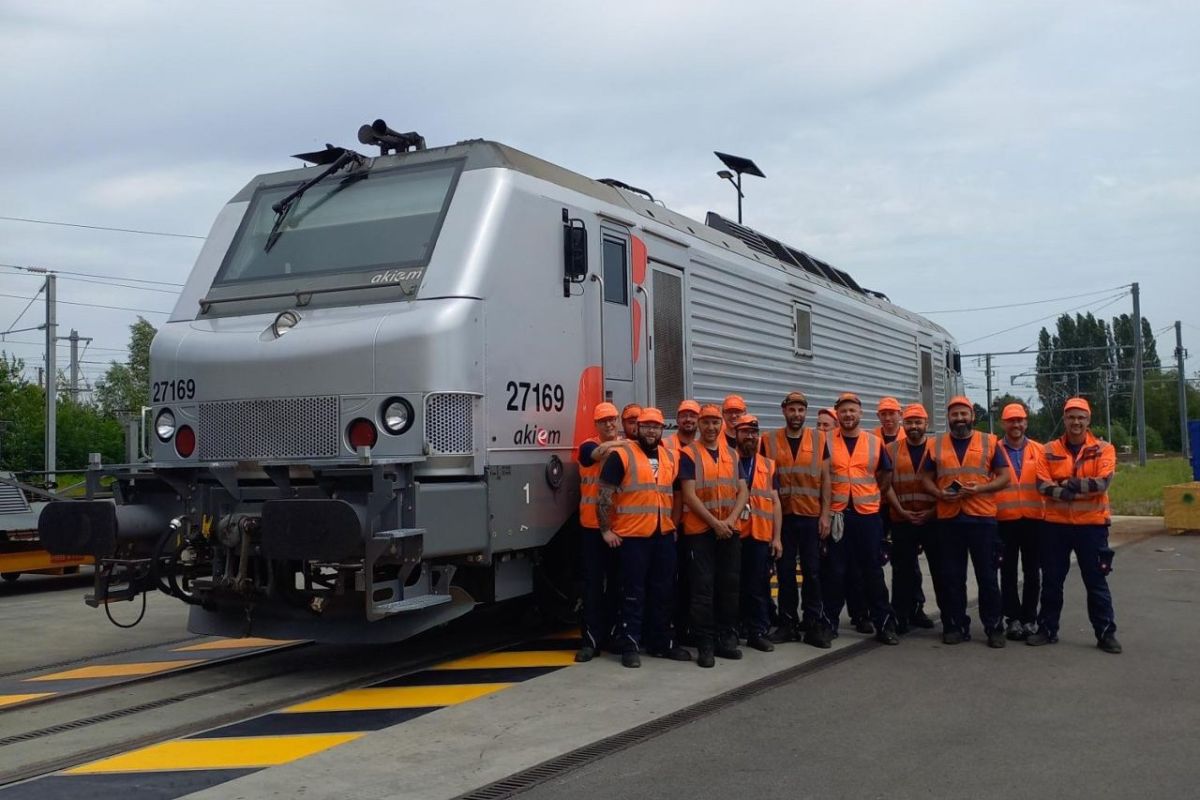
BB 27169, the 50th Prima locomotive to receive mid-life overhaul, was outshopped at Akiem’s Ostricourt works on 3 June. A week later, Alstom’s Crespin works completed the 500th Régio 2N EMU. A total of 567 have been ordered by SNCF Voyageurs for 10 régions within a framework contract for up to 840 trains. Photo: Akiem.
Akiem has signed a thirteen year deal with Alstom to undertake maintenance and overhaul of bogies and axles on its Prima fleet (Classes BB 27000, BB 37000 and BB 37500). The work will be managed from Alstom's plant at Le Creusot with traction motor maintenance undertaken at Ornans.
Better connected. Following upgrades to SNCF Connect, through tickets to DB and SBB destinations are now bookable. Other improvements include the ability to book journeys involving up to five changes, and the offer of lower fares by alternative routes or changing at less-obvious places. SNCF Connect, which had 1.6 billion visits and sold 233 million tickets in 2025, will be obliged to open its platform to competitors by 31 December 2027.
A programme of infrastructure work begun in April saw the Ligne des Causses closed from 1 June to 3 July. €4.2 million is being spent on bridgeworks, stabilising rock cuttings and retaining walls, reinforcing a bridge at Tournemire and rebuilding the north portal of Campagnac tunnel (1,198m). Buses replaced trains but there was no service north of Saint-Chély-d’Apcher (the last station in Occitanie), thus no connection to or from the Aubrac IC which terminated at Neussargues. Work continues until 28 August, to be followed by another closure in the autumn for track renewal between Béziers and Millau.
A landslip at Saint-Isidore in the outskirts of Nice on 11 April closed the CF de Provence between Crémat Le Pal and Colomars La Manda. Some 50m of track was buried and major work was necessary to stabilise the rockface, cost €1 million. Peak-hour trains resumed at the end of June, full service planned for late July.
The report into rolling stock delivery delays, leaked earlier in the year (see March News), was published in mid-May. An action plan is to be thrashed out between government, industry, clients and regulators for presentation later in the year.
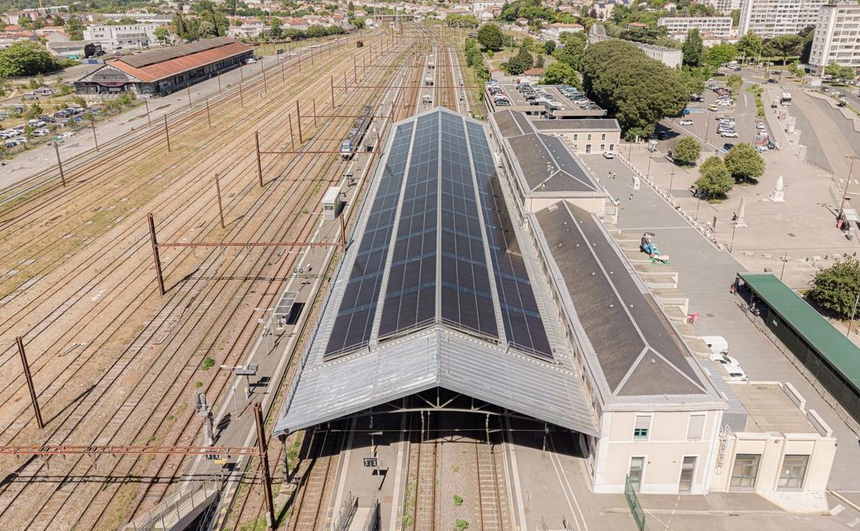
The renovated marquise at Angoulême was officially opened on 28 May. The 840 solar panels provide 40% of the station’s energy requirement, while reducing temperature on the platforms below by up to 4deg. Dating from 1886, this is the first large overall roof to be so treated, taking six years on account of the station’s heritage status; cost €17.4 million. Photo: SNCF G&C.
SNCF’s stand at VivaTech, Europe’s largest start-up tech event held in Paris last month, showcased three projects. Minerve relies on digital modelling tools to make the network more resilient to climate change, including predicting climate risks and their impact on infrastructure. Hypervision brings scattered data onto a single platform to optimise network monitoring and improve response in the event of disruption, while 365 Travaux aims to simplify and secure worksites through digitising procedures and instructions, improving the flow of information between stakeholders, bringing cost savings and more efficient work management.
Farewell Flexy. Development of the Flexy road-rail shuttle concept has ceased after autonomous-vehicle manufacturer Milla pulled out. SNCF said safety and compliance work for the car to run on rail proved to be more costly than expected. The €35.6 million project had received €9.9 million in funding from eco-development agency Ademe. Trials planned for the line from Étang-sur-Arroux to Autun in Saône-et-Loire will not now go ahead, a disappointment for this city of 13,000 which lost its trains in 2020.
Toulouse – Latour-de-Carol trains resumed on 30 June after completion of rebuilding following February’s landslip at Ginabat (see March and April News) which had closed the line between Foix and Ax-les-Thermes.
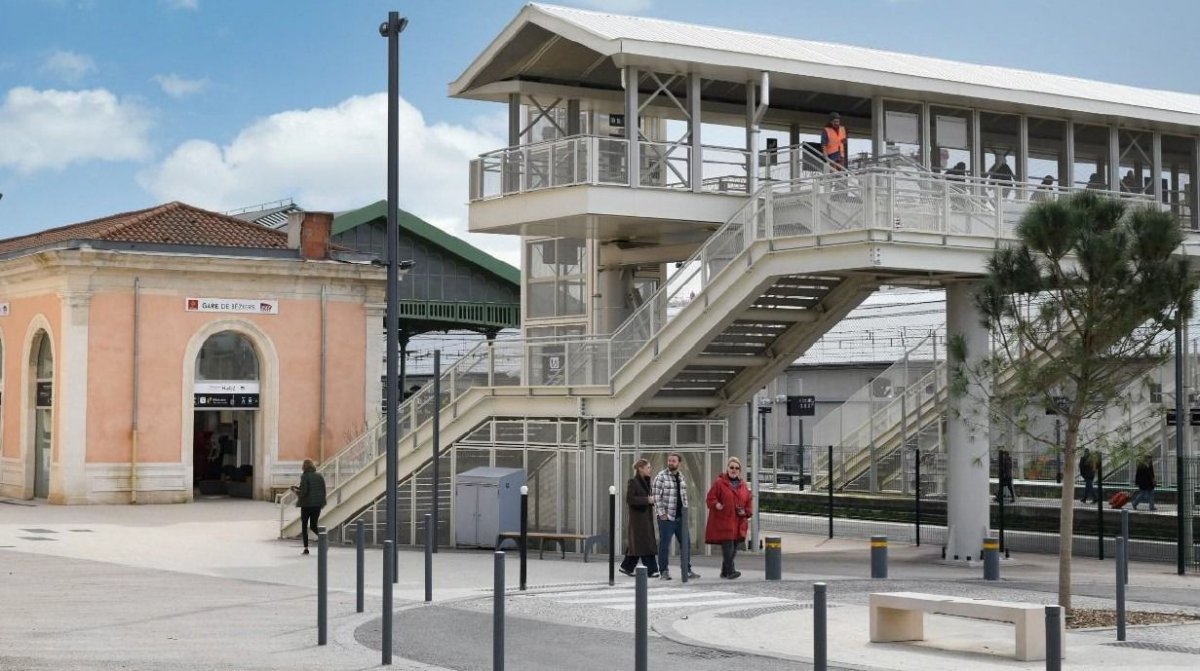
The revamped Béziers gare and its multimodal interchange (PEM) were opened on 5 June by Occitanie president Carole Delga. Completed at a cost of €49 million, the station is fully-accessible, with parking for 300 cars, easier access for cyclists and pedestrians, new bus platforms and a footbridge with lifts. Maire Robert Ménard used the occasion to advance Bézier’s claim to a station on LNMP. Photo: SNCF G&C.
LNMP. Ten weeks of public consultations for Phase 2 between Béziers and Perpignan ended on 19 June. Discussions centred on the line’s mixed-traffic status and whether stations should be built to serve both Béziers and Narbonne, barely 30km apart, or a single stop provided between the two at Nissan. This was thought to be unhelpful for either city, particularly in respect of interchange with TER. At Béziers, the location at Villeneuve-lès-Béziers had been chosen to provide a rail link to the city-centre station for interchange with the classic main line and the Ligne des Causses north to Millau.
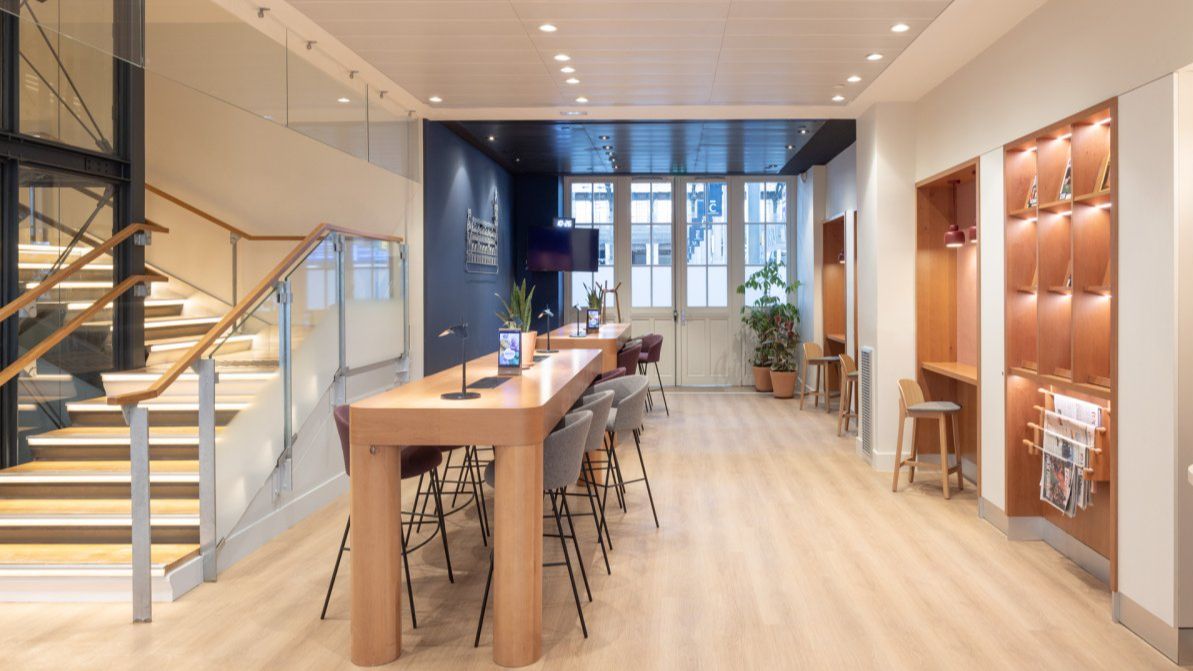
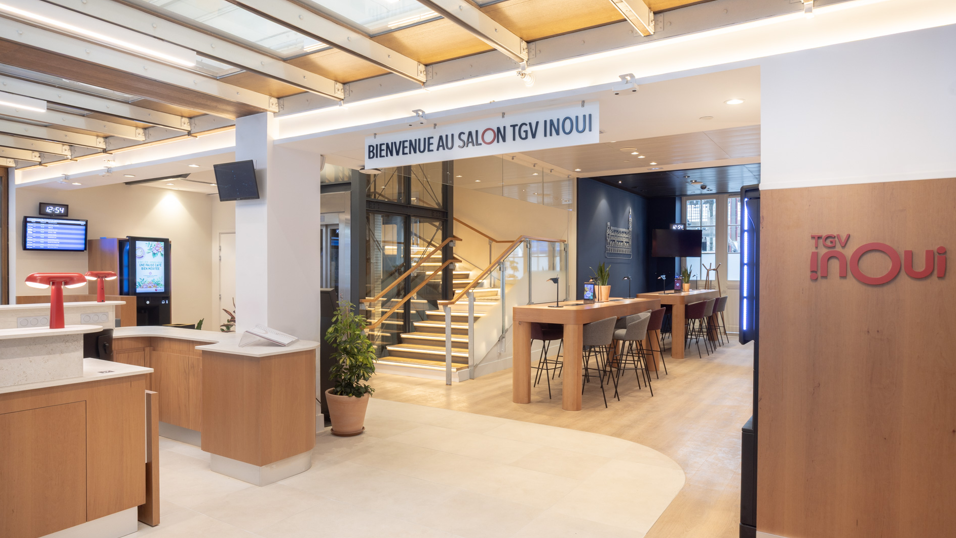
The refurbished and enlarged Grand Voyageur Le Club lounge at Gare de Lyon was opened on 21 April providing facilities for short waits and a high-quality space upstairs for longer periods of relaxation or work. At the inauguration, SNCF said the Optimum Plus business class introduced in January on Paris – Lyon trains was winning back market share from Trenitalia. “We’ve attained the goal we set, “ said Sud-Est TGV director Benjamin Huteau, “and satisfaction is excellent”. However, media reports suggest that SNCF’s profits from its premier TGV route have been halved. Photo: SNCF Voyageurs.
NA région and the University of La Rochelle launched SupFerro at Saintes on 28 May, France’s first railway industry training college being developed on the Ferrocampus site, where up to 180 engineering students a year will gain hands-on experience. Supported by 40 companies and industry bodies, including SNCF, Alstom and Hitachi, SupFerro aims to stem the shortage of personnel experienced in all areas of railway operations and engineering.
SNCF is this year an official partner of the Tour de France and will provide a TGV in special livery to take the riders from the penultimate stage at Grenoble to Paris for the final leg on 26 July. The agreement will run for a further two years.
Service resumed between Brest and Quimper on 13 June following completion of remedial work outside Quimper where a landslide had cut the line on 11 February.
A student from the Lyon area, victim of identity theft in 2022, has been relieved of the 45 fines incurred for ticketless travel by the thief after a long battle with police and SNCF Voyageurs. Each initially denied responsibility for tracing the miscreant but SNCF eventually agreed to strengthen ticket checks and surveillance. The thief was arrested at a ticket check in Vienna and was found to have the personal details of several victims.
Mer de Glace. Banque des Territoires has agreed a loan of €80 million with Haut-Savoie département to finance renewal of theTrain du Montenvers rolling stock fleet, currently six rack railcars dating from 1954, 1961 and 1970.
Following the six-week closure for track upgrading between Meymac and Ussel (see June News), no trains will run between Tulle and Meymac from 17 July until 28 August. €4.6 million (65% financed by Nouvelle-Aquitaine) is being spent on renewal of 2.8km of rail, reballasting of 850m, drainage improvements at 10 locations, repairs to Loches tunnel at Ussel and a retaining wall at Tulle, all aimed at maintaining the line speed of 80km/h.
Track No 7 in Rouen’s Sotteville Technicentre was officially opened on 4 June. This is the area specially-equipped to clean blood and debris from collisions with animals prior to repair of damage in the main works. Normandie région has invested €10.3 million.
Bordeaux SERM. Rebuilt stations were opened on 11 June at Saint-Loubès and Saint-Sulpice Izon between Bordeaux Saint-Jean and Libourne, served by hourly trains on the F41+ cross-city service from Arcachon. Platforms have been lengthened to accommodate pairs of four-car Régio 2Ns.The new city administration is committed to the SERM project but says cost pressures may force some retrenchment. Inclusion of the Médoc line is now seen as questionable.
Canfranc reopening. The promoters held further consultations online from 15 to 30 June to assure conformity of the project with Haut-Béarn’s revised intercommunal development plan (PLUi) prior to application for a declaration of public utility which it is hoped will be granted in mid-2027.
The pedestrian tunnel under construction to link Gare du Nord and Gare de l’Est was holed-through at the beginning of June. The €68 million subway will open next March, coinciding with the start of CDG Express service from Gare de l’Est.
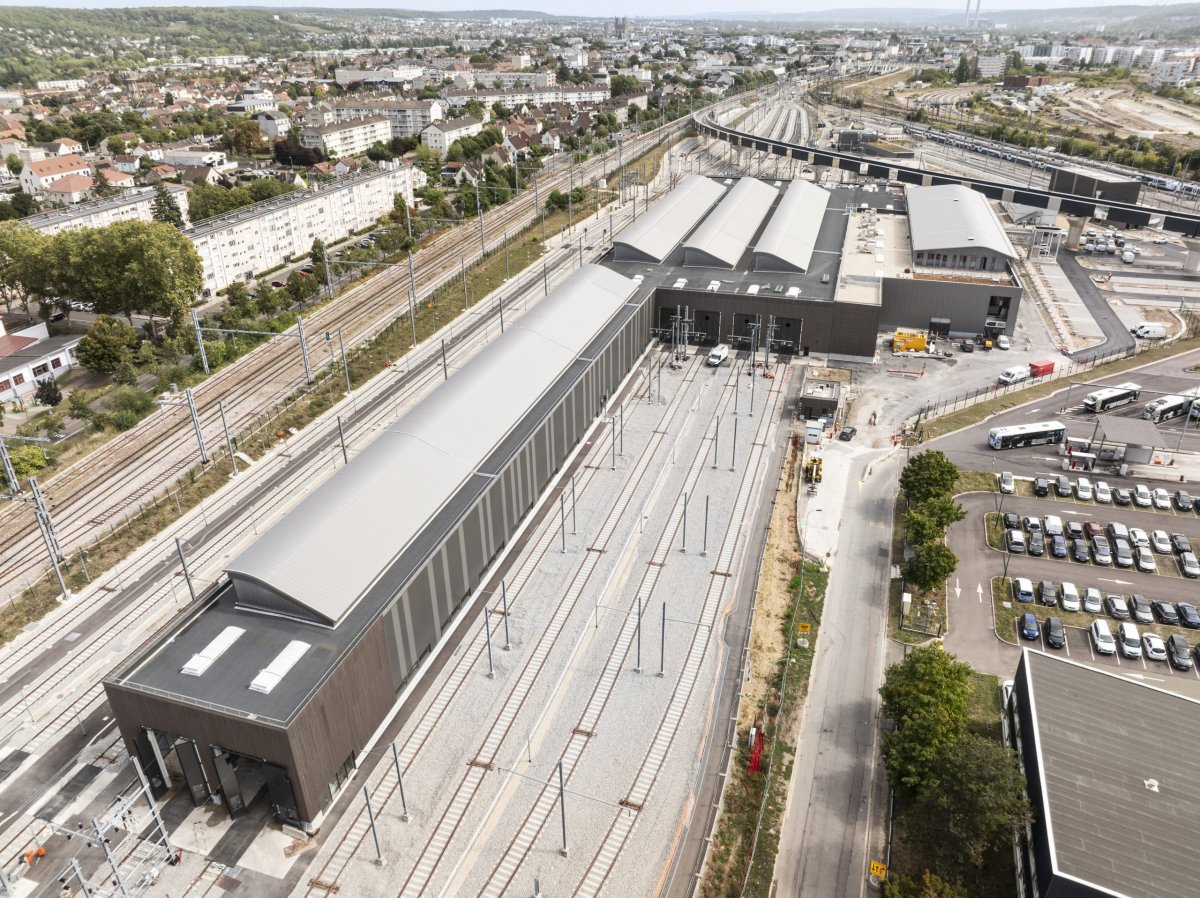
Aerial view of the Technicentre at Mantes-la-Jolie. Behind the building is the new flyover for Cherbourg trains, Mantes-la-Jolie station in the distance. Photo: RER-Eole.fr.
Mantes-la-Jolie ready for Eole
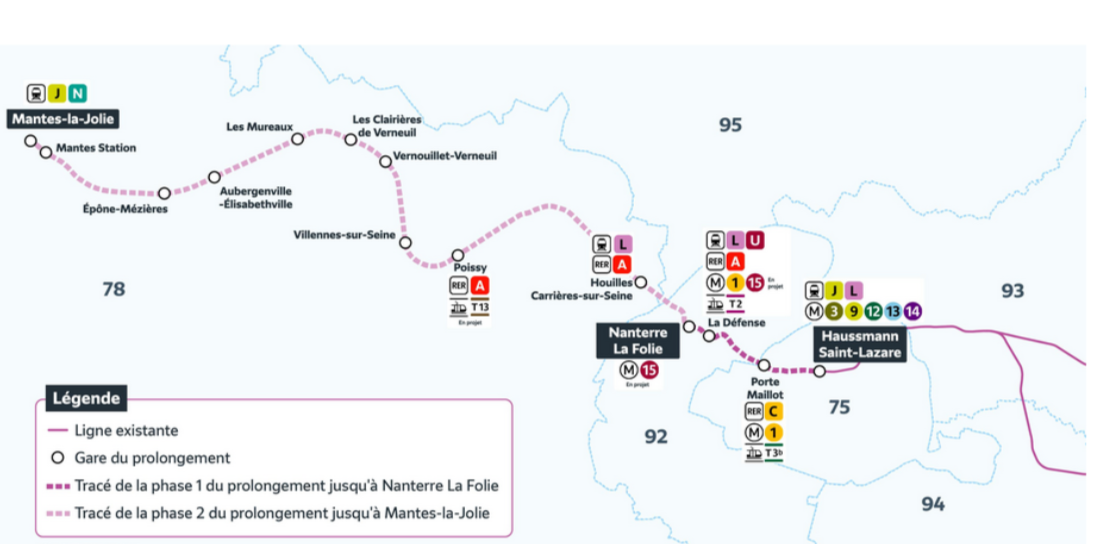
Initially, four trains/h will be extended from Nanterre-La Folie to Mantes, alternating with Line J trains. Journey times from Mantes-la-Jolie and stations towards Paris will be considerably reduced, for example Mantes to La Défense from 60min to 40min, along with much faster timings to central Paris stations. The final stage of the project, six Eole trains/h from Mantes-la-Jolie, awaits commissioning of the NExTEO control system at the end of the decade.
Map: Île-de-France Mobilités.
Normandie. On the following day, a new timetable is to be introduced on routes to and in Normandie, based on even-interval departures from Paris Saint-Lazare. Completion of works at Mantes-la-Jolie to accommodate Eole trains, plus a new flyover west of the station for Cherbourg trains, has allowed a major redraft of the master timetable.
The recast will bring greater clarity and ease of use for passengers on Nomad trains, with departure times repeating throughout the day. Journey times will be standardised on major routes, giving more reliable connections. There will be more trains between Paris and Rouen, and on the Fécamp branch from Le Havre, augmenting the 70 services added in 2025 and 23 this year. Daily passenger-journeys on Nomad trains grew 4% in 2025 to reach 114,000. In a later stage, the Paris – Argentan – Granville and Caen – Granville – Rennes services will also change to even-interval.
Big push to restore Line J
Several Z 50000 trains from Line L have been drafted-in to help maintain peak-hour services on the busiest sections, though at the expense of some Line L cancellations. Line L passengers complained of the absurdity of disrupting a second route to assist Line J but the Z 50000s are the only suitable trains due to short platforms and other operating constraints at Saint-Lazare. Passengers are to be compensated for the disruption.
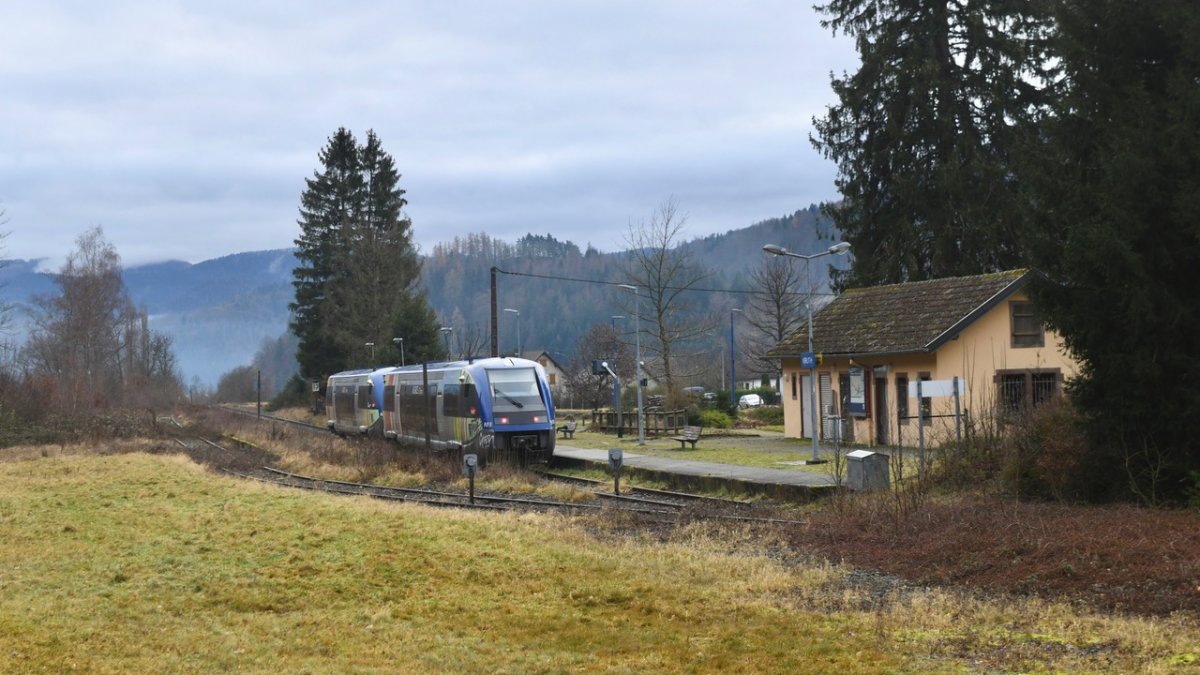
A pair of Grand Est X 73500 units (73905/907) wait to leave Kruth for Mulhouse on 11 December 2025. From the junction with the Mulhouse – Strasbourg mainline at Lutterbach as far as Thann the track is shared with the Mulhouse – Thann 'Avanto 'tram-trains and freight into the chemical plant at Thann. This section has been modernised with OHL. Beyond on the final stretch from Thann up to Kruth an air of neglect creeps in. At Kruth the run round loop is still in situ, but has not been used for many years. Kruth sees about 35,000 passengers a year, with many visiting the Vosges during the summer.
GE funding for rural lines
Effort is being concentrated on the Molsheim – Saint-Dié line (68km), mainly between Molsheim and Saales where sections are limited to 60km/h. This will put the infrastructure in good order prior to transfer of the line to GE ownership, envisaged for 2030. Work includes rail renewal, track equipment replacement, enhanced maintenance of structures, and technical/topographical inspections; total expenditure €10.2 million. Some work has already started, with 5km of track being relaid between Saulxures and Hersbach over the period 6 July to 7 August. The line forms part of TER Lot Bruche-Piémont-Vosges, an operating contract for which is to be awarded in the autumn. This Lot extends to 111 route-km: Strasbourg – Molsheim – Séléstat, and Strasbourg – Molsheim – Saint-Dié – Arches – Épinal. Saint-Dié – Épinal is closed from 6 July until 6 November for 'emergency 'upgrading, comprising renewal of 17km of track between Bruyères and Saint-Dié with long-welded rail and renovation of 20 level crossings,
For the other 10 routes, where funding is shared between the région and SNCF Réseau, allocations for the 2027 works programme are:
● Reims – Fismes €4.5 million
● Charleville-Mézières – Givet €3.3 million
● Lutterbach – Kruth €712,000
● Colmar – Metzeral €994,000
● Strasbourg – Lauterbourg €5.1 million
● Conflans-Jarny – Verdun €2.9 million
● Vendenheim – Wissembourg €1.1 million
● Haguenau – Niederbronn-les-Bains €745,000
● Mommenheim – Kalhausen €6.1 million
● Sarreguemines – Bening €4.6 million
GE will own and manage local rail lines through the SPL Grand Est Infrastructures created last year. Transfer requests are currently being reviewed for Strasbourg – Lauterbourg, Haguenau – Wissembourg, Mommenheim – Sarreguemines, Colmar – Metzeral, Verdun – Conflans-Jarny, and Charleville-Mézières – Givet.
VéloMax takes 18 bikes
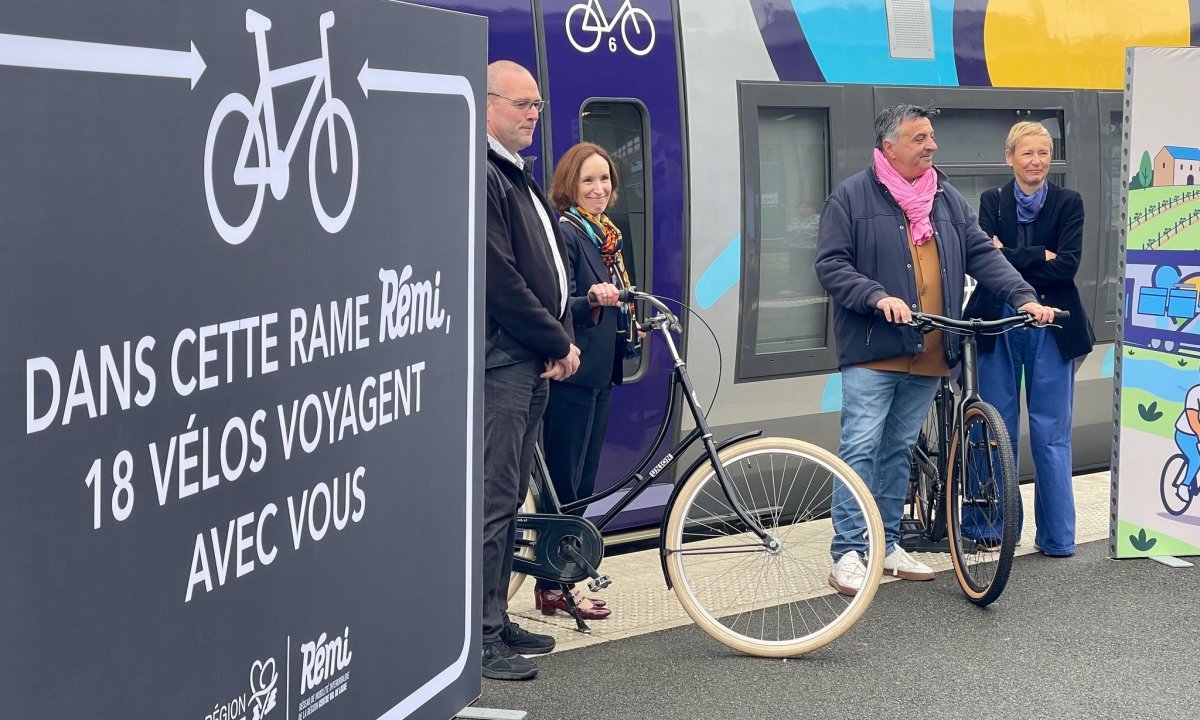
The refurbishment carried out at Nevers Technicentre under the Opter mid-life renovation programme brings improved comfort for passengers, USB sockets at all seats, LED lighting, renovated toilets and easier accessibility for PRM. First class is abolished and the space rearranged for standard seating. The €100 million makeover of these trains dating from 2005-10 extends their life by 20 years. Four sets will be rolled out per year, with completion in September 2030. The trains work Rémi services from Tours and Orléans to Vierzon, Bourges and Nevers and on the POLT main line from Orléans to Châteauroux and Limoges.
Answering questions regarding the région’s diesel MUs (X 72500 and X 73500), M Fournié said the tender process was underway for their replacement by battery-electric or hydrogen powered trains by 2035 at a cost of over €500 million. Photos: Région Centre-Val de Loire.
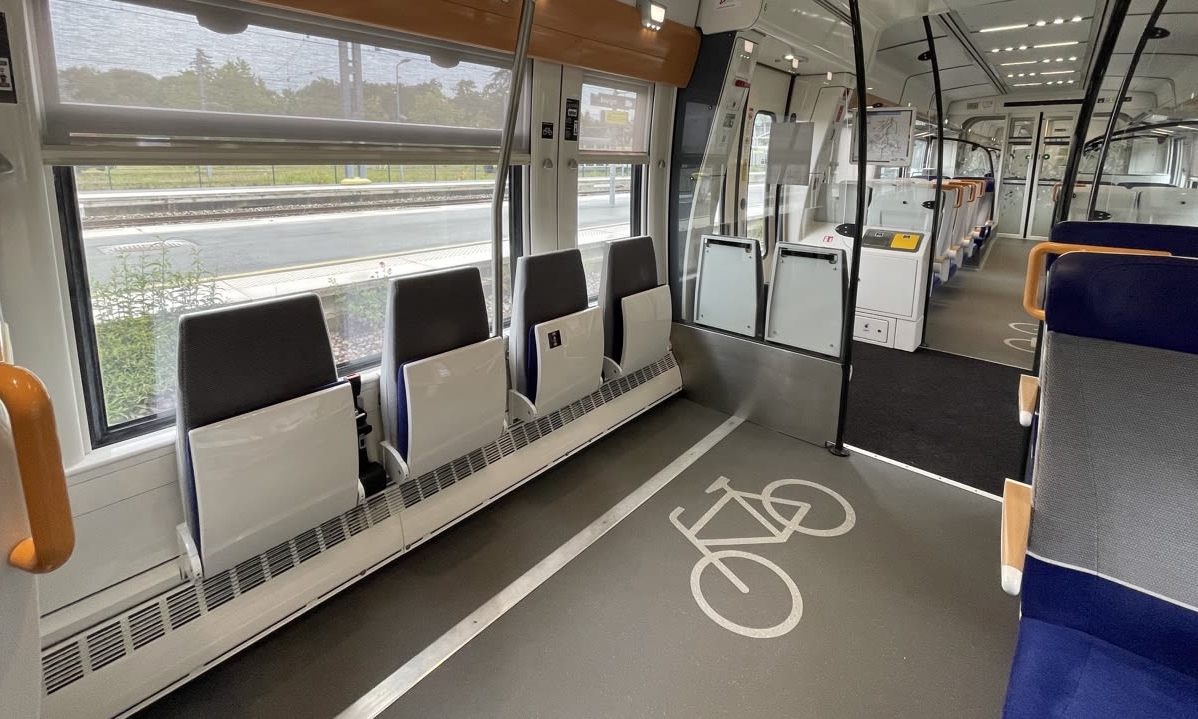
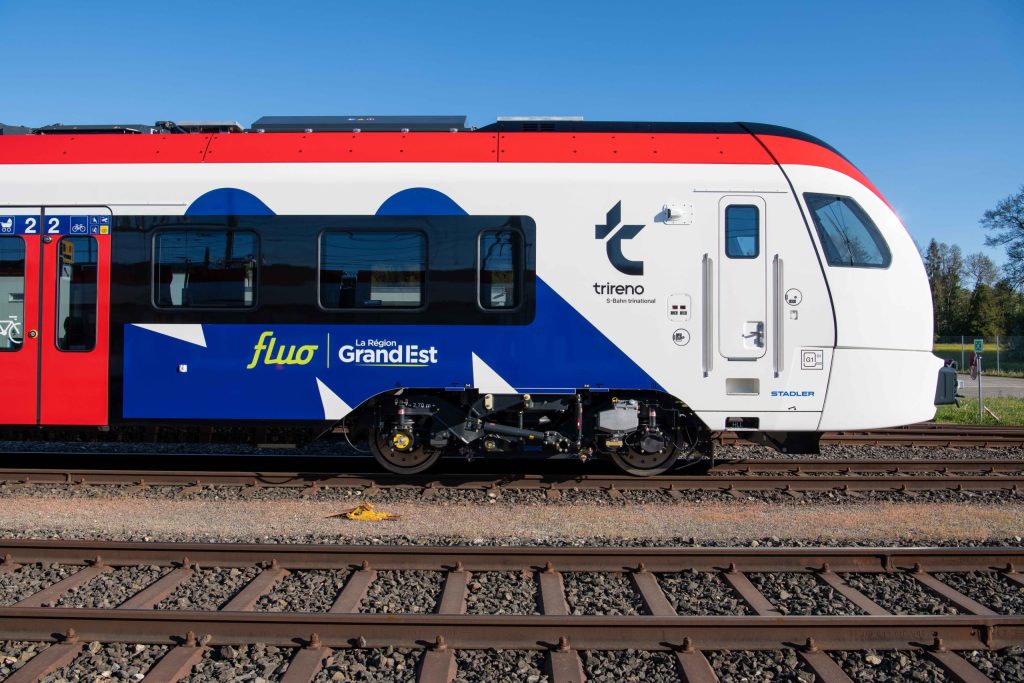
Flirt Evo France presented
This is a joint venture between SBB and SNCF under the Eurobasilea project for improved cross-border links across an area with 1.3 million inhabitants more than usually reliant on their cars, aimed at boosting rail access to the airport and relieving many passengers of the need to change trains at Basle SBB.
The order is part of the framework contract between SBB and Stadler signed in 2021 for delivery of up to 510 Flirt Evo EMUs. The cross-border sub-class, designated RABe 532 in Switzerland, is under construction at Stadler’s Erlen plant. The four-car sets are 90% low-floor, seating 118 in standard and 28 in first class; with two places for wheelchairs and a single PRM-designated toilet. Generous circulating areas give space for standees, luggage and cycles. They operate on 25kV in France and 15kV in Switzerland, where they can work with other Flirts and up to four sets in multiple. In France, they will be limited to three coupled sets. Homologation trials are now underway with approval of the EMUs for use in France expected in 2029. Photo: SBB.
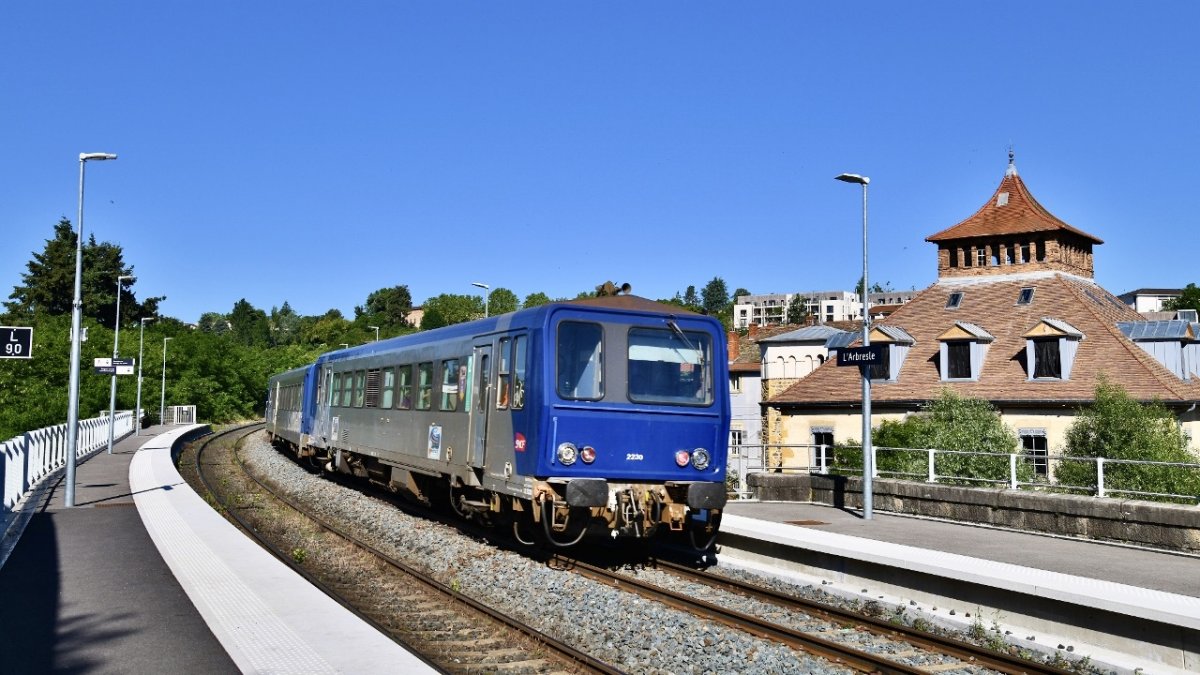
On Friday 22 May AAATV Montluçon provided another charter train for local schoolchildren. This year the destination was Lyon, rather than Paris. Consisting of X 2230, two remorques (XR 6000) and X 2900, the special is seen passing through L'Arbresle between Roanne and Lyon. Photo: Pierre Julien.
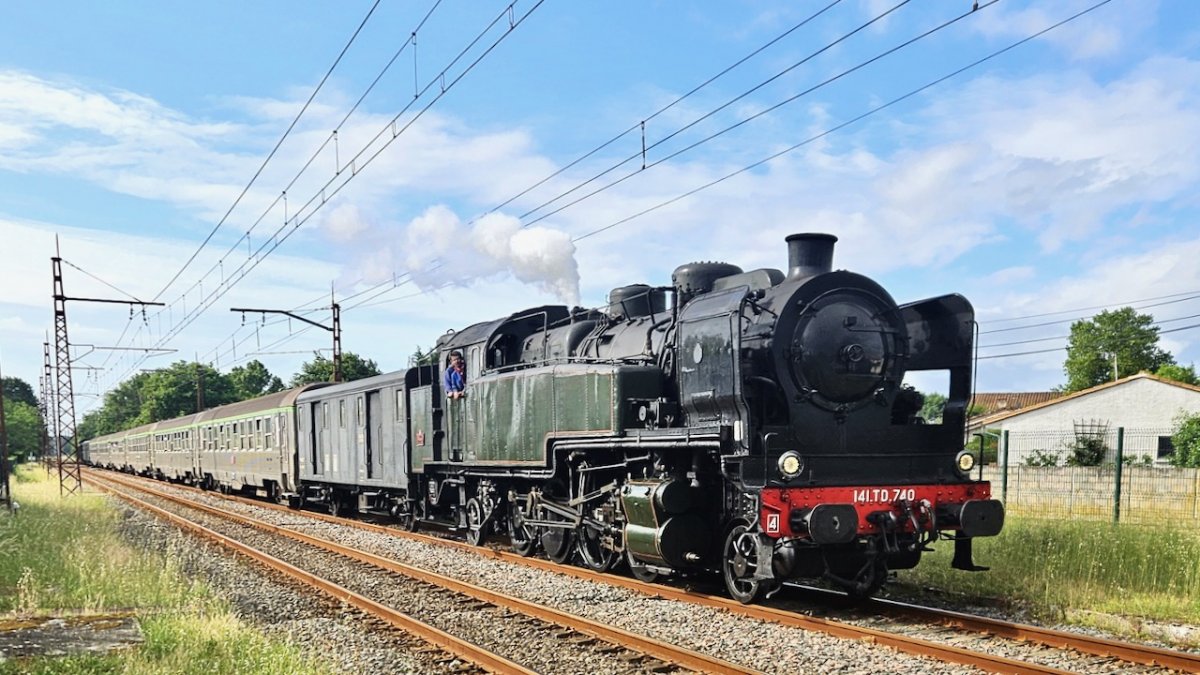
Soulac-sur-Mer’s 23rd 1900s weekend of music and culture again brought 141 TD 740 to the Médoc line carrying revellers in Belle Époque costume. Train Historique de Toulouse provided six stainless steel coaches as the CFTLP rake has been at SDH Fer in Saint-Denis-de-L'Hôtel (near Orléans) for maintenance and could not return due to engineering work.
Having left Bordeaux Saint-Jean at 08.30, on 6 June the train is seen at Macau where the 45min breakfast and water stop was prolonged by late-running of TER 866114 the 08.17 from Le Verdon to Bordeaux. Bimodes B 81826/81678 eventually arrived 50min late for the timetabled 09.32 crossing with the special. Pairs of three-car sets were running in expectation of heavy traffic but B 81678 at the rear was locked out-of-use for the inbound trip to Bordeaux. Leaving Limoges on 4 June, the loco and fourgon from CFTLP (Conservatoire Ferroviaire Territoires Limousin Périgord) passed that night at Coutras, reaching Bordeaux on the 5th.
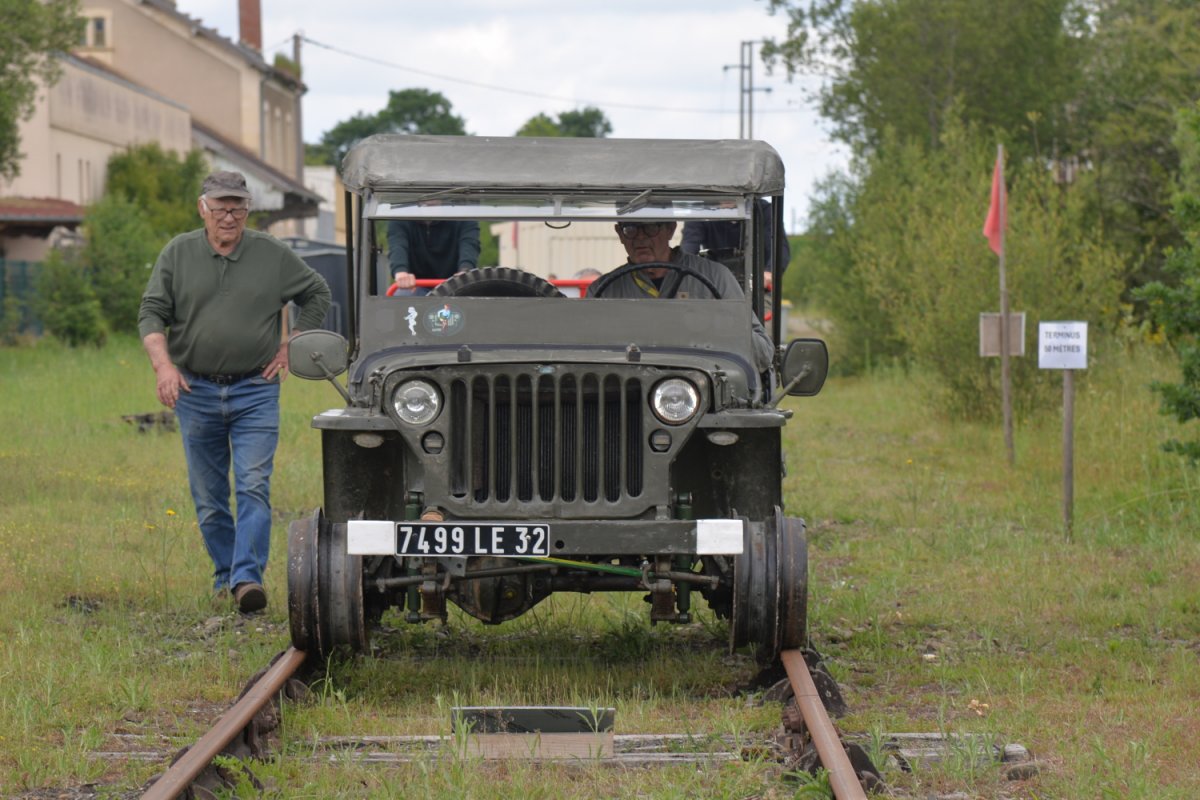
Jeep thrill. A 1944-built US army vehicle belonging to Jeep Club d’Artagnan has been fitted with replica rail wheels to run on the vélorail track at Nogaro in the Gers. Staff and apprentices from the local technical college worked with club members to reproduce the road-rail apparatus to US Army specifications. Jeeps equipped for road-rail were widely used in France during WW2 to carry railway repair gangs and for survey purposes.
The background can be seen at: https://lejournaldugers.fr/article/91494-une-jeep-de-1944-reprend-la-voie-ferree-a-nogaro
Photo: Le Journal du Gers/François Mace.
Photo: Le Journal du Gers/François Mace.
Paid holidays celebrated

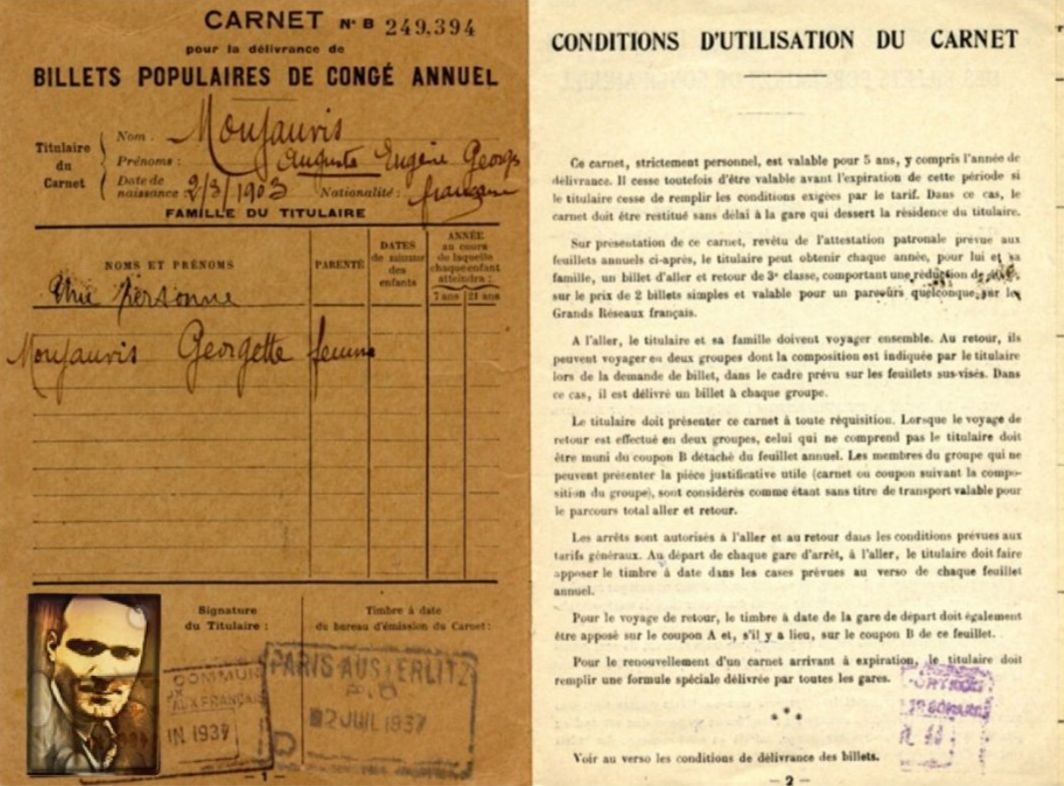
The law stipulated a 40% reduction in third-class fares for holidaymakers, bringing 550,000 additional long-distance rail trips in summer 1936 and 900,000 the following year. The so-called Lagrange tickets, named after the first minister for sport and leisure, were the forerunners of today's social fares schemes and rail passes; they still exist in the form of SNCF’s Billet congé annuel (annual leave ticket) offered at a 25% discount.
In what is now Occitanie, Sète and Palavas-les-Flots welcomed some of the first holidaymakers. Occitanie région sees its own low-fares policy as a direct descendant of the discounts originally offered. The 1936 law began social changes that led to development of mass tourism and new-built resorts, first at the seaside and later for winter sports.
In what is now Occitanie, Sète and Palavas-les-Flots welcomed some of the first holidaymakers. Occitanie région sees its own low-fares policy as a direct descendant of the discounts originally offered. The 1936 law began social changes that led to development of mass tourism and new-built resorts, first at the seaside and later for winter sports.
CC 6570 dating from 1975 has been listed as a historical monument by the ministry of culture. Preserved by APCC 6570, which aims to recreate named trains of the past such as Le Mistral and Le Train Bleu, the loco is based at SNCF’s Avignon Technicentre, The association is seeking rolling stock to make up a complete replica of Le Mistral.
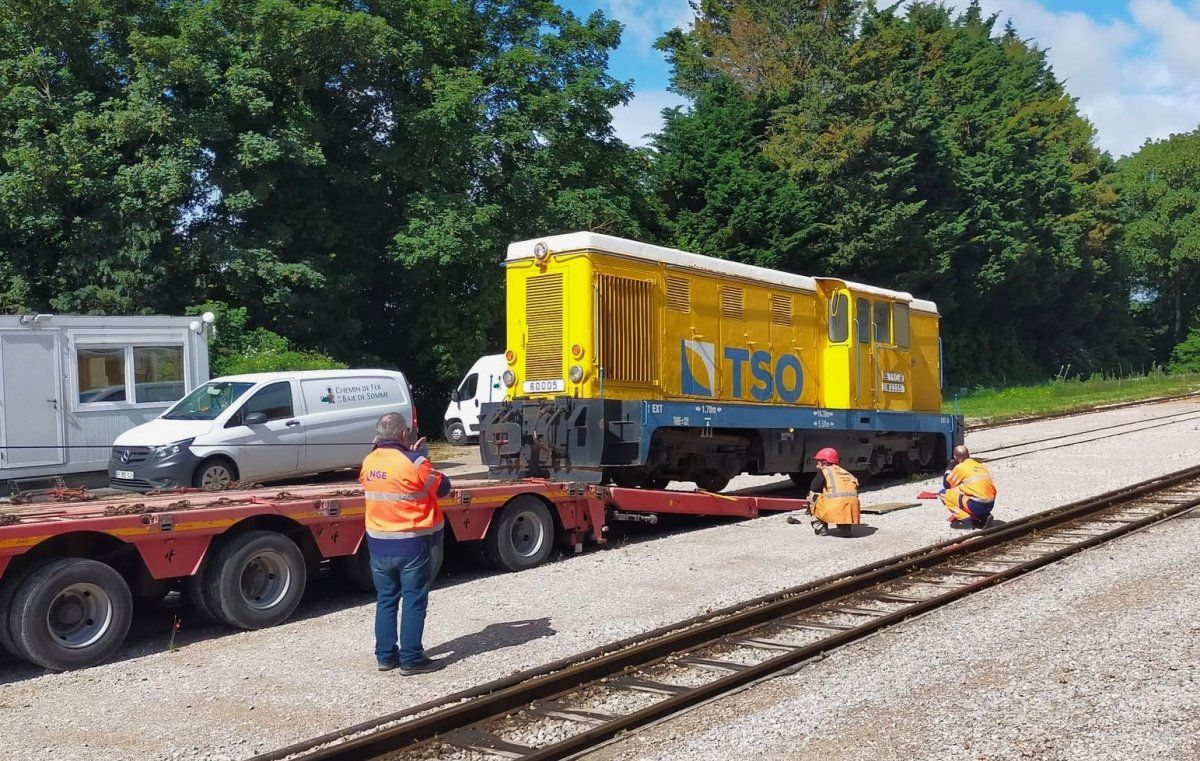
Two of the three TSO Romanian-built Faur L45H locomotives (60002/60005) stored on the CFBS at Saint-Valery have been moved to TSO's maintenance depot at Chelles for overhaul. They were returned from Sénégal last year where they had been used on construction of the Dakar – Diamniadio TER line opened in 2021, and had been at risk of being scrapped (see February News). Once overhauled, they will be moved to Chemins de fer de Provence (CP) to undertake track-laying on various infrastructure projects between Saint-André-les-Alpes and Digne-les-Bains including the Moriez Tunnel. This section has been suspended since a collapse within the tunnel in 2019. 60005 is seen above being moved onto a low-loader at Saint-Valery.
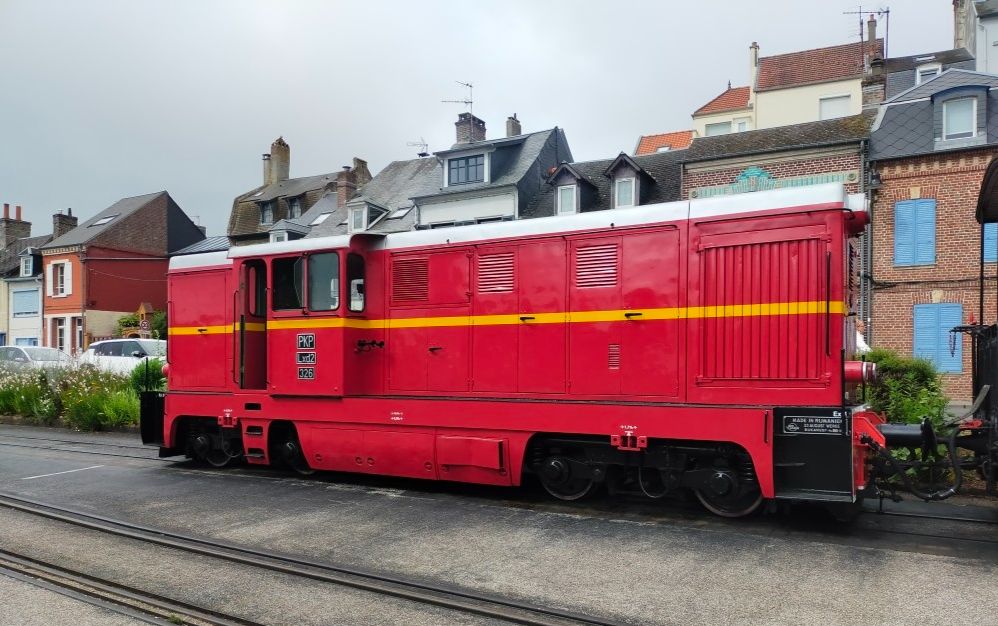
On 15 June the CFBS's former Polish Railways Faur received its PKP 326 plates, seen above on the quay at Saint-Valery. Photos:Alain Paillard.
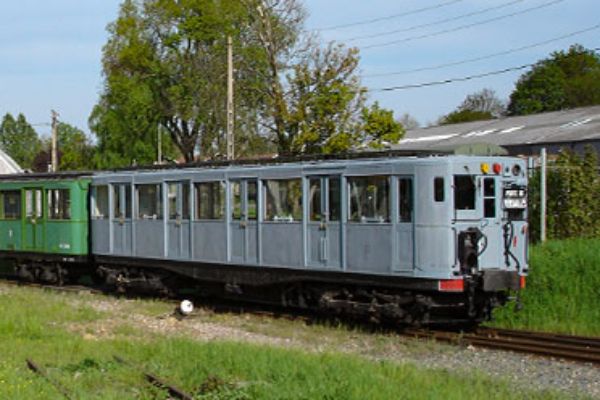
Restoration is nearing completion of Sprague-Thomson M.268, a Paris metro driving car built by Blanc-Misseron in 1902, one of 17 preserved by Association d’exploitation du matériel Sprague-Thomson (Ademas). The car is to be fitted with a generator and equipment for occasional operation under its own power. Work is being carried out by Ademas at its base in the Camp des Matelots Land Army depot at Versailles. M.268 worked on Lines 1, 8 and 9 until withdrawal in 1981. Photo: Ademas.
A new funicular has been commissioned inside the Aven Armand caves in Lozère département. The Aven Express is the third-generation of funicular at the caves, taking visitors 100m below ground to see the thousand-year-old forest of stalagmites said to be unique.
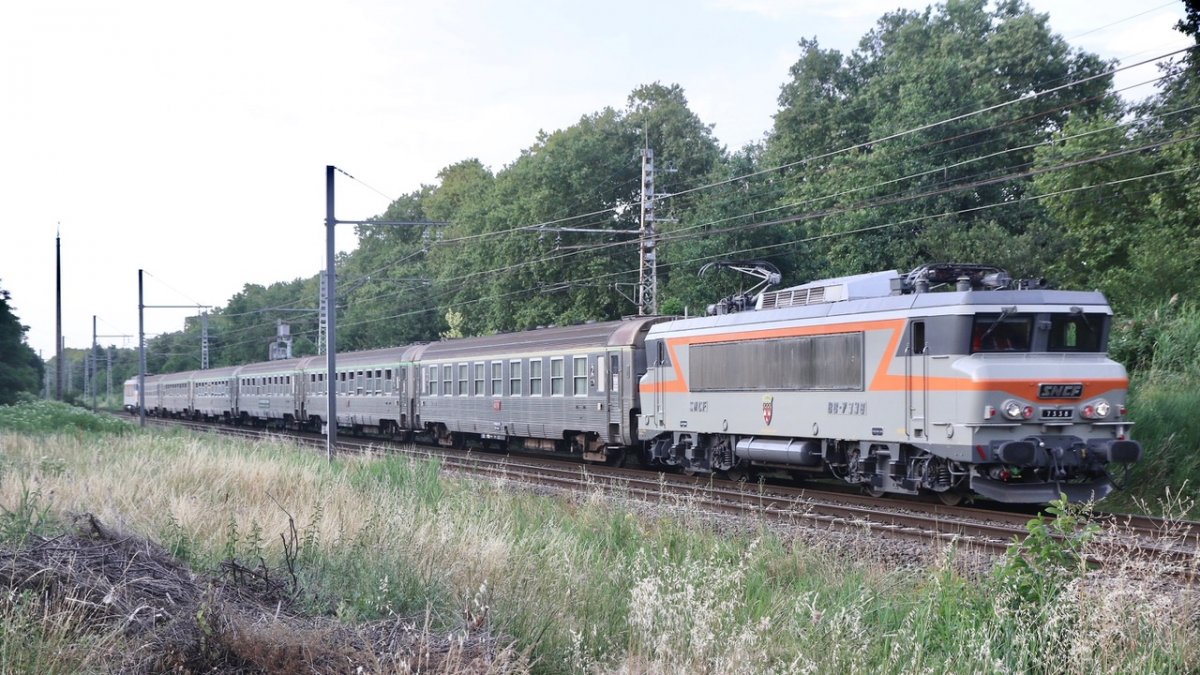
Le Train Historique de Toulouse's trip to Arcachon on 20 June saw their two BB 7200s operate in 'top-n-tail mode' for the first time as there are no runround facilities now at Arcachon. Both locomotives have been repainted: BB 7338 based on its original livery with raised numbers and SNCF logo, and BB 7398 in the more recent painted number and SNCF logo 'cap' livery. With BB 7338 in the lead, the pair are seen on the outward journey between Castelnau-d'Estrétefonds and Grisolles, on the border between Haute-Garonne and Tarn-et-Garonne départements. Photo: Georges Turpin.
Urban Rail
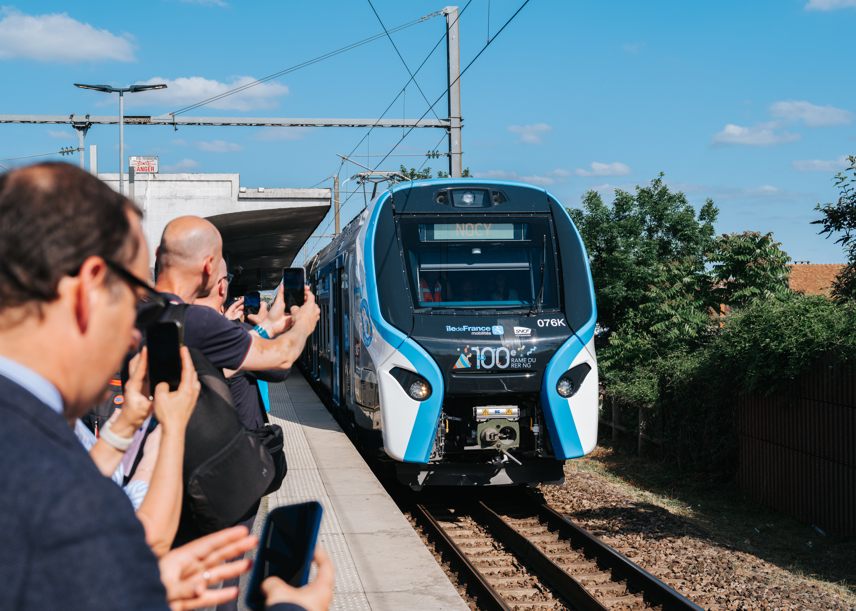
ÎdFM took delivery of the 100th NG trainset at Chelles-Gournay on 21 May. Welcoming the huge improvement brought by the new trains to RER Line E after initial teething problems, Mme Pécresse drew attention to the three-year delay in commissioning the first NGs. “We are very proud of this train” she said. “We waited long enough.” A further 162 are on order for delivery at five per month. Photo: ÎdF Mobilités.
GPE 18 opening delayed. The first section of Line 18 between Massy–Palaiseau and Christ de Saclay had been set to open in October but on 25 June Société des Grands Projets announced a further delay until early-December, necessary, GPE's president said, "to deliver a perfectly reliable and safe metro". The second section to open, Line 15 Sud, is put back another six months, from April 2027 to autumn.
Orlyval, the automated shuttle which lost most of its custom when M14 was extended to Orly airport in 2024, has a new lease on life, albeit temporary. Since April, during closures of RER B south of Gare du Nord, passengers have used Orlyval to reach Paris via Line 14. For the summer closures of RER B between 25 July and 16 August, the €14 fare will be waived for Navigo passholders. ÎdF région’s study on Orlyval’s future is to be published in the autumn.
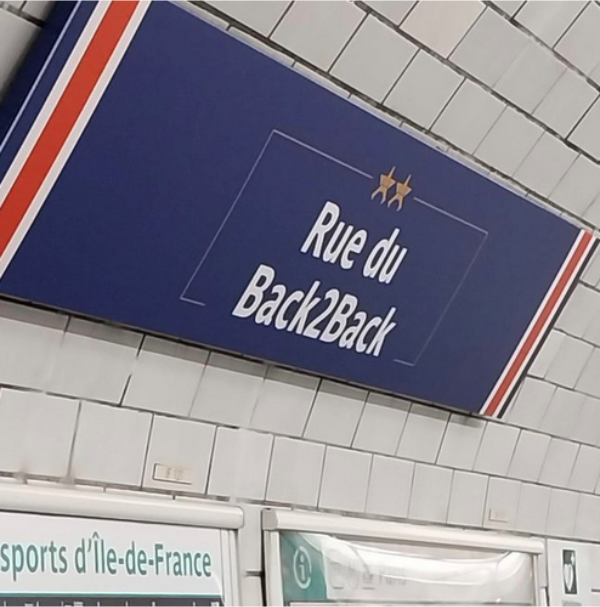
To celebrate Paris-Saint-Germain’s second consecutive win of the European Champions League on 30 May, RATP temporarily renamed three stations. Europe on Line 3 became European Champions, Porte de Saint-Cloud on Line 9 became Paris is Magical,and Line 12’s Rue du Bac was Rue du Back2Back, recognising the two successive wins. Photo: RATP.
Bordeaux. During another summer of work on the Pont de Pierre, Lines A and E are closed between Stalingrad and Sainte-Catherine (A) and Quinconces (E) from 23 June to 28 August. The other four routes will be partially closed for periods between 10 and 21 August for replacement of the APS ground current collection rails.
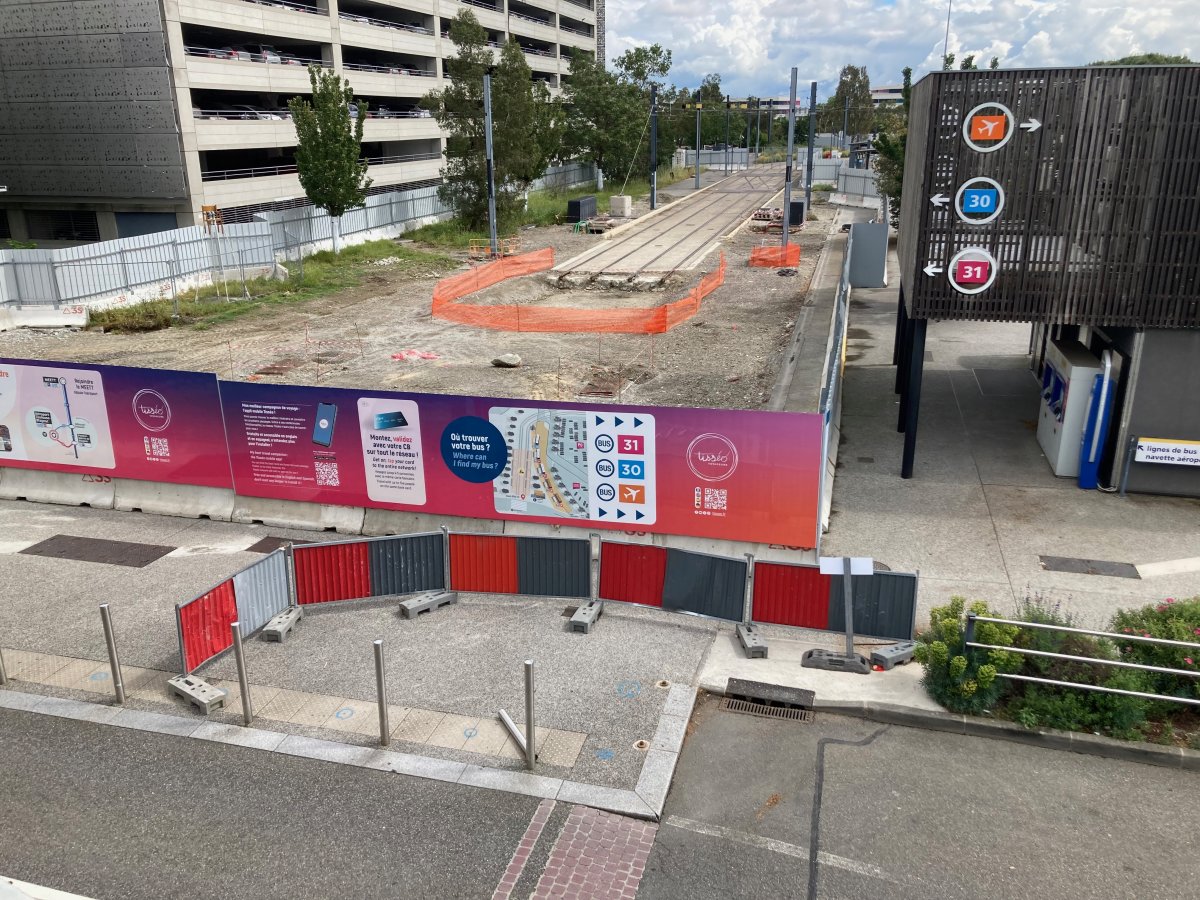
Toulouse. The subway linking Gare Matabiau with Marengo metro station reopened on 29 June after a year’s closure whilst the new Line C platforms were constructed. The Aéroport Express tramway terminal is taking shape ready for opening at the end of the year. Unusually for a tramway, turnstiles will be installed here to regulate access to the platforms as passengers (except airport staff) will pay a special (higher) fare. Photo: Georges Turpin.
Montpellier. Rail replacement and other infrastructure work is underway in the city centre, 3.4km of rail being renewed in four phases over the summer, largely at night.
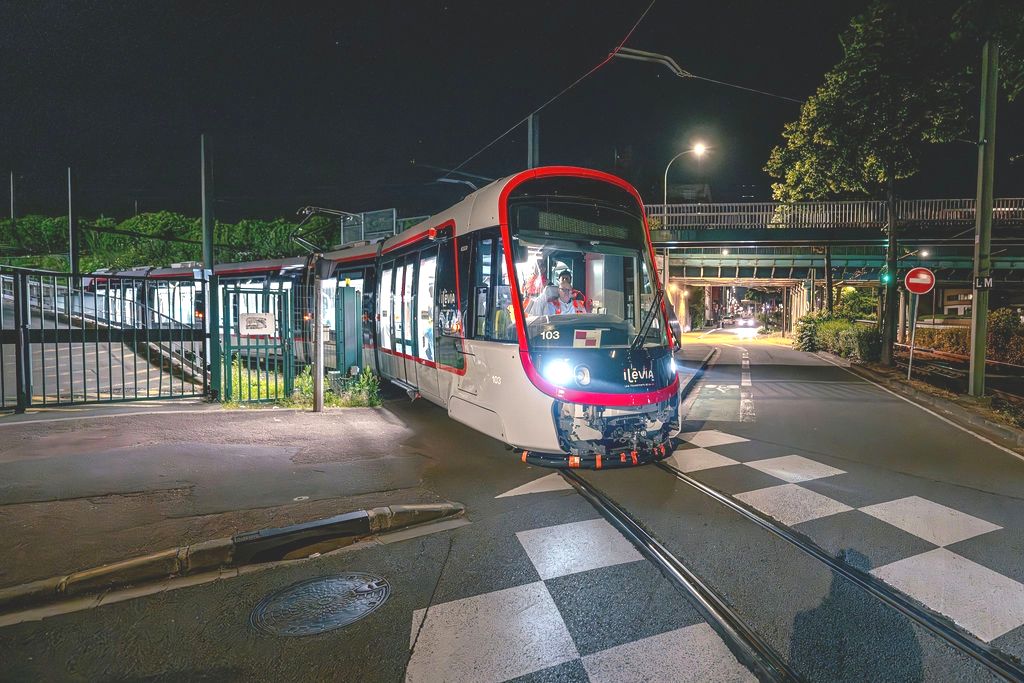
Lille Métropole has awarded Safra Services at Albi a contract for renovation of 60 VAL 208 AG cars of Line 2 dating from 1999, extending their lifespan to 45 years; value €41.6 million. Nighttime trials of the first Citadis trams took place on 9 June. The new fleet of 27 cars should be in service by the end of the year.
Photo opposite. Ilevia.
Francilien annual report. Reviewing 2025 with the PDGs of RATP and SNCF, Île-de-France Mobilités president Valérie Pécresse welcomed improved levels of satisfaction for both operators’ services: RATP up 1.1 percentage point to 88% while SNCF at 79.9% attained its best level since 2020. Metro peak-hour performance was stable at 96.4%, consolidating the recovery begun after the 2024 Olympic Games. Twelve out of 14 lines showed good results, automated Line 4 achieving 100% performance and modernised Line 9 at 99%. Lines 12 and 13 remain ‘fragile’ whilst awaiting upgrading for MF19 trains and automation (Line 13). RER/Transilien punctuality was slightly better at 91.3%, masking ongoing performance problems attributed to ageing infrastructure and rolling stock.
Open payment. From 30 June direct payment by credit card is available when entering Line 14 at Aéroport d’Orly, and on the Montmartre funicular from 8 July. One bank card can be used to pay for up to five passengers. The system will be extended throughout the metro, ÎdFM said at a press conference on 16 June, starting with lines most heavily used by tourists: Line 1 in July 2027, Lines 4 and 14 by the end of the year, Lines 7 and 12 in 2028 and the remainder by the end of 2030. Cost of the roll-out is €140 million. Savings are expected from reduced fraud and administration but for passengers an extra 10% bank commission will be charged on each transaction. A Navigo pass will remain the best option for locals, though its availability on iPhone has been postponed again, now said to be set for September 2027.
The system is not expected to be extended to RER and Transilien routes before 2030. This is because most trips involve interchange with other lines or metro, requiring passengers to validate several times en route and on completing their journey. It is therefore impossible to deploy card payment on a line-by-line basis: the entire suburban network must adopt the system at the same time. On the other hand, Grand Paris Express lines will accept card payment from the outset.
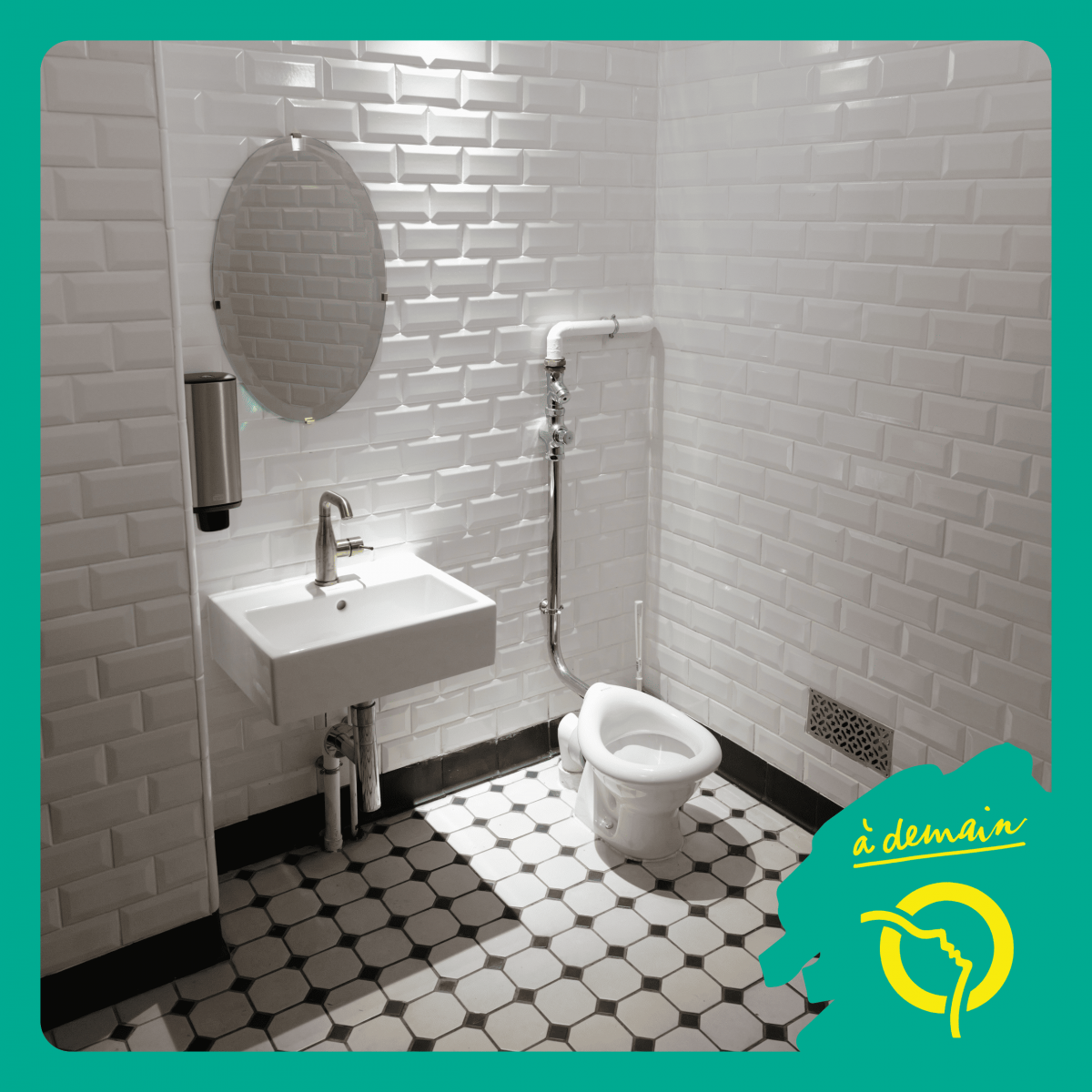
Comfort station. RATP's latest patrimoine project sees art nouveau style lavatories at Trocadero restored at a cost of €1 million. Dating from 1910, they have the iconic white ‘metro' wall tiles designed by Henri Guimard and carved mahogany partitions with stained-glass motifs. There is a mother-and-baby space and original features such as a shoeshiner’s armchair. Photo: RATP.
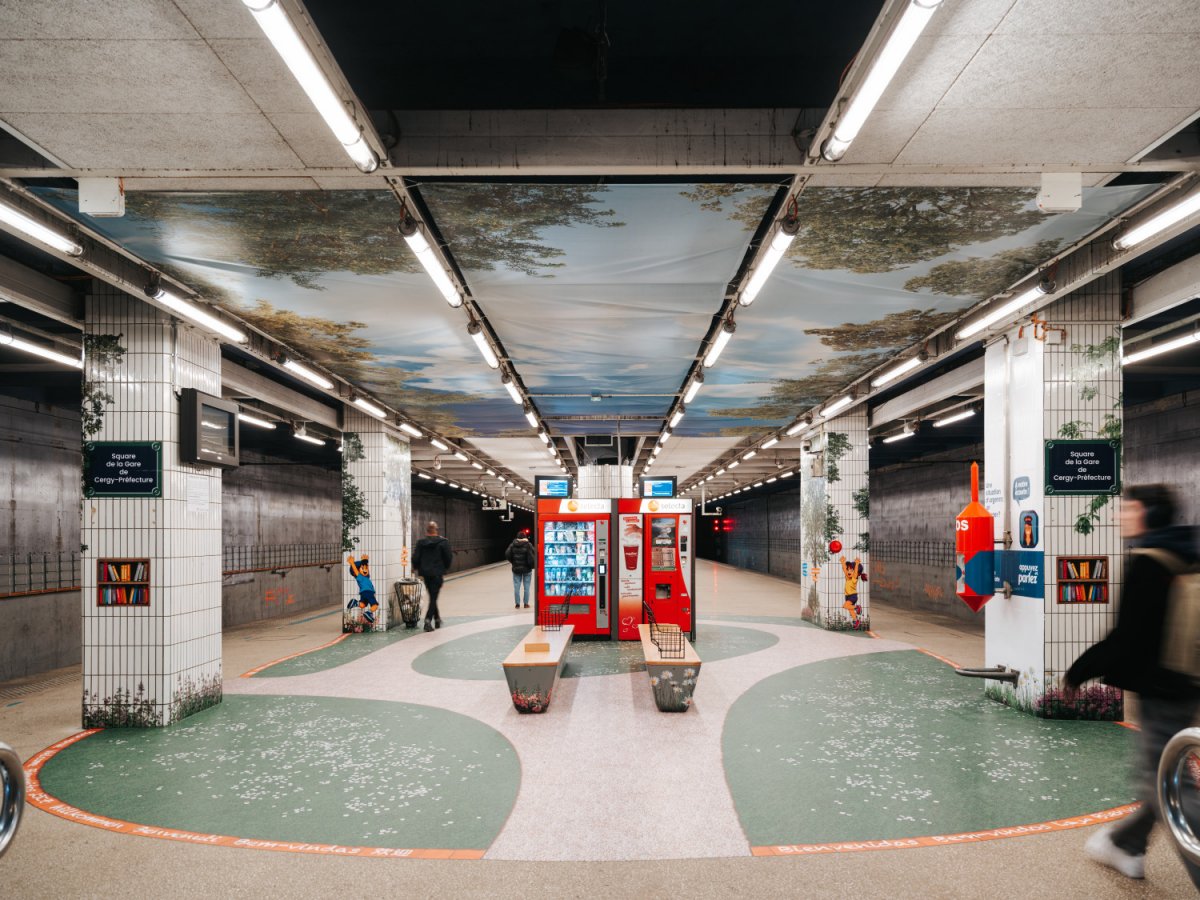
Safe space. As part of efforts to improve passenger personal safety and security, ÎdFM is experimenting with a shared waiting area at Cergy Préfecture station (RER A and Line L). Developed with Transilien SNCF Voyageurs’ Nudge Unit, the clearly-defined space is intended to group waiting passengers in a calm and comfortable zone with emergency call buttons and video surveillance; live feeds from cameras are visible on the platform to deter attackers. Floor, ceiling and columns are decorated with foliage and ‘blue sky’, while posters use ‘nudge’ techniques to encourage passengers to interact with each other and warn-off potential aggressors. Photo: ÎdF Mobilités.
Additions to FRS Photographic Archive and Public Folder during June 2026
Additions to FRS Photographic Archive during June 2026
To Photographic section
To Locations section
- Fifty images of the station, the ateliers and miscellaneous subjects at Epernay to Folder 4 under “CdF de l’Est
- Articles about 140G “Pershing” to Folder 4 under “Steam Traction”
- Article about Mezidon/Region Ouest to Folder 4 under CdF de l’Ouest/Etat
- Article about Jean-Gaspard-Edouard BEUGNIOT / SACM engineer to Folder 7
- Article about Paul Arzens/SNCF Stylist to Folder 7
- Article about Bertin’s AEROTRAIN to Folder 7
- Article about SNCF (ex KPEV P8) to Folder 4 under “steam traction”
- Article about CFTA Gray to Folder 4 under “CdF de l’Est”
- Article about old draisines to Folder 7 under “Manoeuvres””
To Locations section
- None
Additions to the FRS public folder during June 2026
To Section 15 'Timetables summary'
- Le Moniteur des Chemin de Fer January 1849 timetables
All from Peter Lemmey collection
- Indicateur Chaix 1932 )
- Indicateur Chaix Sud-Est 1942 )
- Indicateur Chaix Sud-Ouest 1942 )
- Indicateur Chaix Sud-Ouest Summer 1942 )
- Indicateur Chaix Ouest Summer 1942 )
- Indicateur Chaix Sud-Est Winter 1942 )
- Indicateur Chaix Ouest Summer 1968 )
- Indicateur Chaix Sud-Ouest Summer 1963 )
- Indicateur Chaix Ouest June 1969 )
- Indicateur Chaix Nord Summer 1968 )
- Indicateur Chais Sud-Est Summer 1968 )
- Indicateur Chaix Sud-Est Summer 1967 )
© Peter Lovell & Chris Bushell. The French Railways Society 2026. With thanks to Georges Turpin, Christophe Masse, Pierre Julien and Alain Paillard.
