
June 2026 News

France’s number one international port, Le Havre handles over 80% of containers arriving by sea. In 2025 it moved 84.7 million tonnes of maritime traffic and with the other Haropa ports (HAvre, ROuen, PAris) shifted 18 million tonnes of river-borne goods. Freight services in the port area are operated by SNCF subsidiary Normandie Rail Services. Having initially used Class BB 400 diesels (BB 63500 rebuilds), the company now hires up to six BB 60000 from Hexafret. On 24 April BB 60090 is seen on the long loop line from the maritime container port to the container terminal. Despite the large number of containers handled, comparatively few leave the port by rail, only around 20 trains per week. Photo: David Haydock.
THE FRENCH RAILWAYS SOCIETY SUMMER RENDEZVOUS
Model Railway Exhibition 7 June 2026
Ashtead Peace Memorial Hall, Woodfield Lane, Ashtead, Surrey, KT21 2BE
10am – 4pm
10am – 4pm
Adults £8 Children £2
Working Layouts - Trade Stands
Illustrated Talks - Bring & Buy - Specialist Societies
Working Layouts - Trade Stands
Illustrated Talks - Bring & Buy - Specialist Societies
Refreshments and Free Parking
Service strained by the heat
Tempers frayed. On a stranded Lille – Marseille Ouigo, a desperate passenger who opened an emergency door to let in fresh air received a €200 fine, despite train crew themselves opening the doors a few moments later. The fine was rescinded under media pressure after the passenger reported a crew member as saying “Lucky you are a woman, otherwise I would have hit you”. SNCF apologised, while restating the need for strict safety measures when trains are halted in open country.
As in previous heatwaves, Corail-equipped IC trains were cancelled on the 28 and 29 May because of their inadequate aircon, seven per day on the POLT and Clermont-Ferrand routes, and six between Bordeaux and Marseille, straining TER services called upon to take-up stranded IC passengers. Many instances were reported of passengers taken ill in overheated, overcrowded trains. At Clermont, crew and passengers complained of ‘infernal’ conditions on X 73500 saucisson autorails whose forced-air cooling was particularly challenged. Drivers recorded temperatures up to 45deg in their cabs. SNCF responded with preventive measures including frequent replacement of evaporator filters and topping-up of coolant, as well as ‘refreshment’ of trains before departure by keeping engines running to maintain airflow. Staff pressed for more trains to be parked under cover and for cooling facilities in storage sidings so that trains could start-out cool without constant running of the engines.
Another incident saw two Frecciarossas stranded for 10 hours on the night of 29-30 May. A total of 841 passengers spent the night onboard in suffocating conditions without electricity, water, toilets or food despite support from police and personnel of Yonne and Côte-d’Or départements. FR 6658 19.38 Lyon – Paris, running late following diversion to the classic line due to a track fault between Mâcon and Montbard, came to rejoin the LGV at Saint-Rémy west of Montbard. Unfortunately, it passed too slowly over the neutral section between the changes in voltage and came to a halt at Km15.3. An hour later FR 9296 the 15.53 Milan – Paris was brought up behind and the two Frecciarossa units coupled in an attempt to push the first train forward. This failed, but the units could not be uncoupled. Both became immobilised at 23.45 and could not be moved until technical assistance arrived the following morning. The two trains were on the move by 09.30 and eventually reached Paris at 10.22 and 10.32, respectively 12 and 13 hours late.
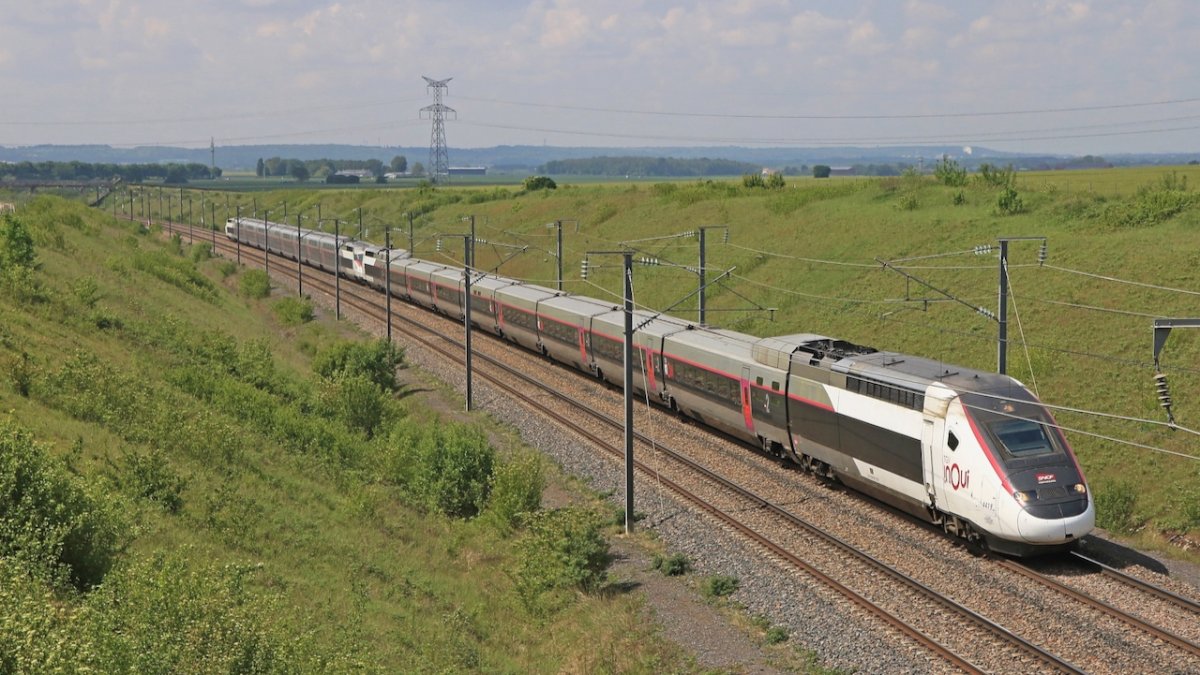
Thursday 7 May saw the last working of the tri-voltage POS (Paris-Ostfrankreich-Süddeutschland) and Réseau-Duplex sets on LGV Est. The POS sets (4401- 4419) were put into service with the opening of LGV Est in June 2007 to provide services beyond Strasbourg to Germany and Switzerland. In 2013 they were transferred to Lyria before returning in 2020 to TGV Inoui services from Gare du Nord and Gare de l’Est. Following the start of major overhauls in 2022, both POS and Réseau-Duplex sets were converted into POS/Duplex (721) and Tango (734) sets for Ouigo. Above. Sets 4419 and 621 are seen on their final journey near Charny heading to Bischheim where they will be converted to Réseau 575 and future Tango 739 trainsets.
Ironically, a few minutes earlier two of the four pre-production TGV Inoui (TGV M) sets 996 (PS1) and 999 (PS4), had passed in the opposite direction heading towards Paris Est on the final journey of endurance trials, bringing the years of pre-production testing to a close. The sets will be returned to Crespin where the passenger vehicles are expected to be overhauled, and the power cars dismantled and the components reconditioned with both being reused in the production series. Photos: Christophe Masse.
TGV M certified. On 22 May, the train received ERA certification to carry passengers but as had been forecast by Ville, Rail & Transports, it will not enter public service on 1 July. SNCF Voyageurs had hoped that four sets would be ready in time for summer service between Paris and Marseille. According to VRT, Alstom now says that six trains will be available at the rentrée, 1 September. Despite round-the-clock working under the Challenge Comet programme to iron-out the remaining bugs, staff at Alstom’s La Rochelle site have been mobilised for a further six weeks. Certification came with several caveats which may necessitate further work. As sets become available, they will be used for pre-public trials from 1 July. When the train finally enters commercial service, it will be over three years late.
TGV M certified. On 22 May, the train received ERA certification to carry passengers but as had been forecast by Ville, Rail & Transports, it will not enter public service on 1 July. SNCF Voyageurs had hoped that four sets would be ready in time for summer service between Paris and Marseille. According to VRT, Alstom now says that six trains will be available at the rentrée, 1 September. Despite round-the-clock working under the Challenge Comet programme to iron-out the remaining bugs, staff at Alstom’s La Rochelle site have been mobilised for a further six weeks. Certification came with several caveats which may necessitate further work. As sets become available, they will be used for pre-public trials from 1 July. When the train finally enters commercial service, it will be over three years late.
This is a real blow for SNCF Voyageurs which had been depending on the extra capacity (200 more seats per train) of the four sets to help meet summer-holiday demand. Capacity is already stretched by high levels of booking due to increased fuel prices and other factors. “Trains will be full and prices high” said a transport economist on Franceinfo.
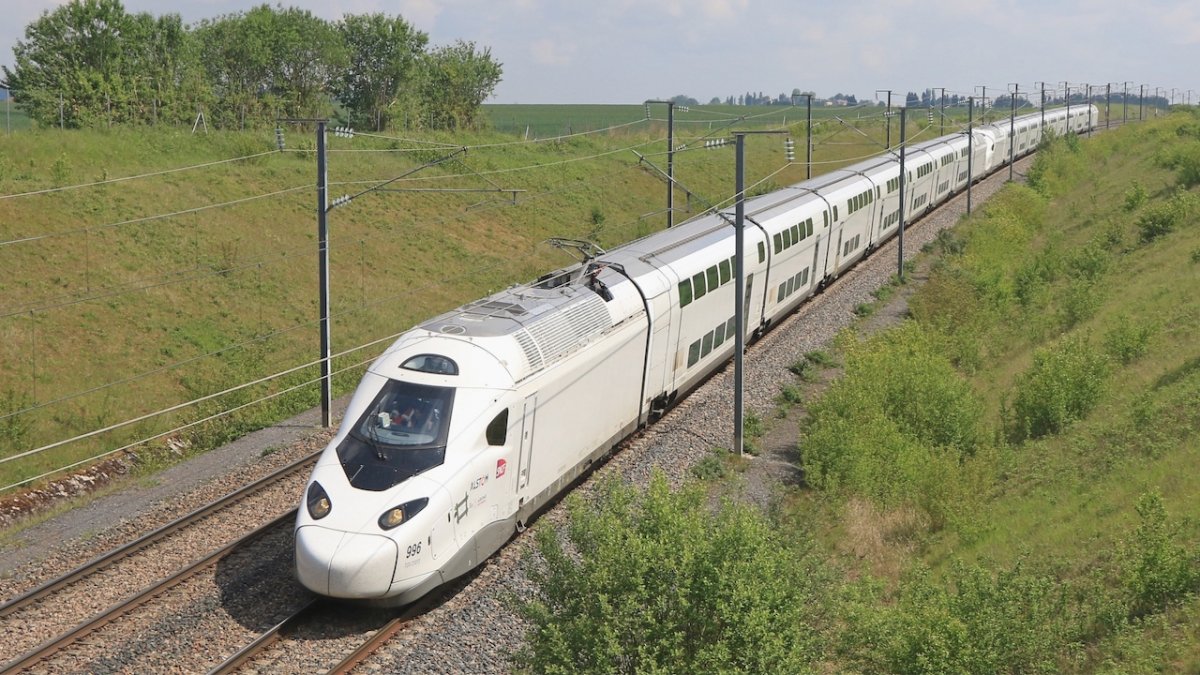
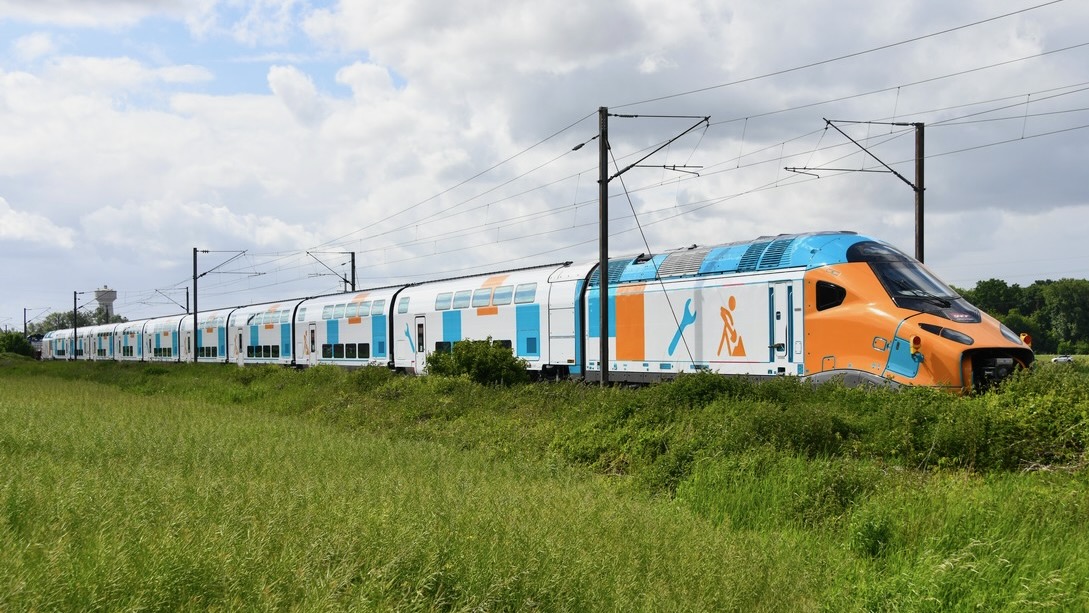
Below. On 18 May set 999 made its final journey to the Alstom plant at Crespin, seen left passing Onnaing on the former Valenciennes – Mons line behind Europorte G1000 1040. During May cross border testing took place between Tournai – Lille and Mons – Aulnoye with set 1402 .On the right set 1403 is seen being towed between Beuvrages and Raismes on the 13 May. It is displaying an orange and blue 'camouflage' livery to conceal the future OUIGO Italie livery.
Both photos: Didier Delattre.

Tendering launched for ‘irreversible’ GPSO
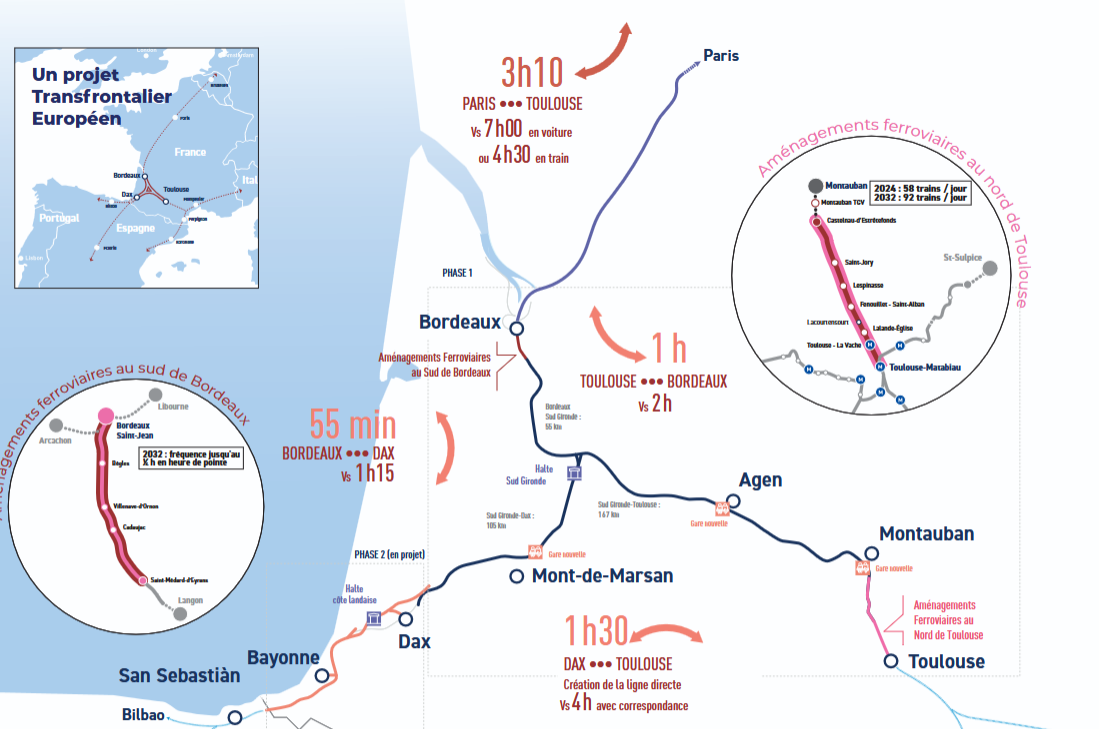
The government has announced funding of €410 million to launch the tendering process for Grand Projet ferroviaire du Sud-Ouest(GPSO), the Bordeaux – Toulouse/Dax high-speed line. Events moved swiftly after publication of the Conseil d'Orientation des Infrastructures (Infrastructure Steering Committee) report into major projects (see below), which cast doubt on the scheme. COI assessed GPSO as costing 20% more than forecast and taking two years longer. On 7 May prime minister Sébastien Lecornu signed a memorandum of understanding with the presidents of Nouvelle-Aquitaine and Occitanie régions, the Bordeaux and Toulouse métropoles, and officials of the départements involved. This provides for a month’s discussion of alternative scenarios: continuing with the existing financial arrangement (State/local/European funding) or switching to a public-private partnership, the latter strongly opposed by the signatories. Lecornu also took the opportunity to confirm the government's intention to increase the amount in its performance contract with SNCF to €4.5 billion, as outlined below.
GPSO is “irreversible” the prime minister said, “which means the first tranche of money…will be released to launch the tendering process”. A total of €820 million will be committed in 2026 and 2027, 50:50 from the State and régions, to finance the initial construction contracts. The State will commit €150 million this year and €260 million next. Transport minister Philippe Tabarot said the move was “proof that France is still a country of major projects”. It was unclear whether the government accepts COI’s recommendation that GPSO be reassessed with a view to cutting the cost. GPSO described the COI conclusions as ‘fanciful’ and ‘unfounded’.
The decision was generally well-received but representatives of Agen and Montauban expressed disquiet over the proposal that Bordeaux – Marseille ICs (by then with new Oxygène trains) would be transferred from the classic line to the LGV ‘to guarantee a high level of service at [their TGV stations]’. The move would also deprive Marmande of its IC service. TGVs would ‘not necessarily’ stop at Agen and Montauban TGV stations, running non-stop between Bordeaux and Toulouse to achieve the planned 3h 10 journey time from Paris to Toulouse. Any time saved by ICs using the LGV would be vitiated by the need for Agen and Montauban passengers to change on to local shuttles to reach the city-centre stations. Thus Agen and Montauban each gain a station on the high-speed line but may lose their TGVs, an outcome that has not been well received by local taxpayers contributing towards construction.
Surveys show the majority of residents of NA and Occitanie régions favour GPSO, but opponents are vociferous and there have been many legal challenges. Midi-Pyrénées Friends of the Earth called the LGV ‘anti-ecological, anti-social and a ruinous project,’ saying ‘we are determined to prevent it going ahead’. Map: GPSO.
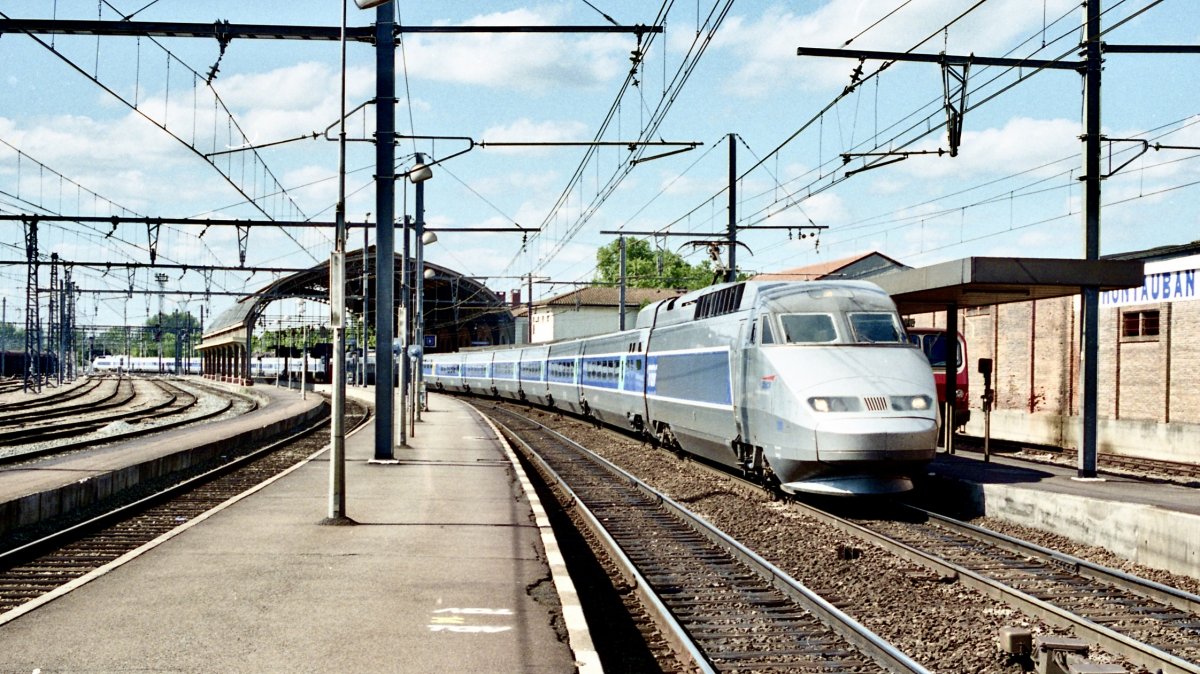
Below. Montauban Ville Bourbon has enjoyed direct TGV services to Paris for 30 years, but this could come to an end if they are all diverted to travel non-stop when GPSO opens. In August 1996 a pair of early TGV Atlantique sets will need all the platform space available as they arrive with a mid-day service from Paris.
‘Time to choose’ COI report says
With the projects representing up to €2.5 billion in annual state expenditure over the next decade, the report warns that the additional €1.5 billion a year required for modernisation of SNCF’s existing assets might be sidelined. Though this extra money should begin to flow from renewed motorway concessions early in the 2030s (see May News), COI calls on decision-makers to choose as soon as possible which of the projects can be afforded, whilst securing a multi-year investment programme that prioritises regeneration and modernisation of existing assets. Below is a brief look at COI’s review of the seven rail projects:
Ligne Nouvelle Montpellier – Perpignan (LNMP). With benefits for international passenger and freight traffic, as well as Montpellier’s SERM, COI recommends launching design of Phase 1 (Montpellier – Béziers) immediately for start of construction in 2029. Phase 2 (Béziers – Perpignan) is yet to be finalised, with significant cost differences between the alternative alignments. COI suggests study of phased implementation of this mixed-use section. Managing the environmental impact and compensation are key challenges owing to the sensitive areas through which the line runs.
Ligne Nouvelle Provence-Côte d’Azur (LNPCA). Similar benefits underpin LNPCA which will be the backbone of three SERMs (Aix-Marseille-Provence, Toulon and Cannes-Nice-Monaco), providing rapid links between the regional métropoles as well as increasing capacity for long-distance services at Marseille and improving links with Spain, Italy and northern Europe. With Phase 1 underway, COI recommends an immediate start on Phase 2 for commissioning in 2035. Additional finance will be required for Phase 1 and a financing plan must be finalised for Phase 2.
Lignes Nouvelles du Sud-Ouest (LNSO). On this much-disputed project (also known as GPSO), opinions were divided. COI considers a comprehensive upgrade of railways in the southwest essential to meet future demand, and recommends pressing ahead with capacity improvements south of Bordeaux and north of Toulouse, already underway and required in any case for those cities’ SERMs. Upgrading of the classic line between Bordeaux and Hendaye should include ERTMS to handle a big increase in traffic when the Basque Y opens at the beginning of the 2030s.
For the Bordeaux – Toulouse LGV, COI assesses that it will cost 20% more than the €10.4 billion envisaged) and the forecast opening date is ‘illusory’, 2035 more likely than 2032. The State’s promised 40% contribution will be difficult to achieve in the present economic situation. The project should be reassessed, with costs and traffic forecasts revised and an alternative method of implementation and financing chosen which reduces State participation (possibly a public-private partnership, see above). Phase 2, from Dax to the Spanish border, could not be ready before 2042 the report concludes, but may need to be revised if the existing line becomes overloaded.
LGV Rhin-Rhône Est Phase 2 (Belfort – Mulhouse). The classic route carrying around 70 passenger and freight trains daily is hardly saturated but this needs watching as the Mulhouse-Basle and Belfort-Montbéliard SERMs develop. COI recommends re-examining the situation between 2028 and 2032 in the light of updated traffic forecasts and cross-border developments. As it stands, Phase 2 does not address possible saturation of the existing line or demand from independent rail operators. Reconsideration should be a medium-term aim.
Liaison Lyon – Turin and Étoile Ferroviaire Lyonnaise. The cross-border base tunnel project is well underway but commissioning in 2033 appears unlikely; COI thinks 2035. It recommends that the State consults with the Italian government and other stakeholders to prepare regulatory, financial and organisational measures to maximise modal shift to ensure viability of operating company TELT.
The existing Dijon – Modane line will provide the initial access to the tunnel so modernisation by 2035 is an absolute priority; it must be capable of handling 850m-long freight trains. Phase 1 of the Lyon eastern bypass route (CFAL Nord) must also be ready by then to ease congestion on Lyon’s rail network. COI invites the State to consult with local authorities this year to decide between the two route options. Four-tracking between Saint-Fons and Grenay should be brought forward for completion before 2039.
Plans for upgrading Dijon – Ambérieu and Ambérieu – Modane should be finalised by the end of this year. The former is costed at €630 million, the latter at €695 million. Improvements include: uprated power supply, infrastructure upgrades and additional layby tracks, safety work at 51 level crossings, noise barriers, and other environmental measures. Installation of ERTMS has ‘ambitious’ deadlines: no later than 2033 for Modane to Montmélian and 2038 for Montmélian – Ambérieu. Planning must also take account of the Grenoble and Chambéry SERMs. Capacity improvements at Chambéry and Aix-les-Bains stations and grade-separation at Montmélian are costed separately at €245 million.
The existing Dijon – Modane line will provide the initial access to the tunnel so modernisation by 2035 is an absolute priority; it must be capable of handling 850m-long freight trains. Phase 1 of the Lyon eastern bypass route (CFAL Nord) must also be ready by then to ease congestion on Lyon’s rail network. COI invites the State to consult with local authorities this year to decide between the two route options. Four-tracking between Saint-Fons and Grenay should be brought forward for completion before 2039.
Plans for upgrading Dijon – Ambérieu and Ambérieu – Modane should be finalised by the end of this year. The former is costed at €630 million, the latter at €695 million. Improvements include: uprated power supply, infrastructure upgrades and additional layby tracks, safety work at 51 level crossings, noise barriers, and other environmental measures. Installation of ERTMS has ‘ambitious’ deadlines: no later than 2033 for Modane to Montmélian and 2038 for Montmélian – Ambérieu. Planning must also take account of the Grenoble and Chambéry SERMs. Capacity improvements at Chambéry and Aix-les-Bains stations and grade-separation at Montmélian are costed separately at €245 million.
On the Lyon – Turin base tunnel project, lining is underway at Site 8 Saint-Julien-Montdenis, the tunnel taking shape in stages from the floor to the vault. Photo: TELT.

COI looked at Phase 2 of the Lyon – Turin project, construction of an entirely new access line from the Lyon area, costed at €7.2 billion due to the heavy tunnelling involved. Members were divided over the possible scenarios and suggest continuing studies of more modest but quicker capacity improvements before any decision is taken.
Liaisons Nouvelles Ouest Bretagne – Pays de la Loire (LNOBPL). These lines will only be required once capacity improvements round Rennes and Nantes are exhausted. ERTMS planned for the Nantes – Angers – Sablé-sur-Sarthe line will benefit all types of traffic and the SERMs. Modernisation studies for the Rennes – Brest and Rennes – Nantes – Sud Bretagne lines (including ERTMS) should aim for public consultation in 2030 and commissioning around 2040.
Ligne Nouvelle Paris – Normandie (LNPN) and Saint-Lazare capacity improvements. Separation of traffic flows at Paris Saint-Lazare by means of an underpass is essential for relieving congestion between Paris and Mantes-la-Jolie, improving reliability for suburban passengers and providing capacity for LNPN. COI says it should be pursued as quickly as possible for commissioning by 2034; cost €300 million. Only then might Phase 1 of LNPN (Paris – Mantes – Rouen) be started, for opening in 2040. Together with the Rouen bypass line and Saint-Sever station, this should provide sufficient capacity to handle growth in passenger traffic and freight moving from Le Havre and Rouen ports. The full text can be seen at:
260403 Rapport COI 2026 - Grands projets, le temps des choix.pdf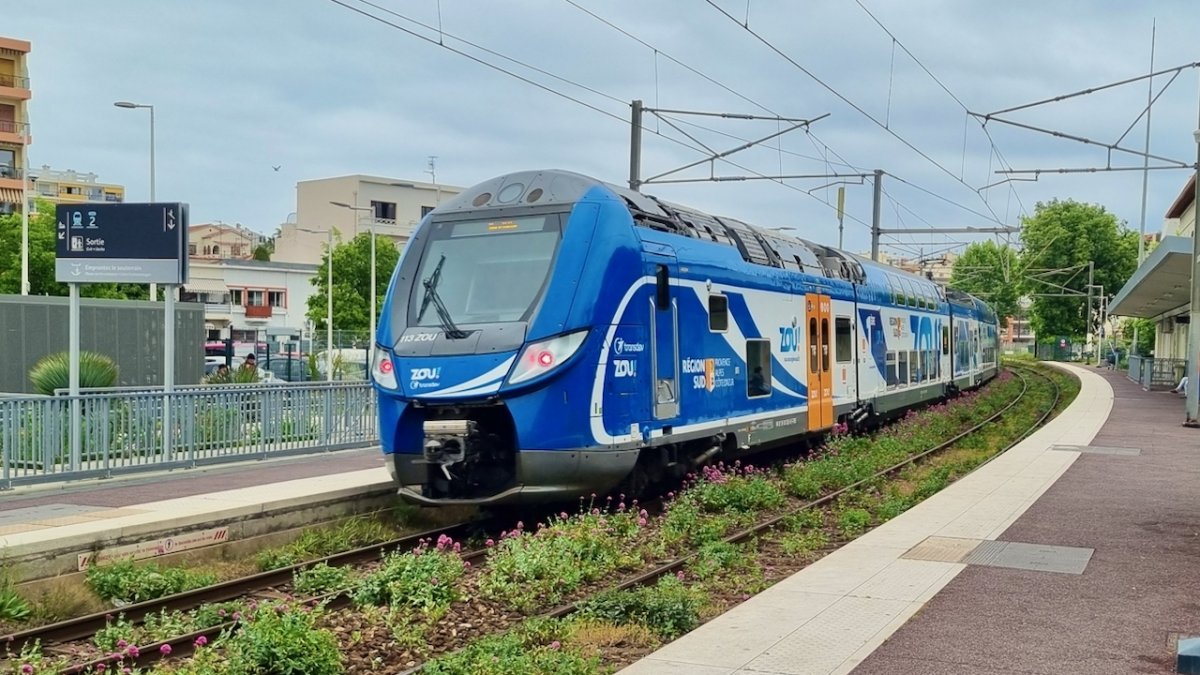
Région Sud Class Z 59000 set 113 in PACA 'Zou' livery and operated by Transdev passes through weed-strewn Juan-les-Pins on 26 April with Train 17469 06.57 Marseille Saint Charles – Nice Ville. The orange door marks where wheelchair access is available. Transfer of this service to Transdev last year has seen replacement of BB 22200 and Corail sets with 16 eight-car Regio 2Ns providing an hourly service, operating singly or in multiple. Other changes in the area have seen the return of BB 26000s on freight services, requiring a loco change at Vintimille, following withdrawal of the BB 36300s by Hexafret. Photo: Niel Wilson.
Other rolling stock changes in the area include mid-life overhaul of the Z 26500s which is nearing completion, although the Rhône-Alpes units hired to cover the shortages are still in use. As indicated in the article above, the COI has recommended an immediate start on Phase 2 of LNPCA for commissioning in 2035. This will see significant development and modernisation of the infrastructure between Marseille and Nice.
Work on Phase 1 started last year, construction of an 8km tunnel and low-level station at Marseille Saint-Charles that will eliminate the need for through trains to reverse in the current terminus. Other work will raise capacity in the Toulon area, between Saint-Cyr-sur-Mer and Carnoules, as well as improvements to stations and development of the future Nice Aéroport station. This will see construction of four platforms and an multimodal hub integrating both TER and high-speed services with local transport.
Visiting Marseille on 6 May, SNCF PDG Jean Castex signed the €2.2 billion contract agreed last October with Région Sud for operation of TER Lot Marseille Est (see November 2025 News). At the December 2029 timetable change, SNCF Voyageurs Sud Alpes Méditerranée will take over operation of routes out of Marseille to Toulon and Hyères, Les Arcs-Draguignan, Aix/Pertuis and Gap/Briançon, plus Briançon to Romans (Valence). In a reference to Transdev’s win of the Marseille – Nice contract, Castex said: “SNCF accepts the rules of the game…but with a fierce desire to win all the prizes".
Other rolling stock changes in the area include mid-life overhaul of the Z 26500s which is nearing completion, although the Rhône-Alpes units hired to cover the shortages are still in use. As indicated in the article above, the COI has recommended an immediate start on Phase 2 of LNPCA for commissioning in 2035. This will see significant development and modernisation of the infrastructure between Marseille and Nice.
Work on Phase 1 started last year, construction of an 8km tunnel and low-level station at Marseille Saint-Charles that will eliminate the need for through trains to reverse in the current terminus. Other work will raise capacity in the Toulon area, between Saint-Cyr-sur-Mer and Carnoules, as well as improvements to stations and development of the future Nice Aéroport station. This will see construction of four platforms and an multimodal hub integrating both TER and high-speed services with local transport.
Visiting Marseille on 6 May, SNCF PDG Jean Castex signed the €2.2 billion contract agreed last October with Région Sud for operation of TER Lot Marseille Est (see November 2025 News). At the December 2029 timetable change, SNCF Voyageurs Sud Alpes Méditerranée will take over operation of routes out of Marseille to Toulon and Hyères, Les Arcs-Draguignan, Aix/Pertuis and Gap/Briançon, plus Briançon to Romans (Valence). In a reference to Transdev’s win of the Marseille – Nice contract, Castex said: “SNCF accepts the rules of the game…but with a fierce desire to win all the prizes".
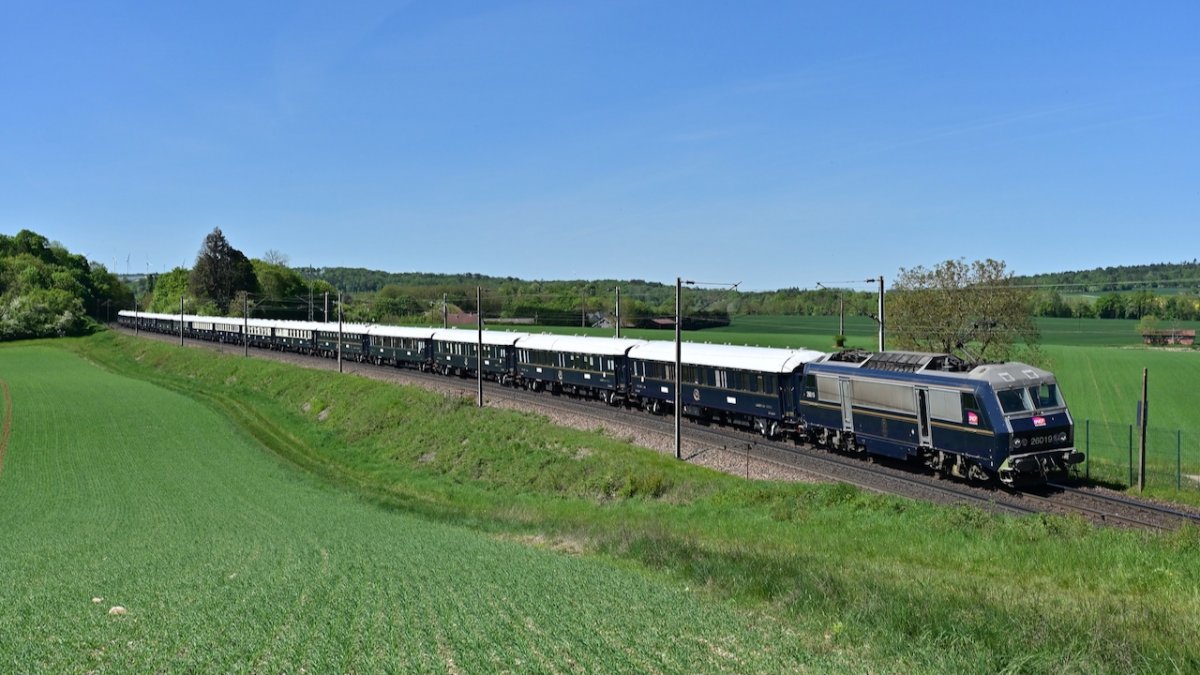
In glorious spring sunshine VSOE liveried BB 26019 passes Prauthoy, south of Langres, on 25 April with the 16 coach VSOE 394 Paris Est – Venice Santa Lucia. Photo: Gwenaël Piérart.
‘Haute couture’ MI20 for RER B
The first MI20 trainset for RER Line B was presented to Île-de-France Mobilités at Alstom’s Crespin works on 7 May and was driven a few metres by Île-de-France Mobilités president Valérie Pécresse. She was accompanied by the PDGs of RATP, SNCF Voyageurs, Alstom and CAF. Despite the appearance of the first set and Mme Pécresse’s hope that the homologation process could be shortened, it is likely to be at least December 2028 before the trains enter public service; some sources say ‘spring 2029’. The initial batch of 10 trains in production is required mainly for testing: five for Alstom/CAF to validate production processes and three for trials with RATP and SNCF (joint operators of Line B); the remaining two will be series-production sets.
Mme Pécresse described the MI20 as “an haute couture train", destined for “the most unreliable line in Île-de-France, to make it the best”. The aim is to achieve 95% punctuality against 85% today on the second-busiest urban railway in Europe (after RER Line A). Due to the tight loading gauge of Line B and other physical restrictions, a configuration of seven short cars was chosen within a length similar to existing trains (104m), though with a bodyshell 20cm wider. Doors are wider too, facilitating passenger flow to reduce station dwell times. Maximum capacity is 1,063 passengers, 35% higher than current trains, and there are 342 seats (22% more).
The layout provides an improved environment for both seated and standing passengers, the alternate single- and double-deck cars providing a variety of ‘comfort areas’. The lower decks have space and easy access for short-distance passengers, especially standees, those with luggage and persons with reduced mobility, while the upper decks provide ‘calm and comfort’ for longer-distance travellers. The wider bodyshell allows extra-wide gangways and there is Boa-style access throughout the train at the lower level. Underfloor heating and ceiling-vented aircon will make for that warm legs/cold head feeling common with modern stock.
The contract has a chequered history. Tenders were called in 2018 for new-generation stock to replace MI79 and MI84 trains and an order for 146 seven-car MI20 (Matériel Interconnection 2020) trains for RER Line B went to Bombardier/CAF in 2020, an award disputed by Alstom. After much legal wrangling and Alstom’s takeover of Bombardier, a revised contract valued at almost €2.5 billion was agreed with an Alstom/CAF consortium in 2021. The initial delay was compounded by covid and its aftermath, plus supply-chain problems, so that delivery was postponed from 2025 to 2027 and then 2028. The production process is also slowed by the work taking place across two sites (powered cars from CAF Reichshoffen, intermediate cars and fitting out at Alstom Crespin) and the mixed configuration of double- and single-deck cars.
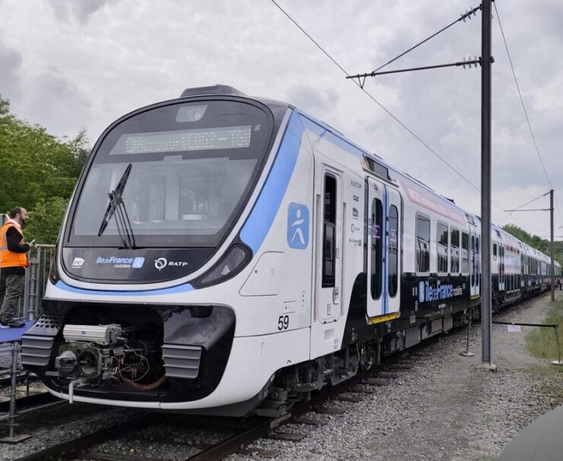
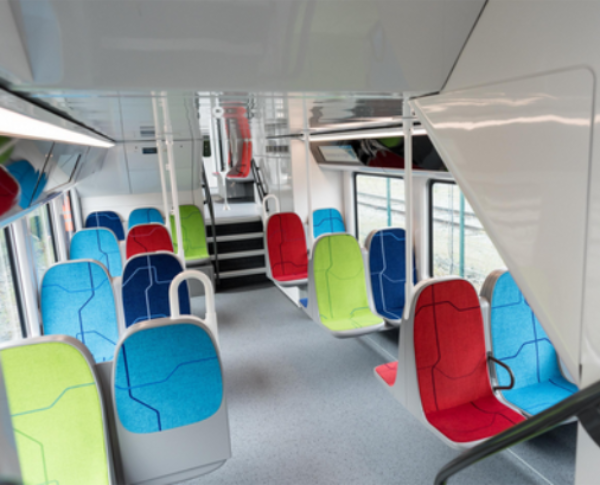
MI20 stock forms part of a €5 billion modernisation of Line B, including a single control centre for Lines B and D and deployment from 2032 of the NExTEO train control system. ÎdFM’s upcoming order, Mme Pécresse said, would be the 52 Z2N NG trains required for Line Y, the route being carved-out of the southern section of Line C. Bids for these trains closed on 31 March. They constitute the first tranche of a joint ÎdFM/SNCF programme to replace the entire RER rolling stock fleet over the next 25 years. Over 300 EMUs would be procured at a cost of around €9 billion. Photos: Région Île-de-France.

Heading for home? With Renfe having abandoned plans to enter the domestic high-speed market due to delays in obtaining certification to operate Talgo S-106 Avril units in France, the test unit appears to have returned to Spain. On 6 May the heavily tagged unit is seen passing south through Toulouse Matabiau behind Hexafret BB 26060 running as Train 805987 Brive – Narbonne. Photo: Georges Turpin.
More trouble at Paray
Paray-le-Monial lost part of its service to Moulins from 18 May when the double track to Gilly-sur-Loire was ‘temporarily’ reduced to single. The line from Paray to Gilly (30km) has been subject to speed restrictions for years due to defects. Now Voie 2 (westbound) has been closed, leading to implementation of temporary single-track operation (Voie Unique Temporaire VUT) between 06.30 and 22.00.
SNCF said this was to allow continued operation of Nevers – Moulins – Paray – Lyon Mobigo trains. Those in the opposite direction were terminated at Paray except for TER 893902 the 18.08 Lyon – Moulins, retimed 25min later from Paray due to a 40km/h speed restriction. This train ran with two sets as the last train of the day TER 893904 19.42 from Lyon was cancelled. The Rémi service from Tours to Lyon via Paray was diverted through Roanne. Alternative routes offered by SNCF Connect included bus to Roanne and thence train to Moulins, taking three times as long and costing three times as much.
This arrangement was to run until 31 May while studies were made of the defective track; thereafter the service would be ‘subject to change’. The move calls into question the additional trains planned for introduction on 13 December when Bourgogne-Franche-Comté’s first lot of concessioned routes passes to SNCF Voyageurs Bourgogne Ouest. Users’ groups fear Voie 2 will never reopen and double-track will remain only between Paray and Digoin, if at all.
Paray-le-Monial, ‘City of the Sacred Heart’, has a population of 9,000, swelled in season by thousands of pilgrims. Service to Lyon has been blighted by closure since 2024 of the passing loop at Lamure-sur-Azergues, the 96km single-track section making it impossible to offer a balanced timetable; trains run outwards to Lyon in the morning, returning in the afternoon and evening. Paray’s third route, to Montchanin and Dijon, is the only one with a decent service, 11 A/R daily.
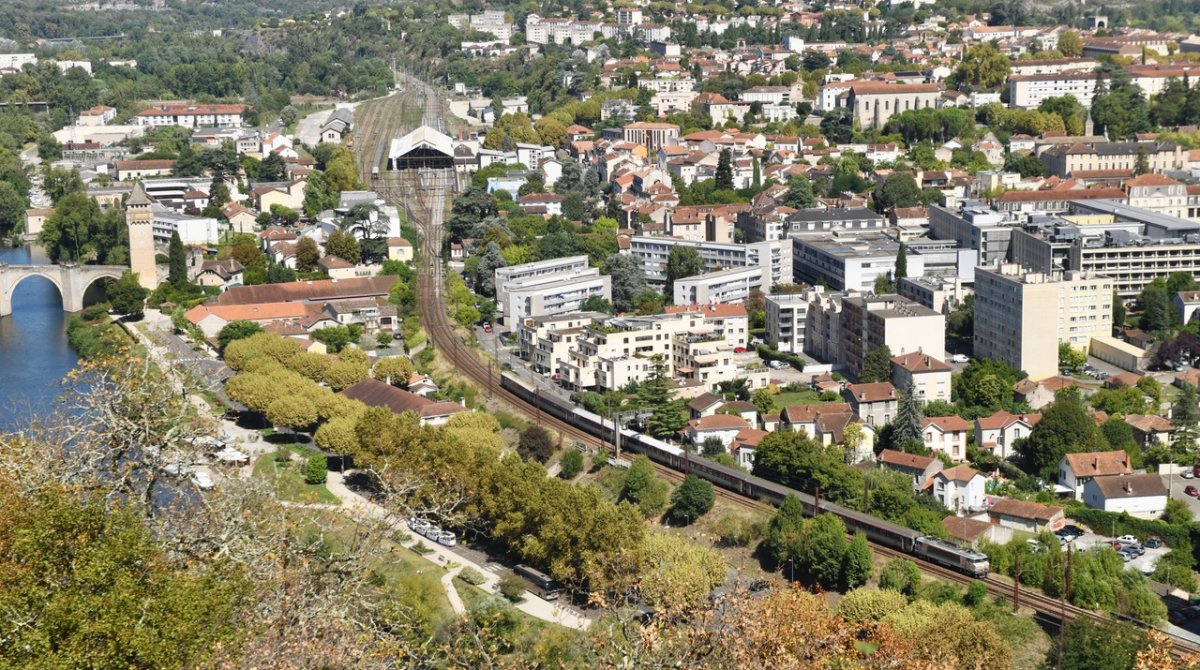
It looks as if it will be 2028 before Oxygène sets take over on POLT. Running some 40min late, BB 7296, deputising for the normal BB 26000, departs from Cahors with the V200-timed IC 3605 06.28 Paris – Toulouse on 3 September 2025.
Oxygène delayed, more money for Clermont
SNCF’s PDG cast doubt on the much-revised delivery schedule of CAF’s Oxygène trainsets: “I invite you to discuss this with the PDG of CAF” he said when questioned on the ‘spring 2027’ date for their introduction. “We are deploying all our energy to ensure that CAF delivers on its commitment”. To no effect as it turned out, for barely a week later CAF announced a further three-month delay in the certification of the train, delivery of which is now running four-and-a-half years late.
Trials of Oxygène on the Clermont line in Auvergne had been scheduled to start in May but will not now begin until September, when the train will be presented to the public at a series of events at local stations. Thus the spring 2027 start of public service, now described as ‘always optimistic’, is delayed until summer. It is still hoped to have all 12 Clermont-line trains in service by the start of the December 2027 timetable, when journey times will be cut and a ninth daily A/R introduced.
That bad news, brought to Clermont-Ferrand by transport minister Philippe Tabarot on 22 May, was tempered by announcement of a further €450 million investment in the Clermont line between 2028 and 2031 ‘to improve robustness and reliability’. Building on the huge upgrade now coming to a conclusion, the extra money is possible thanks to the increased funds allocated to SNCF under its new performance contract with the State. Details were not specified but are thought to be aimed at cutting Paris – Clermont journey time to 2h 30 by raising line speed, strengthening OHL, eliminating level crossings and installation of more fencing to keep wildlife off the tracks. A new plan will be published in September following consultations between SNCF Réseau and stakeholders.
News in Brief
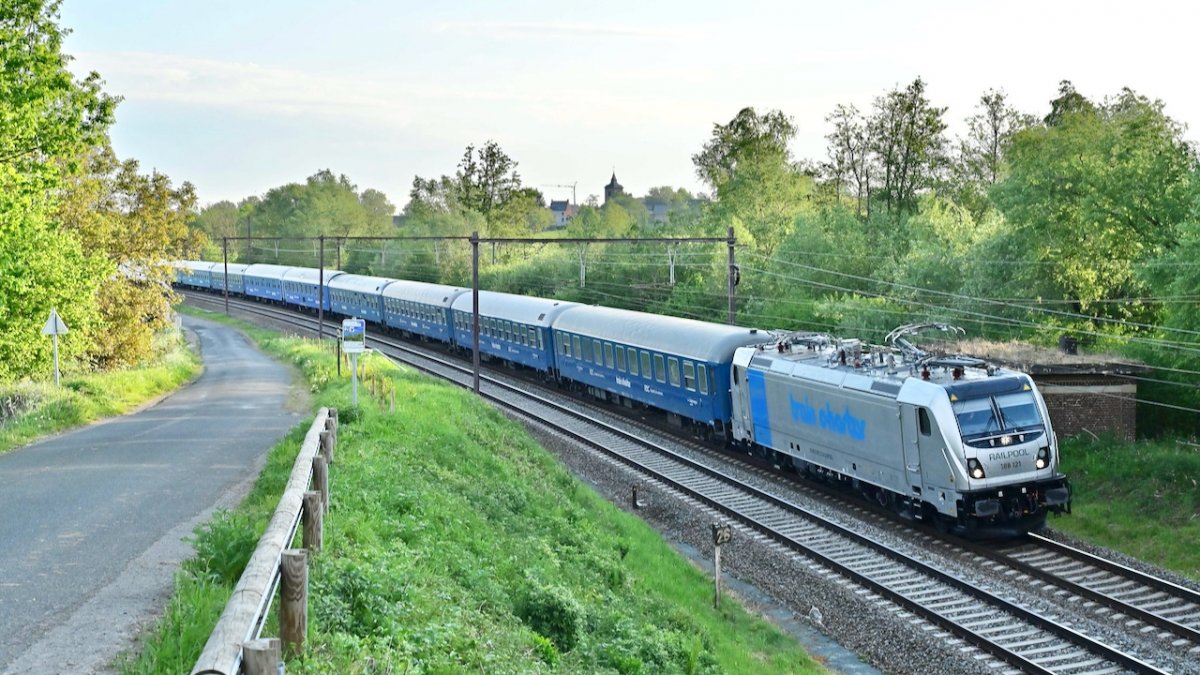
European Sleeper's Paris – Berlin train has had a chequered start with the service starting or terminating at Brussels or Mons and replaced by a coach connection to Paris on eight occasions during April. Problems have ranged from issues with the ATESS 'black box' system to incorrect staffing certification following an audit by EPSF (the French public railway safety authority). On 2 May, Traxx MS3 188 121 passes Hennuyères with ES 474 Berlin Hbf – Paris Nord. Photo: Gwenaël Piérart.
GoVolta, operating a similar business model to European Sleeper, dropped its Amsterdam – Hamburg train from 29 May after only two months’ operation, citing poor loadings. The stock will be used to run the over-subscribed Berlin train six days a week from 1 July. Its Amsterdam – Paris service scheduled to start on 14 December is unaffected. Booking is open, fares start at €19, journey time about 6h with nine intermediate stops including Longueau and Arras.
The EC’s Single Ticketing Directive was published on 13 May, aimed at simplifying booking for cross-border journeys. Passengers should be able to buy a single ticket online for any international train journey in Europe involving multiple operators ‘through a single, easy-to-use booking platform’. Legacy train operators (state railways) would have to allow their tickets to be sold by other operators and independent booking platforms. Online sales platforms, including those of state railways, must display all travel options neutrally; where feasible, offers would be graded by level of greenhouse gas emissions to highlight their carbon footprint. New protections for passengers would include statutory refunds and compensation rights in the event of missed connections. A multimodal regulation would cover through journeys involving air, rail, bus, coach and water modes, though not ‘last-mile’ trips on local transport. National railways strongly oppose the move, which the Community of European Railways (CER) lobby group criticised as ‘unprecedented regulatory overreach’.
Under a memorandum of understanding signed on 11 May, Eurostar, SNCF Voyageurs and Swiss Federal Railways will ‘examine a direct rail connection between Switzerland and London’. They will look at timetable options and operational concepts for services from Zûrich, Basle and Geneva to London via the Channel Tunnel. Implementation would be ‘feasible at the earliest during the 2030s’.
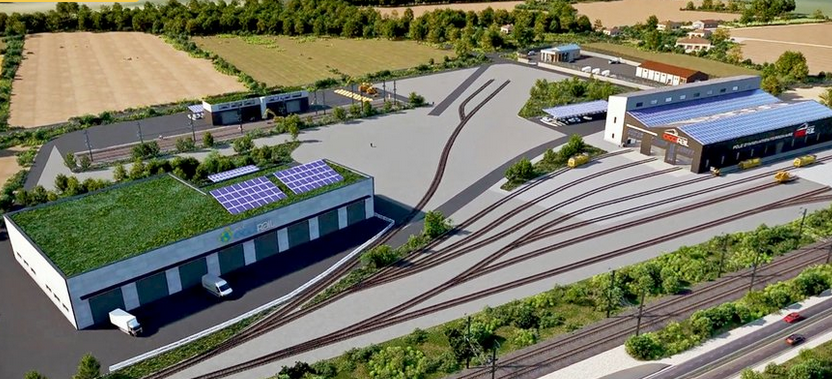
An understanding was signed on 25 March launching the Occirail research, maintenance and training centre to be built at Réalville, adjacent to the POLT main line between Montauban and Caussade. It will specialise in technology for decarbonisation of rail transport. Occitanie région, Banque des Territoires and the State are investing €19 million; 150 jobs will be created. Image: CC Quercy Caussadais.
Following the change in regulations on provision for cycles (see May News), Nouvelle-Aquitaine has introduced a €3 charge for bikes on several routes, in force from 1 May to 27 September. Similarly in AURA, where the charge is €1. Occitanie also requires reservation but without charge, as does Hauts-de-France on seven routes, though confusingly not on all trains. Users’ groups complain of the complexity of a system ‘unknown elsewhere in Europe’, and that reservations are limited to the number of bike hangers, whereas bikes can usually be accommodated in other non-seating areas. Another gripe is the need to access different booking platforms to reserve bike space and buy a ticket.
Le Grau-du-Roi. With trains again able to pass at Vauvert, Occitanie is increasing the service from Nîmes. Until 26 June, weekday trains are up from seven to nine, weekends from six to eight. During July and August there will be 12 weekday trains (up from eight), and 14 at weekends (previously 10). As last year, for crowd-control purposes reservation is mandatory until 30 August.
Meymac. The station was closed for a week at the beginning of April after levels of radon 10 times the norm were discovered in staff accommodation. Brive – Ussel trains ran through without stopping. As it was impossible to work the junction signalling, Limoges – Ussel trains were terminated at Eymoutiers. A temporary control panel was set up in an isolated building whilst safety work was carried out. No trains on either route are running between Meymac and Ussel from 8 June to 17 July whilst unrelated infrastructure work takes place.
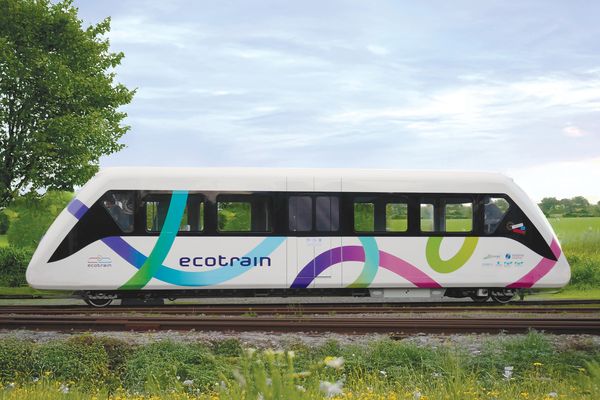
The pre-demonstration EcoTrain ran for the first time on a test track at Socofer’s Saint-Pierre-des-Corps works on 29 April. A further €10 million is being sought by the promoters to take development to the public-trial stage. In series production, the cost per car is estimated at €800,000. Photo: Socofer.
After a 10-year lapse, grain shipments are moving again from a silo at Ormes on the freight-only line from Orléans to Orgères. A 700m private siding has been restored by agri-business Pissier which plans up to 10 shipments a year to Montauban-de-Bretagne in Bretagne. Millet Rail operated the first train on 13 May.
Mont-Blanc Express. With all seven Stadler Z 890 EMUs delivered, overnight trials of the new stock concluded last month. They will enter service on 21 September.
Construction has begun of a station to serve the Plan de Campagne shopping and commercial centre on the northern outskirts of Marseille. The single platform between Septèmes and Simiane on the line to Aix-en-Provence, opening in 2029, will be a multimodal interchange with buses, parking for 288 cars and 40 cycle lockers; cost €16.5 million. The complex has 50 million visitors a year but rail passengers are estimated at a modest 2,000 daily.
SNCF recorded higher ticket sales during April, said to be due to the rise in fuel prices; motorway operators noted a drop in toll revenue. SNCF sold 14% more tickets across all its services than in April last year. Other factors include the four May bank holidays, three of them long weekends, for which many TGVs were fully-booked weeks ahead, and demise of the low-cost coach operation BlaBlaBus due to ‘significant losses’. Trainline by contrast warned of lower earnings due to the impact of fuel shortages on international travel.
More ticket office closures are underway in Limousin, though Nouvelle-Aquitaine région says it wants ‘to keep options available’ at small stations. Amongst them are: Aixe-sur-Vienne, Le Dorat, Nexon, Saint-Junien, Saint-Sulpice-Laurière, Saint-Yrieix, Allassac, Égletons, Objat and Pompadour. The service may not be missed at Pompadour, closed on 30 April, where the guichet was open 08.10 to 15.25 even though the station has no trains or buses.
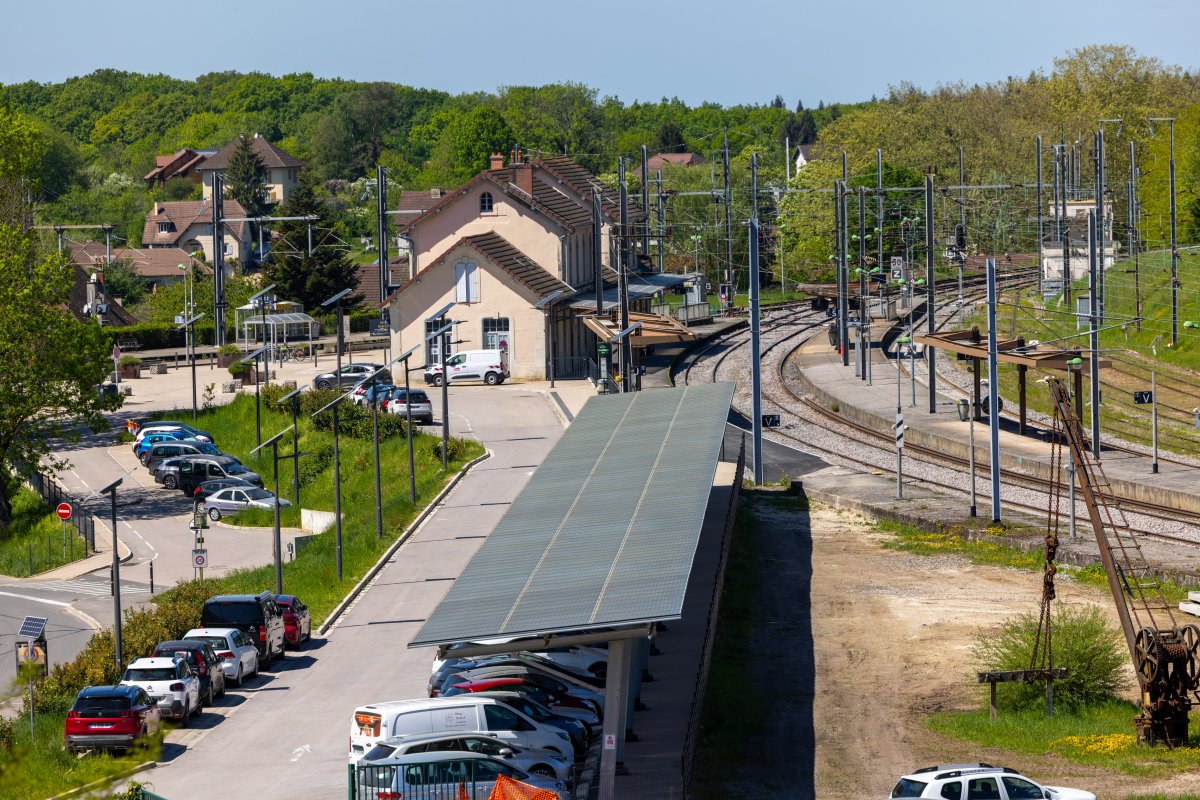
SNCF’s first 100% energy-autonomous station is Mouchard in the Jura, where modernisation was completed in April. Solar panels shading the parking space provide the station’s entire energy requirement, with 70% of output surplus for sale to the grid. Photo: Région BFC.
“I didn’t want to start my mandate like this” said Alstom’s new PDG Martin Sion announcing a profits warning on 16 April prior to the 2025-26 results out on 13 May. With a record order book of over €100 billion, production problems and delayed deliveries continue to dog the company. In a reorganisation next year, Sion’s priority will be to “improve quality, with tighter day‑to‑day project management, reinforced planning discipline and better co-ordination across engineering, supply chain and manufacturing”. Streamlining the large number of production sites in Europe could see disposal of another ex-Bombardier plant in Germany.
CDG Express. With opening 10 months away on 28 March 2027, power and signalling on the 4.5km link between Gare de l’Est and Plaine Saint-Denis was switched on over the weekend of 23-25 May and the new section connected to the Saint-Denis control centre. This completes infrastructure work on the €2.6 billion project. Operating concessionaire Hello Paris is expected to announce the premium fare shortly. This is likely to be at least €20, reinforcing the widespread view of the new service as a ‘train for the rich’.
Neoen’s solar park at Labouheyre in the Landes was inaugurated on 21 April. The 25,000 panels will produce 16GWh per year for sale to SNCF Energie under a 25-year contract to power trains on the nearby Midi main line. A similar project agreed in May with JP Energie Environnement and Générale du Solaire will produce over 100GWh annually at a site in Indre-et-Loire département coming on stream in 2027.
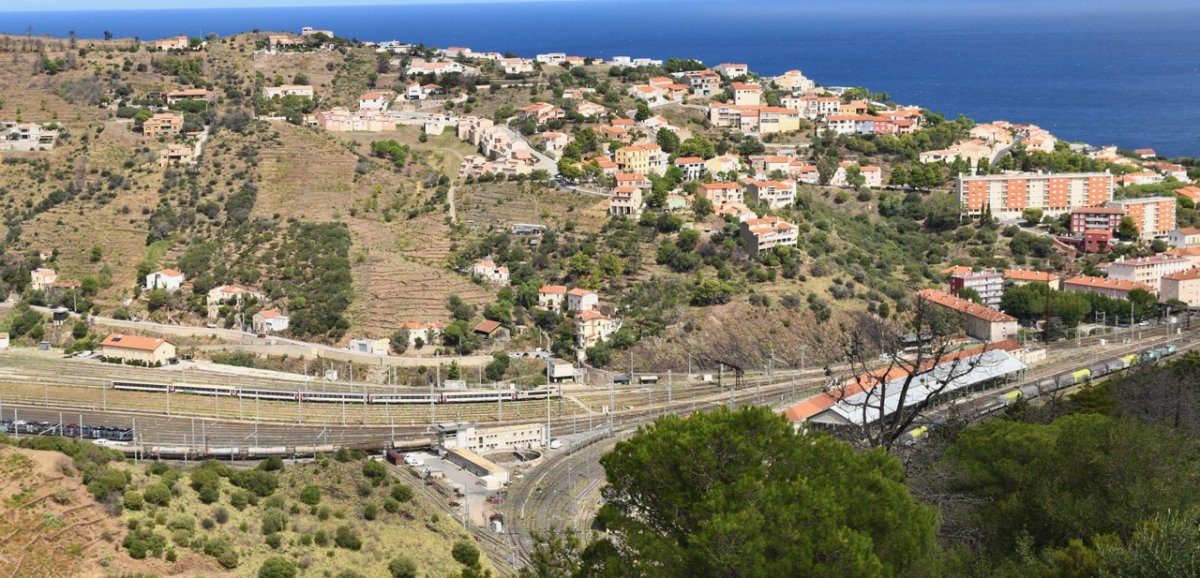
On Monday 1 September 2025, BB 22328 and the stock of the overnight service from Paris are stabled in the otherwise empty standard-gauge yard at Cerbère. With the school holidays over it will not be used until the following weekend. In the station, a pair of BB 69000s wait to depart with the 15.00 trip to Perpignan.
Limited interest in new night stock
A report in Les Echos says leasing companies bidding for the ICN rolling stock contract have been reduced to a shortlist of two. The government postponed the award in January due to financial pressures: it now expects final bids in the summer and will decide ‘before the end of the year’. The first tranche of replacement stock comprises 180 coaches and 27 bimode locomotives.
Apart from the financial aspect, lessors and their prospective rolling stock builders have issues with the specifications. The end-2029 deadline set for the first trains to be in service at the start of the 2030 Winter Olympics (1 February 2030) is considered too short for development and testing of new designs, five years being a more likely scenario. Alstom and Talgo are understood not to be bidding.As for the locos, the bimode requirement raises their cost by 30%, and with bimodes only approved for freight service in France, existing designs would have to undergo homologation for passenger use. Both Railpool and Beacon are said to have withdrawn on account of the tight deadline and severe penalties for delay, Railpool saying that it was being asked to tender for ‘equipment that doesn’t exist’. Akiem and Stadler remain in the contest.
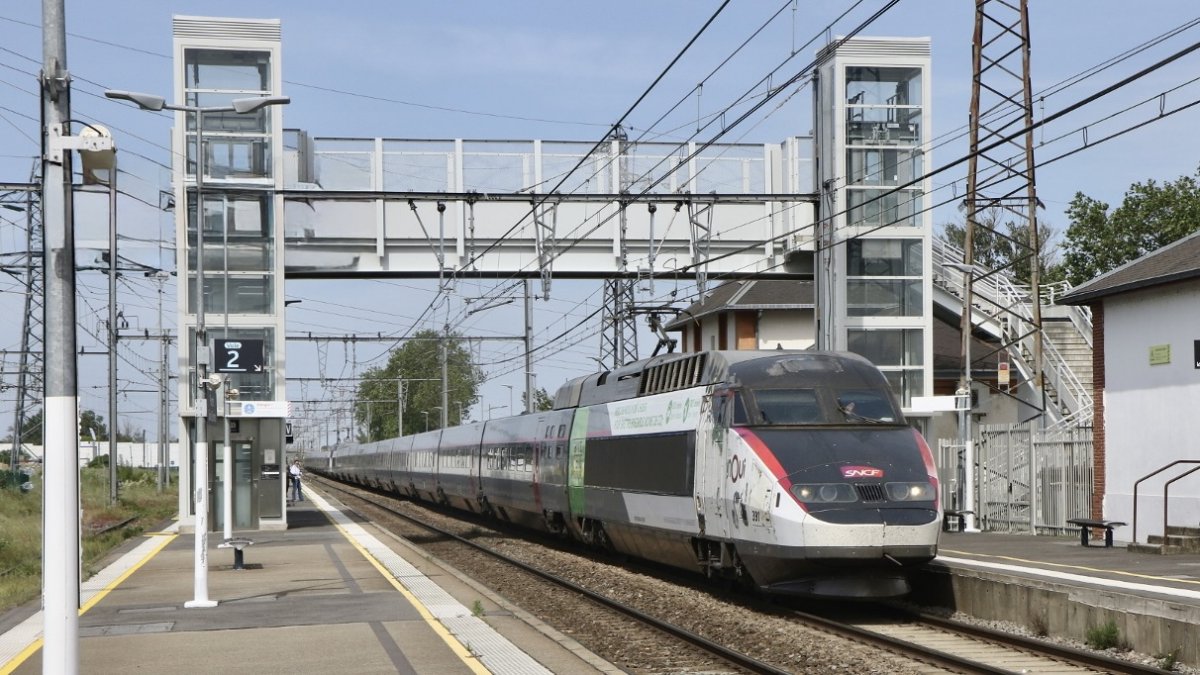
Orthez washout diversions
In the evening of 28 April 100mm of rain fell in two hours at Orthez in Béarn causing washouts at Castétis east of the town, closing the line from Pau and said by SNCF Réseau to be a ‘once in 50-years event’. About 100m of track was affected. Trains from Pau to both Dax and Bayonne were replaced by buses, with the Toulouse – Bayonne IC curtailed at Pau. Buses were few and far between, only five Pau – Dax and two to Bayonne, reserved, according to Nouvelle-Aquitaine région, for TER passholders and ‘local workers’. There appeared to be no provision for long-distance passengers or those needing to travel at short notice. Location of the incident close to the boundary between NA and Occitanie régions was no doubt a factor; Pau and Tarbes complained of being ‘cut off’ from the west, losing their TGVs and ICN.
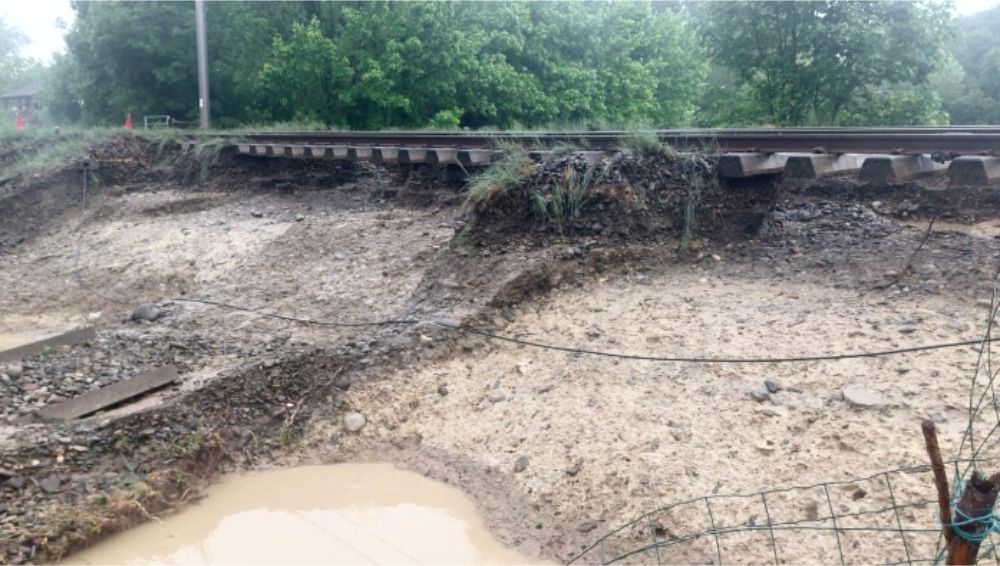
Fortunately, road access close by enabled materials to be brought to the site easily, but further inclement weather hampered the clean-up. Reinstatement of the formation and track required 1,400m3 of infill and 600tonnes of ballast. Photo: SNCF Réseau.
Pilgrims appeared to be better served than regular passengers. Unable to reach Lourdes by their usual route, trains from Paris and northern France took a lengthy diversion, running from Bordeaux east to Toulouse and then turning west along the line to Tarbes which does not normally see TGVs. The diversion was complicated by the fact that pairs of TGVs draw too much power to run on Capvern bank, so trains were split or joined at Montréjeau-Gourdan-Polignan and ran singly to and from Lourdes. Timekeeping suffered considerably. On 1 May, the 10.14 departure from Paris Montparnasse (TGV 33132 front/32314 rear) should have reached Lourdes at 15.47 (front portion) and 16.00 (rear portion) but were seen at Portet-Saint-Simon outside Toulouse at 16.05, still 167km from Lourdes! Photo Georges Turpin.
Pilgrims appeared to be better served than regular passengers. Unable to reach Lourdes by their usual route, trains from Paris and northern France took a lengthy diversion, running from Bordeaux east to Toulouse and then turning west along the line to Tarbes which does not normally see TGVs. The diversion was complicated by the fact that pairs of TGVs draw too much power to run on Capvern bank, so trains were split or joined at Montréjeau-Gourdan-Polignan and ran singly to and from Lourdes. Timekeeping suffered considerably. On 1 May, the 10.14 departure from Paris Montparnasse (TGV 33132 front/32314 rear) should have reached Lourdes at 15.47 (front portion) and 16.00 (rear portion) but were seen at Portet-Saint-Simon outside Toulouse at 16.05, still 167km from Lourdes! Photo Georges Turpin.
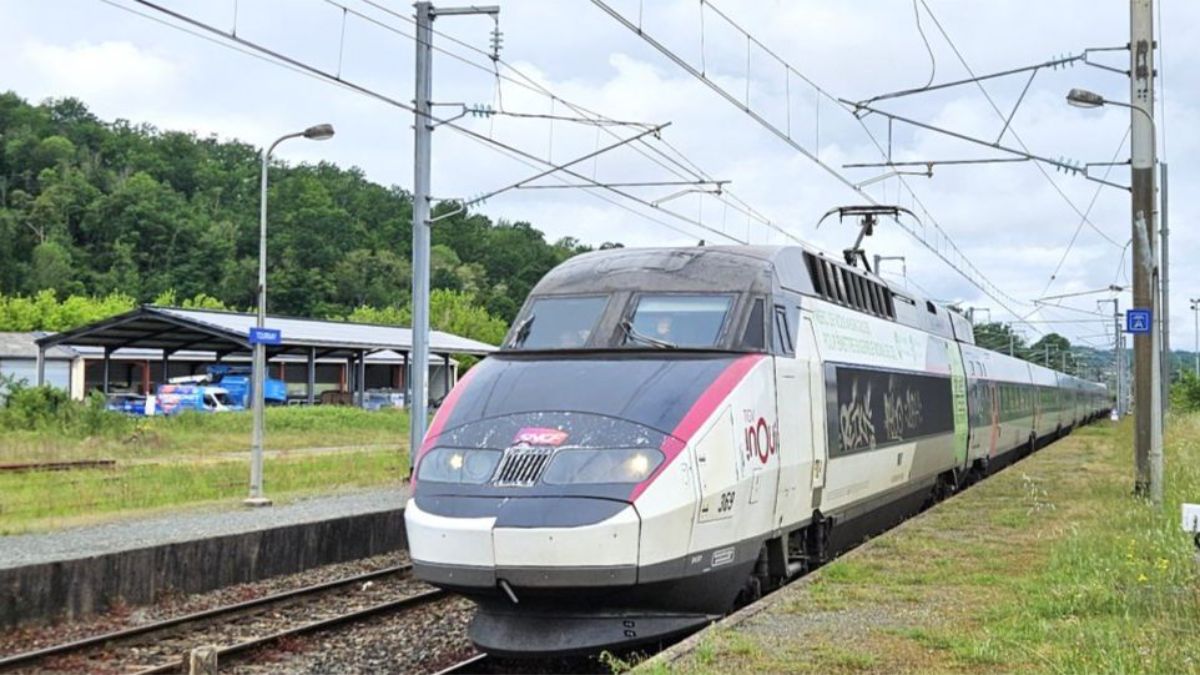
Below. At Tournay east of Tarbes on 5 May, tatty-looking Atlantique Set 369 on TGV 32315 begins the ascent of Capvern bank, 8km at 1 in 33. This was the second portion (Lourdes dep 10.21) of that morning’s Lourdes – Paris Montparnasse returning pilgrims’ working, joining the first section (TGV 32317, 10.02 ex-Lourdes) at Montréjeau for the roundabout run to Bordeaux and then on to Paris.
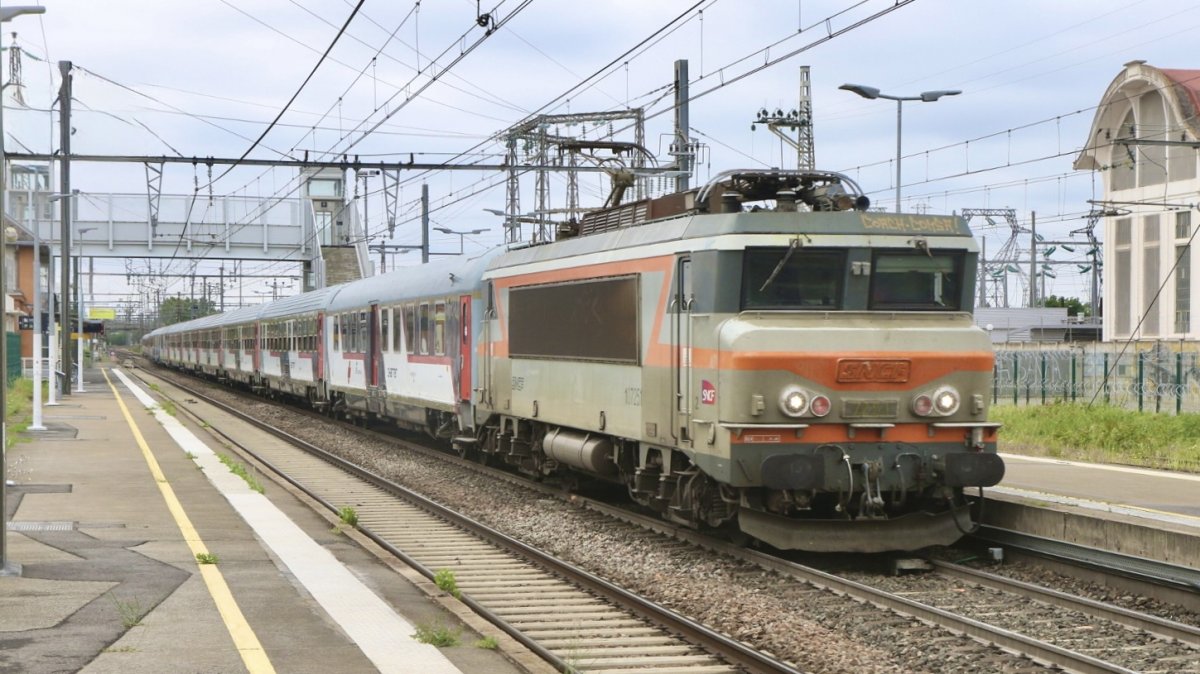
The weather looked more favourably on Italian pilgrims who were largely unaffected by the flooding. BB 7251 passes through Portet-Saint-Simon on 30 April with Train 29956 Lourdes – Reggio di Calabria, the stock entirely in FS charter livery except for the baggage car, which is in Treni Turistici Italiani livery and carries the inscription Treno dei desideri (Pilgrim Train of Dreams).
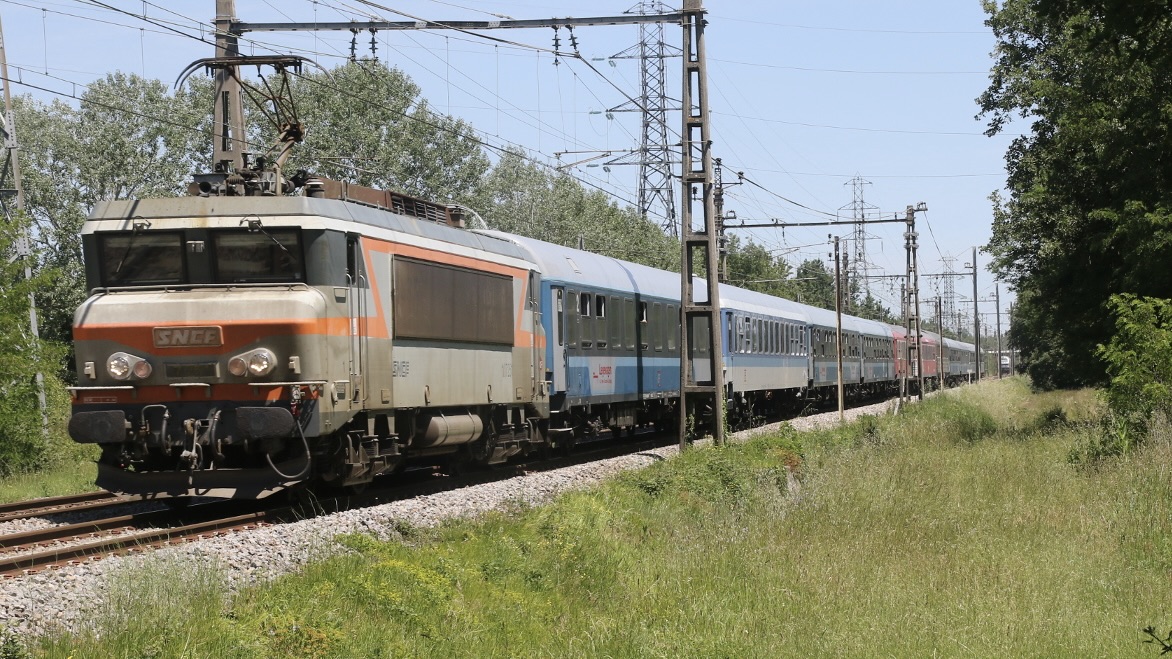
Pilgrims were again entrusted to BB 7251 on the 21 May when it handled German charter 286 that had travelled via Basle Saint Jean. Seen below between Portet-Saint-Simon and Muret where the original 1924 concrete masts are still in use. The 12 coach train included a type P sleeping car 4557 built for CIWL in 1955. Photos: Georges Turpin.
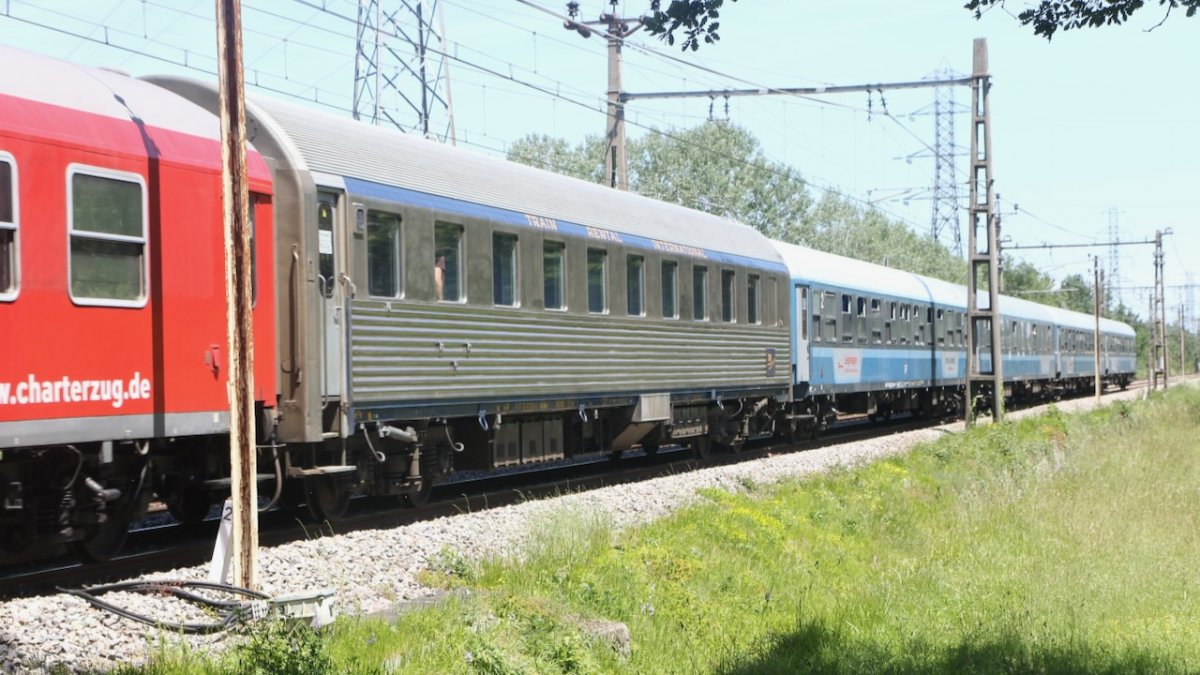
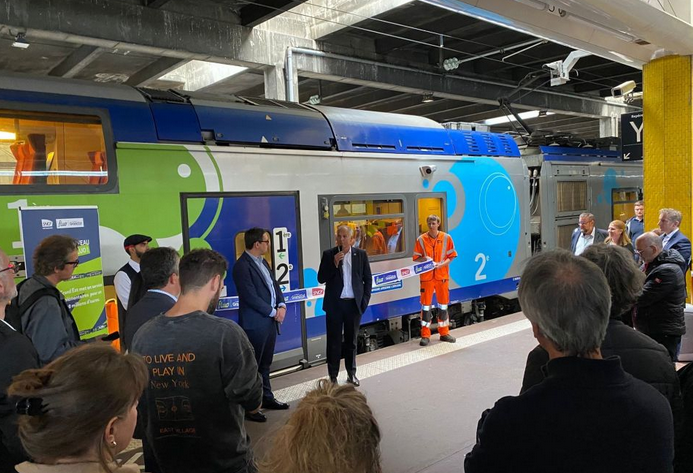
SNCF wins Line J
This is SNCF’s tenth win out of the 14 lots tendered nationally and SNCF's second Paris suburban contract having taken Line L last year.. No financial details were given and ÎdFM did not name the unsuccessful bidders. The lot comprises 174 route-km with 52 stations. Current service provision is 6.2 million train-km annually, but with extension next year of RER Line E over Line J tracks to Mantes-la-Jolie, Line J train-km will be reduced to 4.2 million a year. Line J is operated by a fleet of 55 Z 50000s, seven cars rather than eight to fit Saint-Lazare’s short platforms, supplemented by the remaining BB 27300s and VB2N push-pull stock.
Line J passengers are to receive compensation for the attenuated service in force since discovery in April of damaged wheelsets. Having taken some time to identify the cause, misaligned blades on a turnout at La Garenne-Colombes, Transilien initially underestimated the extent of the damage. In the last week of May, 60% of the fleet was still immobilised awaiting wheel-reprofiling, a task that was unlikely to be completed before mid-July.
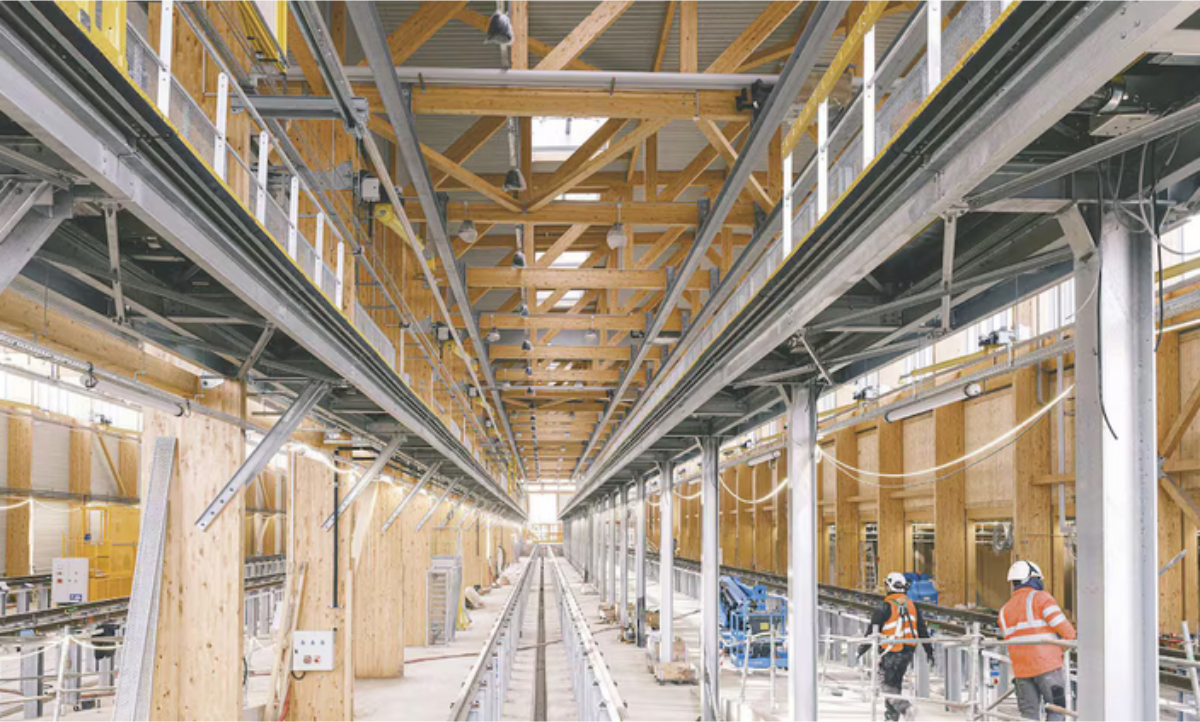
Timber first for TER depot
The Grand Est TER maintenance depot being built at Montigny-lès-Metz was commissioned in April and will be fully operational by the end of the year. For the first time in a modern railway building of this size (7,600m2 covering four tracks), timber has been used for the frame as new fire-protection regulations rendered the usual type of steel framework problematic. The low thermal conductivity of wood was determined to offer significantly better fire protection than steel, as well as environmental advantages.
Working with timber, low-carbon concrete and metal presented challenges in design and construction. Some of the laminated wooden sections are more substantial than would have been the case with steel, though compensatory savings were achieved with other materials. Anchoring metal components to the timber beams is by large metal brackets, in particular where the OHL is retractable to allow safe use of overhead cranes. About two-thirds of the wood has been sourced from forests in nearby Jura and Alsace.
Grand Est région and Luxembourg co-financed the €105 million depot with SNCF Voyageurs. EMUs working the Nancy – Metz – Luxembourg service will be based here. The design has earned the designation ‘excellent’ from the Low Carbon Building association, with 28 trees planted, 1,700m2 of greened roof area, solar panels and 4,780m2 of surface painted white. Exterior facings were manufactured using rubble recovered from demolition of the original buildings.
Photo above: AREP/JL.
Grand Est région and Luxembourg co-financed the €105 million depot with SNCF Voyageurs. EMUs working the Nancy – Metz – Luxembourg service will be based here. The design has earned the designation ‘excellent’ from the Low Carbon Building association, with 28 trees planted, 1,700m2 of greened roof area, solar panels and 4,780m2 of surface painted white. Exterior facings were manufactured using rubble recovered from demolition of the original buildings.
Photo above: AREP/JL.
Cross-border EMUs in service
Further south, 29 April saw the first of 16 five-car 2N NG Z 26500 EMUs bought in 2019 from Normandie région enter service on the congested Nancy – Metz – Luxembourg line, with an official launch taking place on 4 May. Each train provides 554 seats, compared with 313 seats on the three-car units previously in use. By early-2027, peak-hour seating capacity will have almost doubled to 13,000/h. These trains will be maintained at the Montigny-lès-Metz Technicentre.
A fuller description of the trains and the problems affecting both cross-border projects appeared in March News.
Photo: Région Grand Est.
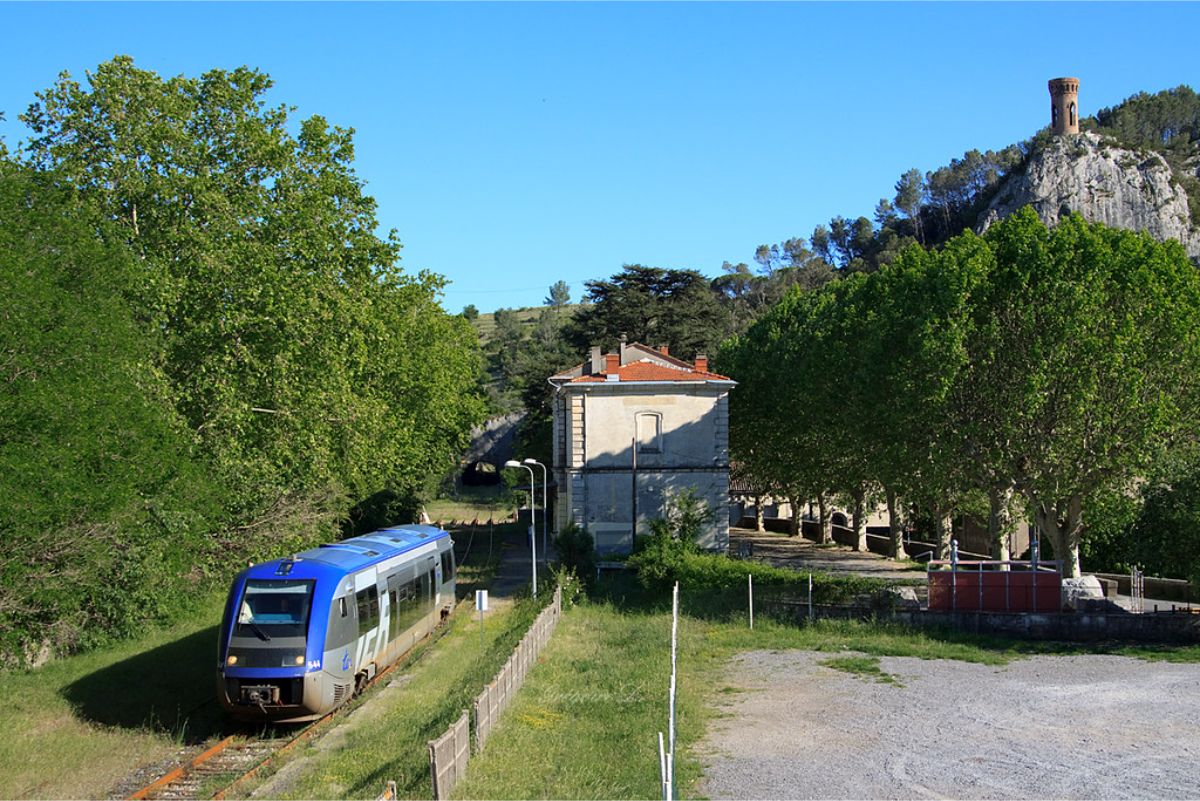
X 73544 leaves Saint-Ambroix en route to Alès on 16 May 2012. Passenger service from Bessèges to Alès was withdrawn on 8 July. Photo: G Kippelstein/CC BY-NC-ND 2.0.
Bessèges reopening moves forward
Revised environmental considerations and the new level crossing safety standards have delayed the planning process by several years, also considerably increasing the cost. Rebuilding the line to Luchon, reopened last year, cost roughly €2 million/km; estimates for Bessèges fall into the same area. Infrastructure, track and signalling require modernisation; five of the 12 level crossings will be closed. Local officials are also looking into provision for carrying freight after the residual service to the now-closed Solvay chemicals plant at Salindres ceased in March last year. At a previous round of consultations in 2021, seven daily A/R were envisaged, serving nine stations with a journey time to Bessèges of 40min.
Gare de Lyon blockade
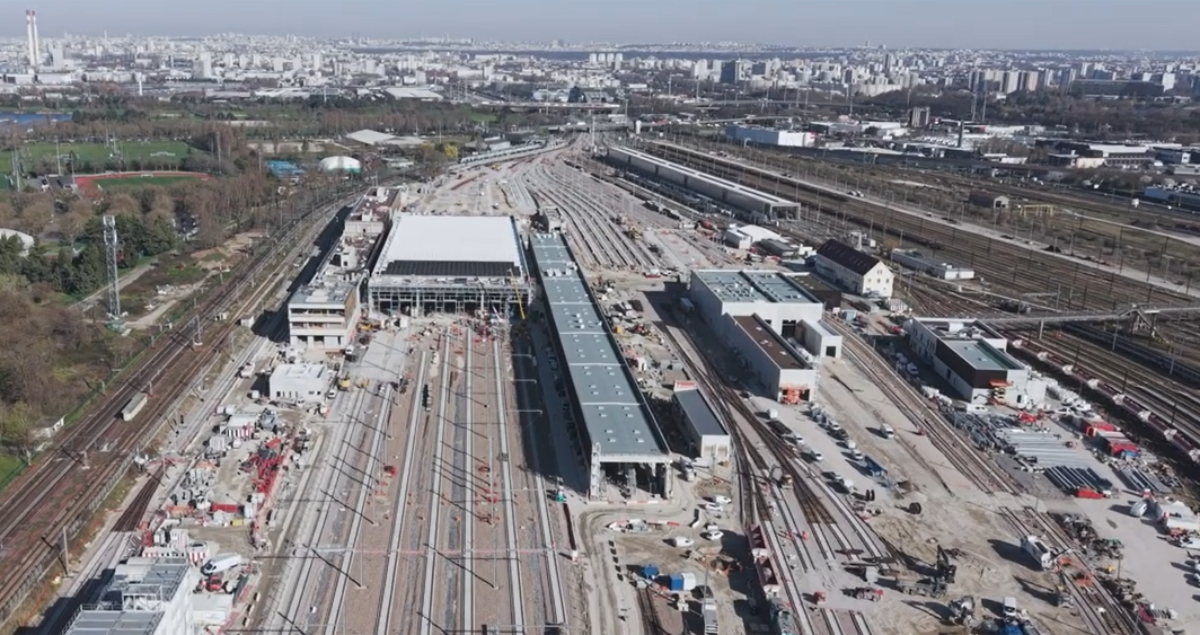
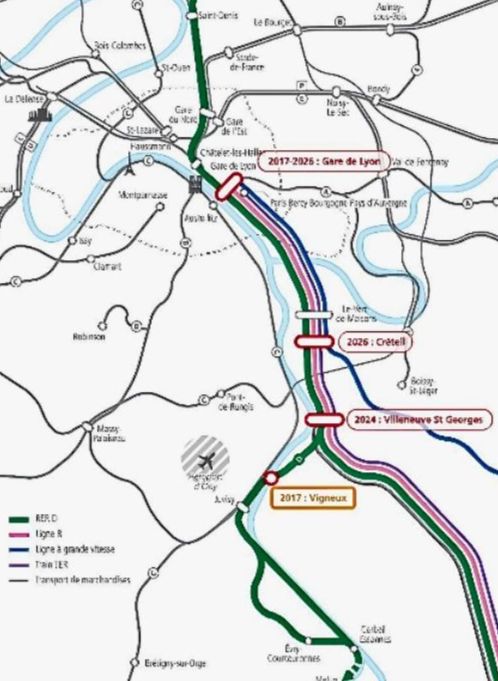
No trains ran into the surface or low-level platforms at Paris Gare de Lyon over the 1 May holiday weekend whilst SNCF Réseau replaced signalboxes dating from the 1980s and 90s with digital systems operated from the Vigneux-sur-Seine control centre. Services across a wide area of southeast France were disrupted between 30 April at 20.00 and 3 May at 12.10, affecting over 400,000 passengers. TGV, IC, RER and TER trains from Gare de Lyon and Bercy were diverted or cancelled. About 60% of scheduled TGVs ran, diverted to Montparnasse, Gare de l'Est, Roissy CDG, Marne-la-Vallée Chessy, Pont de Rungis and Versailles Chantiers. Clermont-Ferrand ICs normally running from Bercy were heavily curtailed and rerouted to Austerlitz, TERs to Montparnasse.
Trenitalia’s service was cut to just one A/R Paris – Lyon (14.33), one Paris – Milan (07.02) and two Paris – Marseille (06.18 and 15.17) to match the limited capacity at Marne-la-Vallée. Train 6651 the14.33 to Lyon Perrache on 30 April was the first Frecciarossa seen at Marne-la-Vallée.
Libération drew attention to weird and wonderful alternative routes (itinéraires loufoques) being offered on SNCF Connect, including Paris Nord – Lyon via Arras and CDG or Lille (journey time up to 8h), Montparnasse – Lyon via Valence, Nîmes or Versailles Chantiers (7h), Paris – Nice by various routes taking all day, Paris – Besançon via Strasbourg, and some journeys to Switzerland routed via Germany. These all had increased fares to match the greater kilometrage involved. Despite four months’ notice of the closure, many turn-up-and-go travellers found themselves stranded and SNCF was widely criticised for closing the station on a weekend of grands departs.
The work was the culmination of four years’ preparation for replacement of the obsolete signalbox at Gare du Lyon (underground), which controlled RER D, and that at Créteil which handled all trains between Paris and Villeneuve-Saint-Georges. This is the third phase of installing digital signalling on the Sud-Est route out of Paris, begun in 2017 with commissioning of Vigneux control centre, followed by that at Villeneuve-Saint-Georges in 2024. To facilitate the change to control from Vigneux, RER D peak-hour service was reduced by 30% over the period 4 to 15 May. Replacement of the signalling systems and associated track improvements mark a further stage in the parallel €200 million project for installation of the NExTEO train control system on RER Lines B and D, expected in 2031, when Line D service will increase from 28 to 32 trains/h.The weekend also saw commissioning of access tracks into Villeneuve Demain Technicentre(photo above) where a new heavy-maintenance depot for RER D and Transilien Line R trains opens later this year at a cost of €685 million. Photo: Transilien.
Infra round up
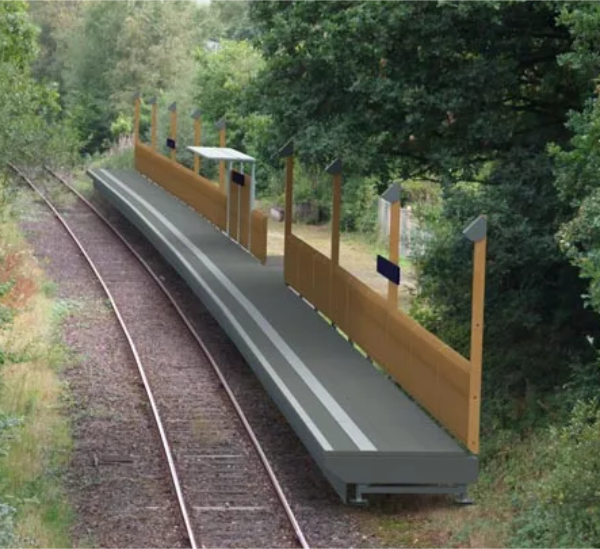
SNCF Gares & Connexions has developed a modular platform as a temporary solution for extending an existing platform, raising it to improve accessibility, or creating a new stop. Mobil’Quai has a modular metal structure assembled from standard components and installed on lightweight screw-pile foundations. The platform surface is made from recycled plastics, including from dismantled TGVs. Seen as useful for inexpensive SERM stations, pilot installation sites have been identified in Grand Est. Funding came from the Environment & Energy Management Agency (Ademe). Photo: SNCF G&C.
All three May long weekends (ponts) saw work on lines out of Bordeaux, with trains to Arcachon, Hendaye, Mont-de-Marsan, Libourne and Langon replaced by up to 200 buses until Sunday midday. Under the LGV three-tracking/SERM widening project, PN13 at Saint-Médard-d’Eyrans was closed completely and work continued to replace five other level crossings between Cadaujac and Saint-Médard and install platform loops at the stations. Further south, Lisea’s Marcheprime depot was connected to the Bordeaux – Hendaye main line, SNCF Réseau installing entrance/exit crossovers and turnouts. The first track was laid inside the depot in March.
SNCF Réseau is investing €60 million this year in upgrading the Paris – Caen – Cherbourg line, with 75km of rail being replaced by factory train between Bernay and Caen during nighttime possessions. Also underway until 27 September is renewal of rail, sleepers and ballast at Lison, Martinvast, Sottevast and Le Molay-Littry, 6,000 timber sleepers being replaced by concrete.
The Paris – Laon rerailing begun in March last year is drawing to a close. Phase 2 between Villers-Cotterêts and Soissons (27km) was completed on 15 May, with fettling continuing until 10 July. A total of 106km has been relaid at a cost of €26 million. Recovered rail will be recycled into low-carbon steel at Saarsthal’s Ascoval de Saint-Saulve works.
SNCF Réseau is replacing 2.8km of track and four turnouts at Lille Flandres at a cost of €6.4 million, working at night and over two weekends until 4 July. The station handles 280 departures daily.
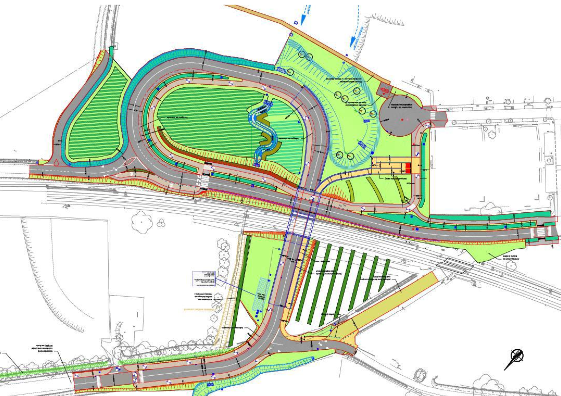

New rail and road bridges are being built to eliminate PN4 over the N175 at Maison-Blanche outside Rennes on the Saint-Malo line. The level crossing is being replaced by an underpass at a cost of €21.4 million, the prefabricated concrete box bridge rolled-in on 14-17 May. A diversion will take the road beneath the railway and raise it by a spiral to cross itself on a second bridge adjacent to the rail crossing. The PN will be closed in a year’s time. Photo: SNCF Réseau.
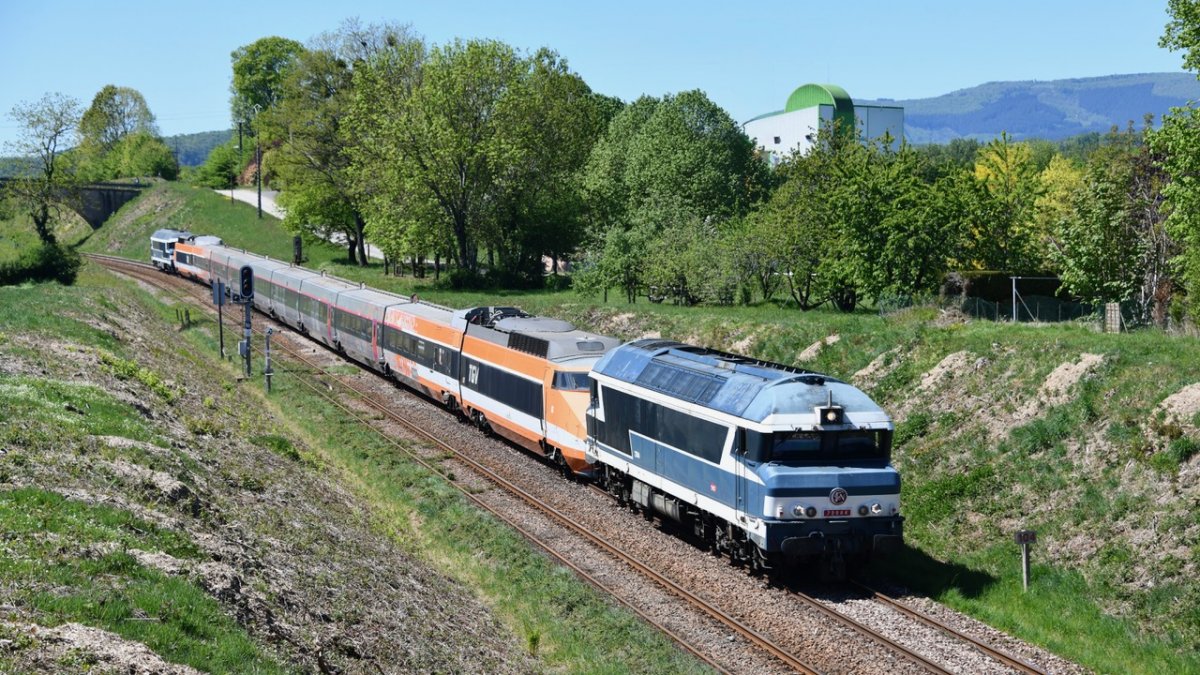
Another glimpse of TGV PSE 16 en route from Laroche-Migennes to Le Creusot on 24 April, running via Auxerre, Clamecy, Corbigny andCercy-la-Tour (see May News). At Cercy-la-Tour the train reversed direction with CC 72084 taking the lead, leaving CC 72064 on the rear. Seen approaching Étang-sur-Arroux. Photo: Didier Delattre.
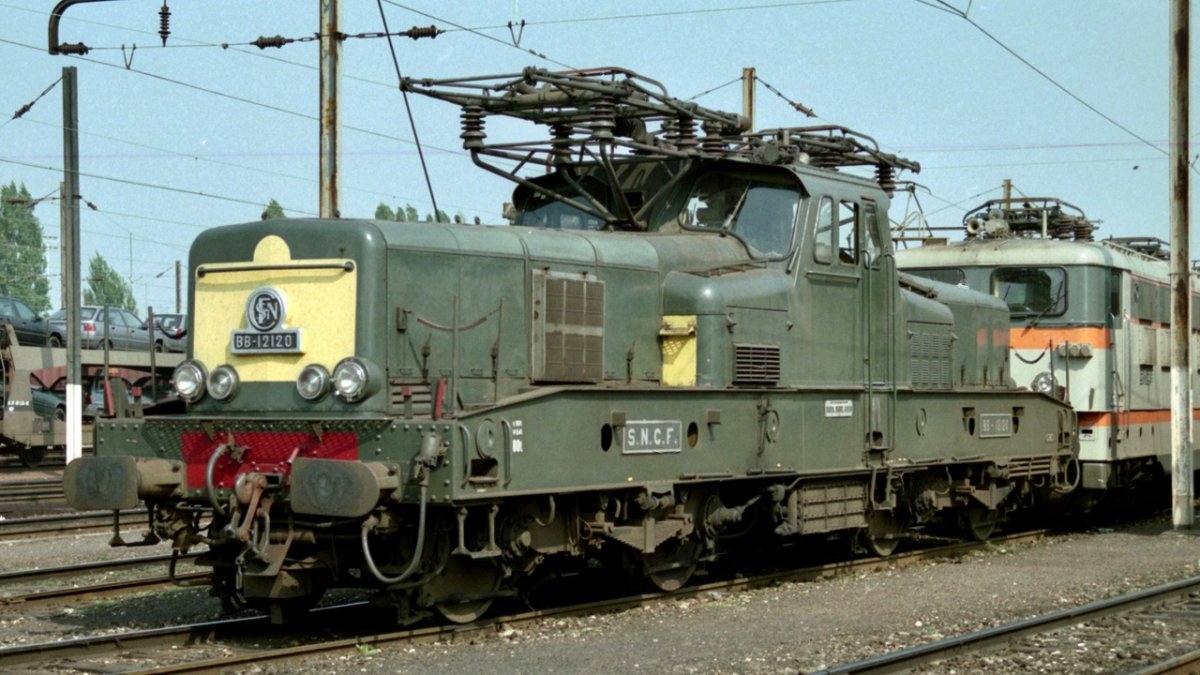
Appeal to return BB 12120 to France
Saint-Lazare based AAPSL (custodian of BB 17016) has launched an appeal to raise €30,000 to buy and return to Paris BB 12120, currently preserved by CFV3V (Chemin de Fer à Vapeur des 3 Vallées) at Treignes in Belgium. CFV3V has been trying to sell it for some time as its space in the museum is needed for other purposes. APPSL denies reports that it plans to sell the locomotive for scrap having gone to the effort of restoring it. Further details of the appeal at https://dons.aapsl.fr
Above. BB 12120 at Le Bourget on 16 May 1992. Photo: Martin Bray.
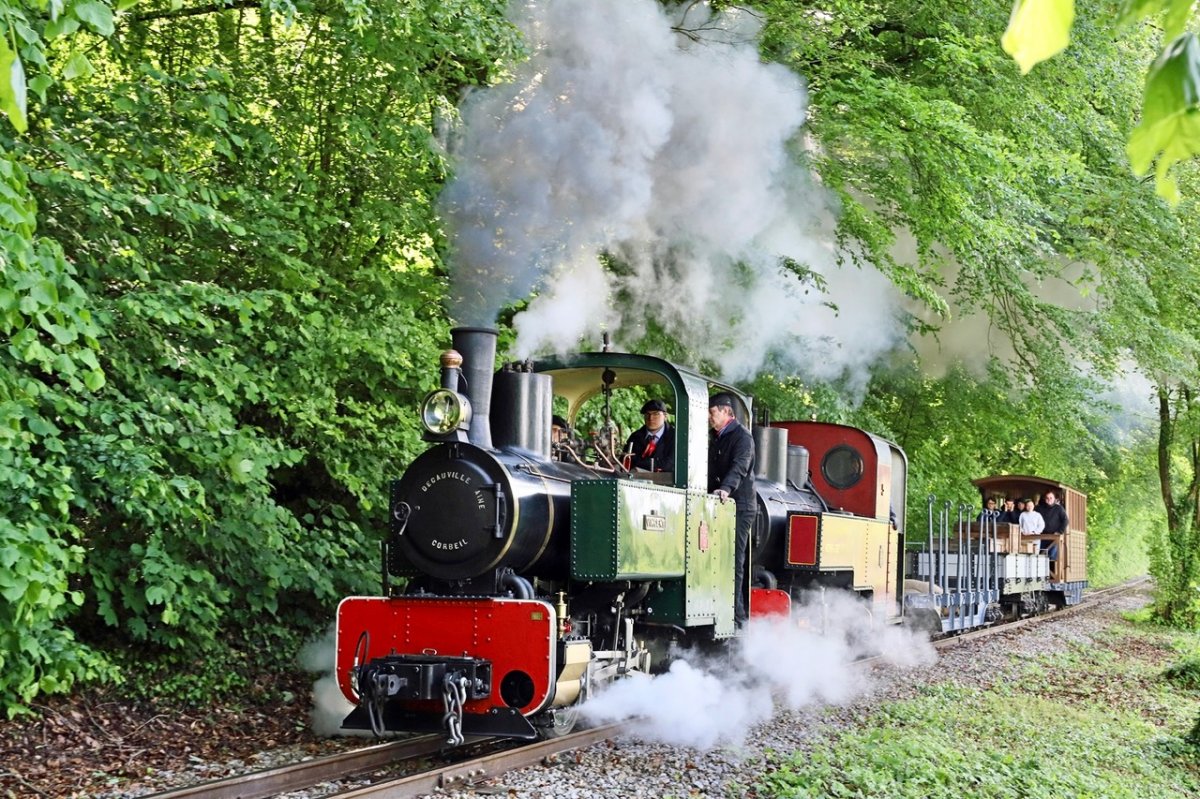
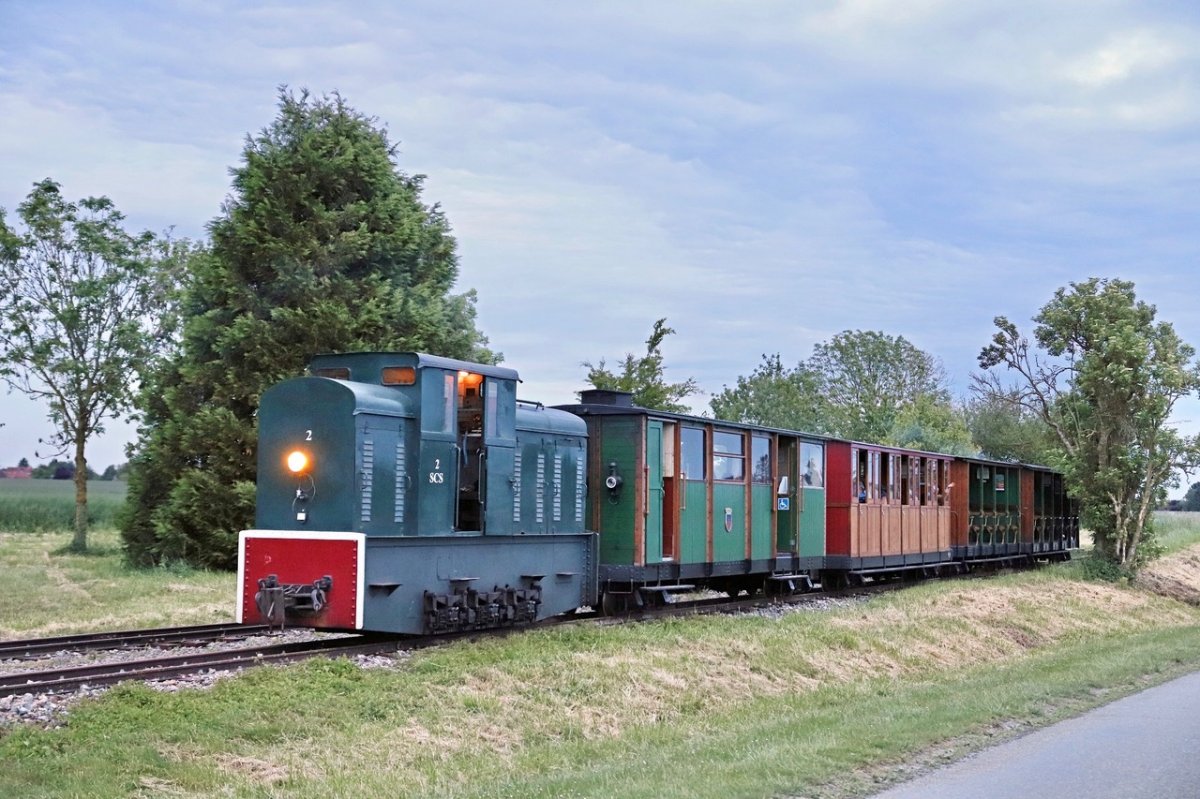
The P'tit train de la Haute Somme held a four day fête from 14-17 May to celebrate 55 years of presentation and commemorate 110 years since the railway provided logistical support to the British Army on the Somme. An intensive service was operated that included visiting locomotives from Musée des Transports de Pithiviers and Chemin de Fer des Chanteraines. Above left. In inclement weather a pair of Decauvilles head for the zig-zag as they run beside the canal at Cappy, Right. In failing light Coferna (type MR 100), T 25 heads towards Dompiere on the plateau. Photos: Jocelyne Bourneuf

Gorges de Haut-Allier. Tourist trains through the Gorges d'Allier will be operated by both Train Bleu and Train à Vapeur d’Auvergne this year although after many years BB 67400 and RRR push-pull sets are not scheduled to be used.
https://www.trainvapeur-auvergne.com/programme-annuel/
Petit Train Bleu du Sud will operate on 14 and 21 July, 11 and 18 August with their X 2800 Massif Central units (X 2819/2914). Starting from Langogne at 09.35 they will head up to Langeac passing through the 51 tunnels and 15 viaducts of the Gorges d'Allier, arriving at Langeac at 11.12. Return to Langogne is at 15.35 arriving at 17.13.
During the layover at Langeac a shorter trip will be available departing at 11.52 venturing as far south as Chapeauroux, calling also at Monistrol d'Allier, with a 15.17 arrival back at Langeac.
Over the weekend of 30/31 May Train à Vapeur d’Auvergne ran a charter from Clermont-Ferrand to Nîmes with 140 C 27 hauling the northbound return. It is scheduled to operate two trips from Clermont-Ferrand to Langogne on the 21 June and 2 August.
Reservations for Train Bleu are through the Office de tourisme at Langeac (ot.langeac@rivesduhautallier.fr)
and for 140 C 27 at:

Thanks to the efforts of retired railway engineer Philippe Cheveau, the closed station at Montdoubleau in Loir-et-Cher retains two interesting relics. A 6tonne Braine-le-Comte manual yard crane dating from 1881, thought to be the last of its type in France, and a Trayvou wagon weighbridge. Photo: Philippe Cheveau.

Fréjus. Musée de la Traversée des Alpes has joined with partners to assess work needed to restore Italian FS 640 021 which stands at the original entrance to the Mont-Cenis tunnel, closed in 1881 when the line was diverted. Funds will be sought for restoration which will enable the tunnel museum to reopen. Photo: MTA.
As a sign of hope that the Pau – Canfranc line will eventually be reopened throughout, students at a technical college in Zaragoza have constructed a small-scale replica of the Pont de l’Estanguet, now on display at Canfranc. This was the bridge that collapsed in the 1970 derailment, closing the line on the French side. The installation provides a reminder of how much the railway is missed on the Spanish side.
Urban Rail
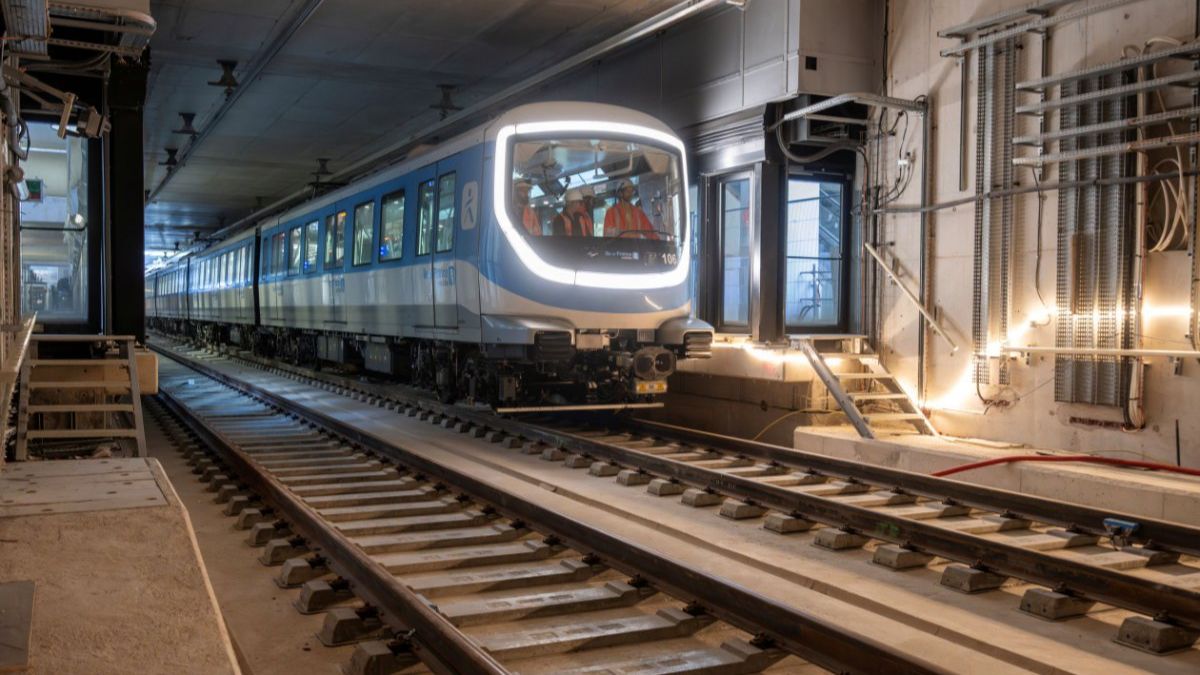
Grand Paris. A Line 15 milestone was passed at the end of March with the start of 120km/h running trials on the section between Pont de Sèvres and Noisy-Champs, opening early next year. Photo: Société des Grands Projets.
SGP’s latest estimate of opening dates is:
Ligne 15: Pont de Sèvres – Noisy-Champs, 2027
Pont de Sèvres – Saint-Denis-Pleyel, 2031
Saint-Denis-Pleyel – Champigny Centre, 2031
Pont de Sèvres – Saint-Denis-Pleyel, 2031
Saint-Denis-Pleyel – Champigny Centre, 2031
Ligne 16: Saint-Denis-Pleyel – Clichy-Montfermeil, 2027
Clichy-Montfermeil – Noisy-Champs, 2028
Clichy-Montfermeil – Noisy-Champs, 2028
Ligne 17: Saint-Denis-Pleyel – Le Bourget Aéroport, 2027
Le Bourget – Parc des Expositions, 2028
Parc des Expositions – Le Mesnil-Amelot, 2030
Le Bourget – Parc des Expositions, 2028
Parc des Expositions – Le Mesnil-Amelot, 2030
Ligne 18: Massy-Palaiseau – Christ-de-Saclay, October 2026
Massy-Palaiseau – Aéroport d'Orly, 2027
Christ de Saclay – Versailles-Chantiers, 2030
Massy-Palaiseau – Aéroport d'Orly, 2027
Christ de Saclay – Versailles-Chantiers, 2030
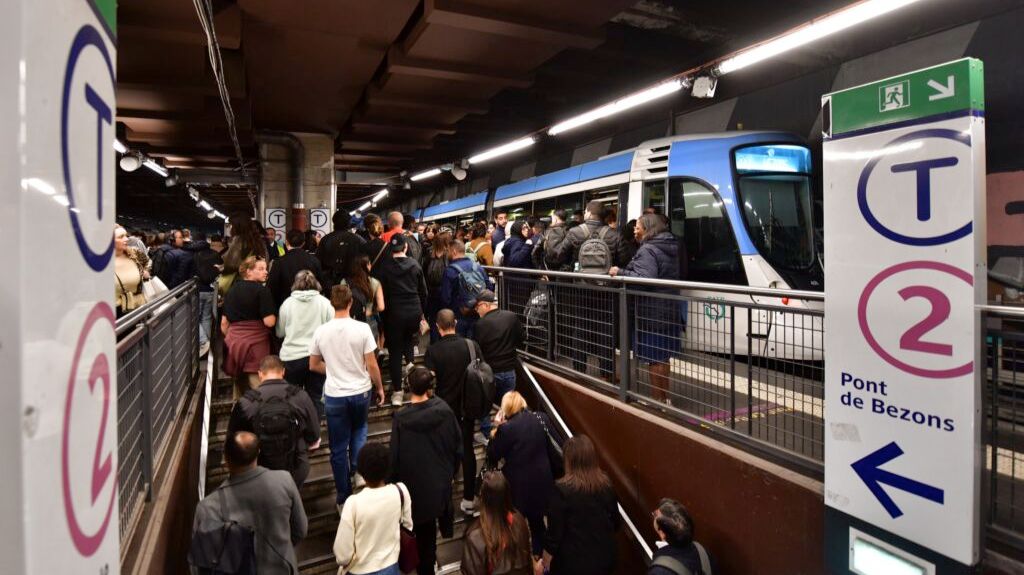
With the T2 extension at Porte de Versailles completed (see April News), work has started on rebuilding the congested underground stop at La Défense, part of the major upgrade of this huge interchange. T2 will be closed between Charlebourg and Puteaux from 13 July to 26 August whilst the island platform (originally used by suburban trains) is reconfigured to separate passenger flows. Photo: Defense-92.fr.
Châtelet. The travelator saga continues. Closed several times last year and definitively since last October for renovation, the three 160m walkways were scheduled to reopen in July. It had been decided to replace all 2,400 moving sections due to defects, but spare parts are discontinued and new components have to be manufactured to order. The project is running several months late and reopening is now planned for September.
MF19 stock began trial running on Line 13 on 11 May. Closures of the line over the summer will allow clearance and other work to be carried out before the fleet of 67 trains enters public service in a year’s time.
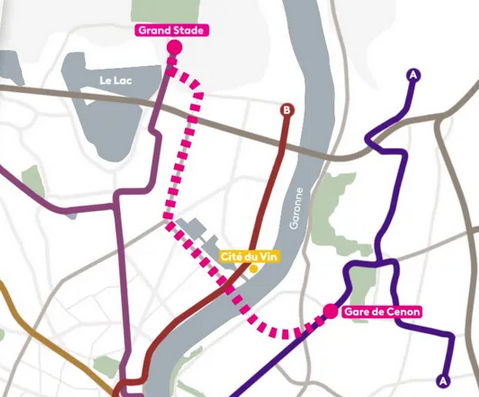
Bordeaux. Following abandonment by the new administration of metro and cable car plans, the métropole has dusted off studies for the second river crossing mentioned in last month’s News. The 7.5km link would run from Line C at Grand Stade Atlantique to La Cité du Vin (Line B), then across the Garonne on the Chaban-Delmas lifting bridge before terminating at Cenon Gare on Lines A/E. The three interchanges would make for better distribution of passengers and provide faster journeys for many residents north of the city centre, while also easing overcrowding on Line A south of Cenon. About 15% of the service would be lost during times when the lifting bridge was opened, mainly in off-peak hours, but this is not seen as a problem. The métropole hopes to finalise the route by the end of this year before going to public consultation in 2027. Though put forward as a ‘quick win’ in the battle to ease the city’s traffic jams, the link is unlikely to be open before 2032. Map: Bordeaux Métropole.
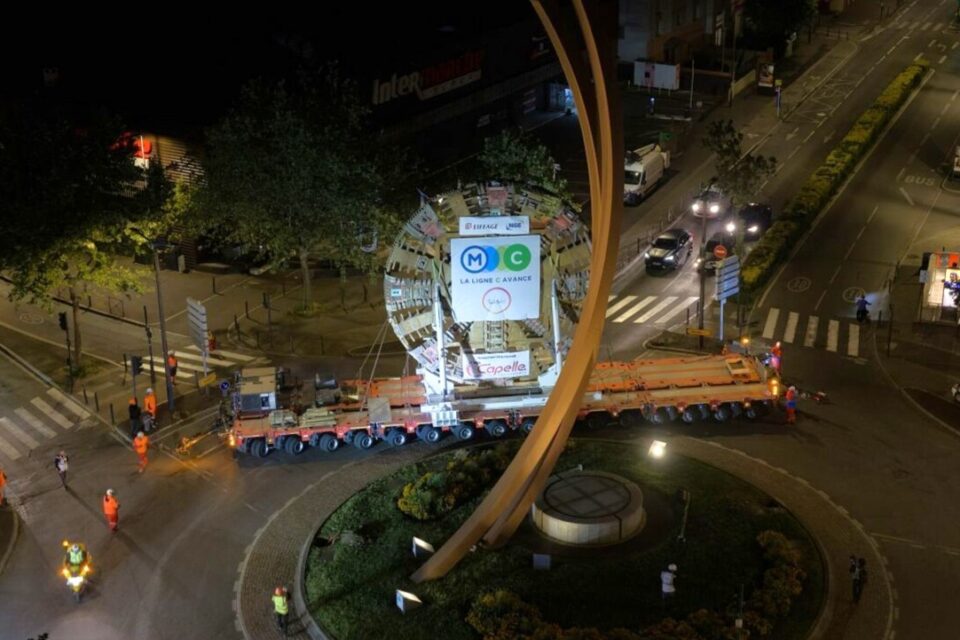
Toulouse. Line C boring machine Berthe de Puybusque was moved in sections by road overnight during April and May for reassembly at a new worksite. On 22 April the 150tonne cutter was carried on a lowloader from Pont Jumeaux to La Vache to tackle a further 2.2km of tunnelling. Photo left: Tisséo.
Nancy. The government has scrapped plans for a new regional legal centre and law courts in the quartier Alstom redevelopment, putting in doubt patronage forecasts for the €20 million Urbanloop peoplemover. A 7km loop with seven stops and 40 capsules is scheduled to open next year.
Additions to FRS Photographic Archive during May 2026
To Photographic section
- FACS No. 427-Jan/Feb 2025 - Autorails Jean Laborie
- France Trains colour schemes for AL, Nord, Ouest, PO Midi, PLM & SNCF in Folder 7 (Miscellaneous)
- Seventy old postcard images of Romilly-sur-Seine (station, ateliers & associated images)
- Some fifty various drawings to Folder 2 (under “Miscellaneous drawings 3”)
To Locations section
Additions to the FRS public folder during May 2026
- None
Additions to the FRS public folder during May 2026
- A provisional photo index for April 2026 images by David Thirlwall
- A few additional timetables to Section 15
© Peter Lovell & Chris Bushell. The French Railways Society 2026. With thanks to Georges Turpin, Christophe Masse, David Haydock, Gwenaël Piérart, Didier Delattre, Jocelyne Bourneuf, Niel Wilson, and Martin Bray
